

Introduction
Kitchens in The Woodlands, Texas deal with a unique mix of heat, humidity, and everyday cooking demands along with home styles that range from classic 1970s layouts in Grogan’s Mill to modern open-concept homes in Creekside Park. Because of this, proper kitchen ventilation is more than just a comfort upgrade; it’s a durability upgrade that helps protect cabinets, finishes, drywall, and indoor air quality over time. Homeowners planning improvements often begin by exploring expert kitchen remodel services to understand how ventilation, layout, and materials work together in a well-designed renovation. For local homeowners considering upgrades, our kitchen remodeling services for The Woodlands show how properly planned kitchens stay cleaner, safer, and more durable for years of daily use.
Everyday cooking releases heat, steam, grease, odors, and airborne pollutants that can build up quickly indoors. The U.S. Environmental Protection Agency explains how indoor air can become more polluted during normal household activities, including cooking: EPA indoor air guidance.

In humid areas, the impact is even more pronounced. When steam and grease stay trapped, your kitchen holds moisture longer, surfaces attract sticky buildup, cabinet doors can warp faster, and the risk of mold increases over time. If your kitchen already feels “heavy” after cooking, reviewing real renovation examples like the Spring kitchen remodel project and the Tomball kitchen remodel project can help you see how improved ventilation, upgraded materials, and better layouts reduce humidity-related wear while keeping kitchens clean, functional, and long-lasting.
This guide explains how ventilation works, which systems perform best in The Woodlands, how to size CFM correctly, and the simple maintenance habits that keep your kitchen looking newer for longer. If you’re planning upgrades that involve cabinetry, lighting, layout adjustments, or ventilation improvements, working with experienced remodeling contractors can help ensure the design, materials, and installation are properly planned for long-term durability and everyday comfort.
Why Proper Kitchen Ventilation Matters in The Woodlands
Every time you cook — boiling, sautéing, frying, grilling, or searing — tiny particles of grease rise into the air and land on surfaces. Without strong airflow, that grease settles onto upper cabinets, ceilings, light fixtures, backsplashes, and even HVAC filters. Over time, kitchens look older faster and feel harder to keep clean.
Ventilation is also moisture control. Steam from cooking and dishwashing raises indoor humidity — and when outdoor humidity is already high, the “extra” moisture has nowhere to go. If you’ve noticed quick film buildup, stubborn odors, or condensation, don’t miss this 2026 guide to keeping kitchens fresh and odor-free (it pairs perfectly with ventilation upgrades).
The U.S. Department of Energy highlights that ventilation helps remove heat, smoke, and contaminants produced during cooking: DOE ventilation basics. In the Woodlands, effective ventilation also reduces long-term moisture exposure that can damage cabinets, paint, and drywall.
Key Benefits of Proper Kitchen Ventilation
1) Removes smoke, grease & cooking pollutants
A properly sized and well-installed range hood captures grease particles and cooking fumes before they spread through the home. That means cleaner cabinet faces, less buildup on ceilings, and fewer deep-cleaning sessions. Pair this with smart material choices from easy-to-clean kitchen materials for a kitchen that stays “fresh-looking” longer.
2) Reduces moisture in a humid climate
Steam from boiling water, simmering, and dishwashing adds real humidity to the space. In The Woodlands, if that moisture isn’t exhausted properly, it lingers — and over time you may see swelling cabinet doors, soft drywall, peeling paint, or staining in corners.
The CDC explains how moisture problems contribute to mold growth and why ventilation matters: CDC mold and moisture information.
3) Protects indoor air quality
Cooking can release gases and fine particles that travel quickly, especially in open-concept homes. ENERGY STAR notes that a properly installed range hood can improve air quality by venting contaminants outdoors: ENERGY STAR range hood guidance.
4) Extends the life of cabinets, appliances & finishes
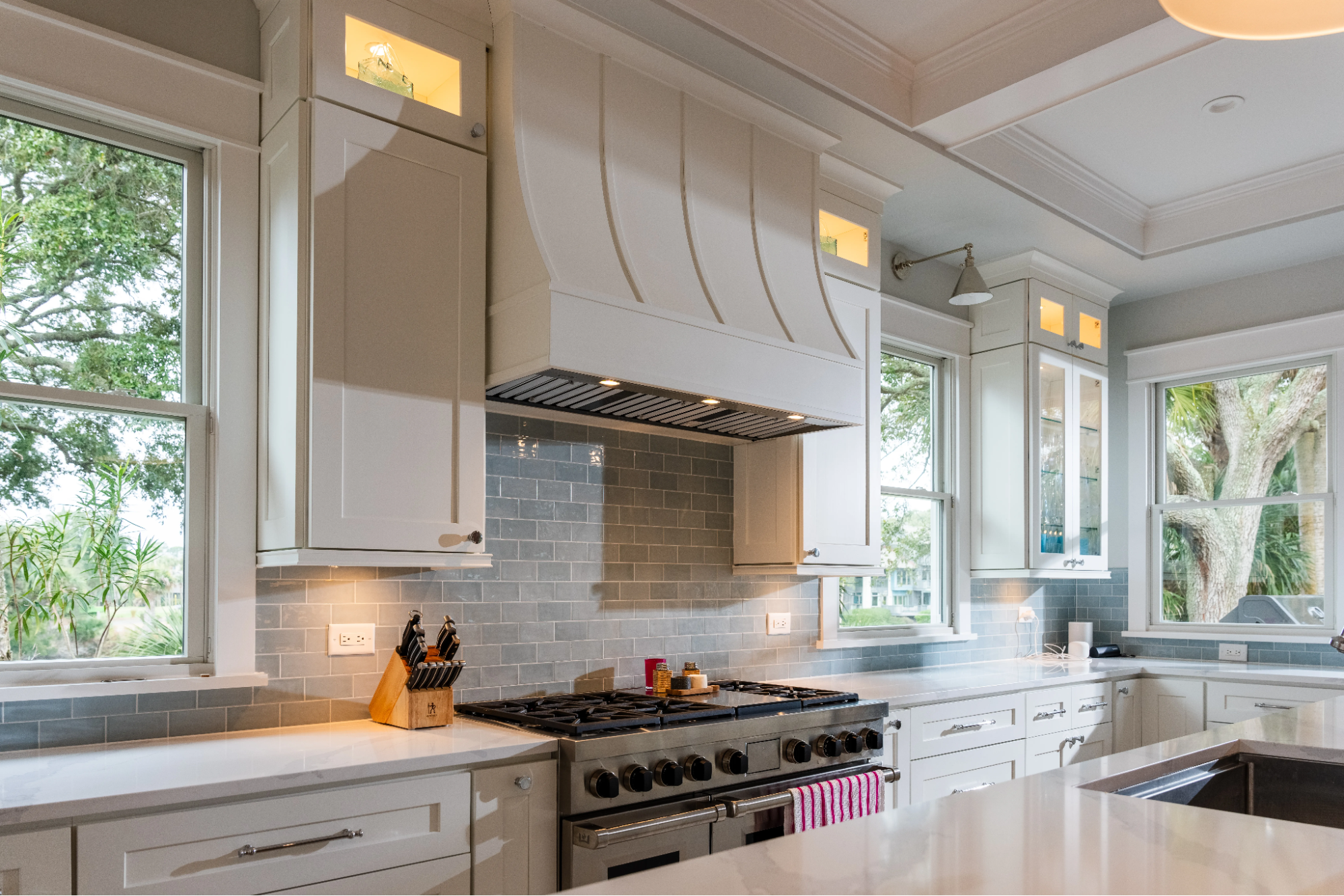
Grease + steam + heat can weaken cabinet finishes, caulk lines, paint adhesion, and even appliance electronics over time. If you’re also updating layout, consider aligning ventilation with your home’s style — our guide to kitchen designs for common Woodlands home types helps you plan the hood, ducting, and cabinet lines as one cohesive system.
Types of Kitchen Ventilation Systems (Explained)
1) Ducted (vented) range hoods — best for most Woodlands homes
A ducted hood vents air directly outside. In humid environments, this is typically the strongest long-term solution because it removes moisture and pollutants instead of sending them back into the kitchen.
Pros:
- Best at clearing heat, smoke, grease, and moisture
- Helps reduce long-term cabinet and finish wear
- Usually quieter when properly sized and ducted
2) Ductless (recirculating) range hoods
These filter air (often with charcoal) and recirculate it back into the room.
Where they fall short in humid climates: they don’t remove moisture, and filters need consistent replacement to stay effective.

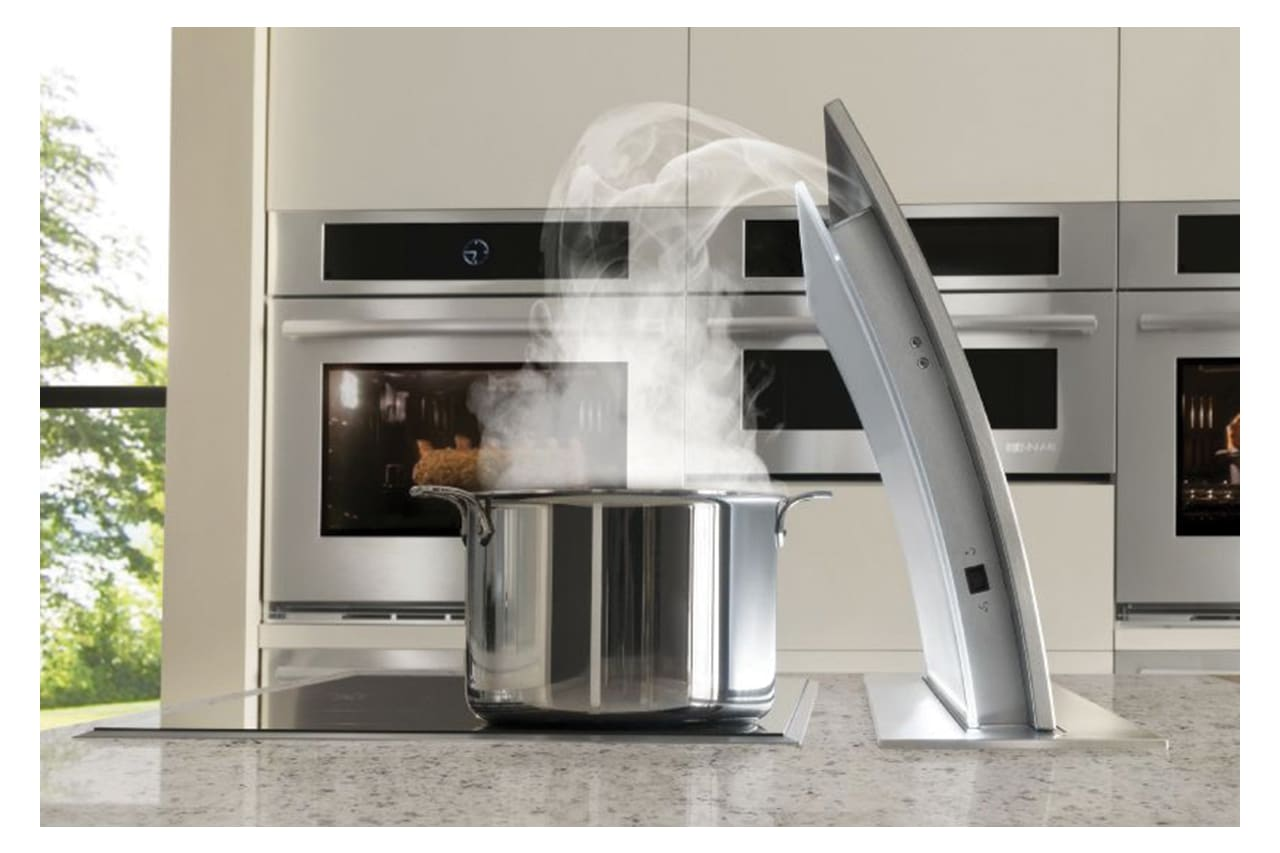
3) Downdraft systems (often used on islands)
Downdrafts pull air downward behind the cooktop. They can help in specific layouts, but steam and heat naturally rise — so performance can be limited, especially for frying or searing.
4) Make-up air (when the hood is powerful)
When you install a high-CFM hood, you may also need a make-up air strategy so the home can “replace” the air being exhausted. Without it, you can create negative pressure that impacts comfort and HVAC performance. This is one reason it helps to plan ventilation as part of a full kitchen scope with an experienced local team.
How Much CFM Do You Actually Need?
CFM (cubic feet per minute) is the airflow capacity of your hood. In real homes, the “right” number depends on cooking style, the cooktop, and how well the duct is designed.
- Light cooking (minimal frying): 250–400 CFM
- Standard family cooking: 400–600 CFM
- Frequent frying / searing / aromatic cooking: 600–900 CFM
- High-BTU professional-style gas ranges: 900–1200+ CFM
In many Woodlands homes, a 600–900 CFM ducted hood performs well — but only when the duct run is short, sized correctly, and kept as straight as possible. If your hood is loud or feels weak, the problem is often the duct layout, not the hood itself.
Common Kitchen Ventilation Problems in The Woodlands
1) Grease film on cabinets
A sticky film on cabinet doors and crown molding usually means the hood is undersized, installed too high, has clogged filters, or the duct run has too many bends. If cabinets are already showing wear, compare notes with kitchen cabinet durability in The Woodlands.
2) Condensation on windows & walls
Condensation during or after cooking is a clear sign steam isn’t being exhausted effectively. In humid conditions, this becomes a long-term moisture issue rather than a one-time annoyance.
3) Persistent cooking smells
Lingering odors often point to recirculating-only operation, weak suction, or poor duct design. If you want a full cleanliness + odor plan, see keeping your kitchen clean, fresh & odor-free.
4) Mold risk and moisture damage
Mold behind cabinets or staining near corners is a serious red flag. Use the hood consistently and address moisture sources early — the CDC’s guidance is a helpful reference: CDC mold guidance.
Best Practices for a Properly Ventilated Kitchen
These best practices make a noticeable difference in real Woodlands kitchens:
- ✔ Choose a ducted hood whenever possible
- ✔ Use properly sized ducting (often 6–8 inch for mid-to-high CFM systems)
- ✔ Install at the manufacturer’s recommended height
- ✔ Keep duct runs short and straight (fewer elbows = better airflow)
- ✔ Clean metal filters monthly (more often for heavy cooking)
- ✔ Run the hood while cooking and for ~10 minutes after
ENERGY STAR notes that proper installation and correct use significantly impacts performance: ENERGY STAR recommendations.
Ventilation Upgrades That Work Best in The Woodlands
If you’re remodeling or replacing your hood, these upgrades tend to work especially well in Woodlands homes:
- 600–900 CFM ducted range hoods: strong performance for frequent cooking
- Ceiling-mounted island hoods: good for open layouts with large islands
- Cabinet-integrated hoods: clean look in transitional/modern designs
- Exterior wall/roof venting: better exhaust vs. long attic runs
- Smart hoods: auto-adjust speed based on heat/steam
The best results happen when ventilation, layout, cabinetry, and lighting are planned together. If you’re mapping a full project, start with kitchen remodeling services in The Woodlands and work with a remodeling contractor in The Woodlands who can align hood sizing with duct design, cabinet lines, and your cooking style.
You can see how ventilation, layout, and material choices work together in this kitchen remodel , where proper hood planning, improved airflow, and moisture-aware design help protect cabinets and finishes while making the space more comfortable to cook in every day.
Maintenance Checklist for Ventilation Systems
Even the best hood won’t perform if filters and vents are neglected. Use this checklist to keep airflow strong:
| Task | Recommended Frequency |
|---|---|
| Clean metal mesh / baffle filters | Every 30–45 days |
| Replace charcoal filters (ductless units) | Every 2–3 months |
| Inspect duct + exterior vent cap for buildup/blockage | Every 6–12 months |
| Wipe hood canopy + underside | Monthly |
| Deep clean fan housing (as needed) | Every 3–6 months |
If you’re doing a larger refresh, pairing ventilation maintenance with a smarter cleaning routine helps too — see common kitchen cleaning mistakes Woodlands homeowners make.
Final Thoughts
Kitchen ventilation is one of the most important — and most overlooked — systems in a healthy home. In The Woodlands, humidity makes the stakes higher: grease buildup accelerates, moisture lingers longer, and long-term damage shows up sooner.
- Cleaner indoor air and fewer lingering odors
- Less moisture stress on cabinets, drywall, and finishes
- Reduced grease film on surfaces and lighting
- Better comfort during high-heat cooking
- A kitchen that stays “newer” for longer
If you’re planning a ventilation upgrade as part of a remodel, we can help you design the hood, ductwork, and layout as one system. Start with kitchen remodeling in The Woodlands, or explore interior remodeling if your project includes cabinets, lighting, and finishes.
If you’re choosing a remodeling contractor in The Woodlands for planning, reach out to The Woodlands general remodeling contractor
Choosing the right contractor matters. Reach out to Remodeling contractors The Woodlands & nearby areas like Spring, Conroe, Tomball, and Magnolia.