

Introduction
Texas homeowners are feeling it — longer summers, higher utility bills, and kitchens that heat up fast when ovens, dishwashers, and afternoon sun all collide at once.
Electricity demand in Texas continues to rise due to population growth, extreme heat waves, and increased air-conditioning usage. During peak summer months, many households see electric bills jump 25–40% compared to spring or fall. When temperatures stay above 95°F for weeks, your kitchen can easily become the hottest room in the house.
That's why energy-efficient kitchen remodeling in Texas isn't just about being eco-friendly — it's about saving real money, improving comfort, and protecting your home from extreme climate stress.
If you're planning a remodel, working with professionals who understand Texas climate conditions makes a measurable difference. Our expert kitchen remodel services are built around performance as much as design, and our kitchen remodeling services in The Woodlands are specifically tailored to the heat, humidity, and cooling demands of this region. For a team that coordinates every detail from permits to final walkthrough, our remodeling contractors in The Woodlands bring the local expertise your project deserves.
This guide breaks down exactly what Texas homeowners should upgrade, how much it costs, and how quickly you can expect to see savings.
Why Energy Efficiency Matters More in Texas Homes
Texas presents three unique energy challenges:
- Extreme heat exposure
- High humidity in many regions
- Long cooling seasons (6–8 months of A/C usage)
Kitchens generate heat internally through:
- Ovens and cooktops
- Dishwashers
- Refrigerators
- Lighting
- Poor insulation
- Direct sun exposure through windows
If your kitchen remodel ignores energy performance, you may unknowingly increase cooling costs. This is especially true in The Woodlands and surrounding areas where summer heat is relentless and poorly planned kitchens force HVAC systems into longer, more expensive cycles. Our broader guide on energy-efficient remodeling ideas for The Woodlands homes covers how this applies across the entire house, not just the kitchen.
The goal is simple: reduce heat gain, reduce appliance load, improve airflow, improve insulation, and lower your bill.
1. Energy-Efficient Appliances Built for Hot Climates
In Texas, appliances must do two things:
- Use less electricity
- Produce less waste heat
Refrigerators
Older refrigerators (10+ years) can use 700–1,200 kWh per year.
Modern ENERGY STAR models use 400–500 kWh per year.
Savings Example:
Electricity cost: ~$0.14 per kWh (varies by plan)
Old fridge: 1,000 kWh = $140/year
New fridge: 450 kWh = $63/year
Annual savings: ~$77
10-year savings: ~$770
That's just one appliance.
Induction Cooktops vs Gas or Electric
Induction cooktops are gaining popularity in Texas because they:
- Transfer heat directly to cookware
- Waste less ambient heat into the kitchen
- Keep the kitchen noticeably cooler during cooking
- Cook faster than traditional methods
- Reduce A/C load by generating less residual heat
Induction is about 85–90% efficient, compared to:
- Gas: 40–55%
- Electric coil: 65–70%
In summer months, less heat leakage means less strain on your cooling system — a compounding benefit that adds up across the entire season. You can see how appliance selection and kitchen design work together in our Spring kitchen remodel project, where performance upgrades were incorporated alongside the full layout redesign.
Energy-Efficient Dishwashers
Modern dishwashers use:
- 3–4 gallons of water per cycle
- As little as 240 kWh annually
Older units can use:
- 6–10 gallons per cycle
- 400+ kWh annually
Switching saves water, energy, and water heating costs. In Texas, where water conservation is also increasingly important, this double benefit carries real weight.
Proper Ventilation Matters
A powerful, properly vented range hood prevents:
- Heat buildup during cooking
- Humidity accumulation that taxes HVAC
- Mold growth behind cabinets
- HVAC overload from unvented cooking moisture
Minimum recommendation: 300–600 CFM vented to exterior. Avoid recirculating hoods in Texas kitchens — they trap heat and humidity inside. For a detailed breakdown of ventilation requirements specific to this region, read our guide on kitchen ventilation in The Woodlands: preventing grease and moisture damage.
2. LED Lighting: Cooler, Brighter, Cheaper
Lighting may seem small, but in Texas heat, every watt counts.
Incandescent vs LED
Incandescent bulb: 60 watts
LED equivalent: 8–10 watts
If your kitchen has:
- 12 recessed lights
- Used 5 hours/day
Old setup: 60W × 12 × 5 hrs = 3.6 kWh/day = ~1,314 kWh/year
LED setup: 10W × 12 × 5 hrs = 0.6 kWh/day = ~219 kWh/year
Annual savings: ~1,095 kWh = ~$150/year
Plus:
- LEDs emit far less heat, reducing cooling demand during peak summer months
- Longer lifespan (15–25 years) reduces replacement costs
- Consistent light quality that doesn't degrade with heat exposure
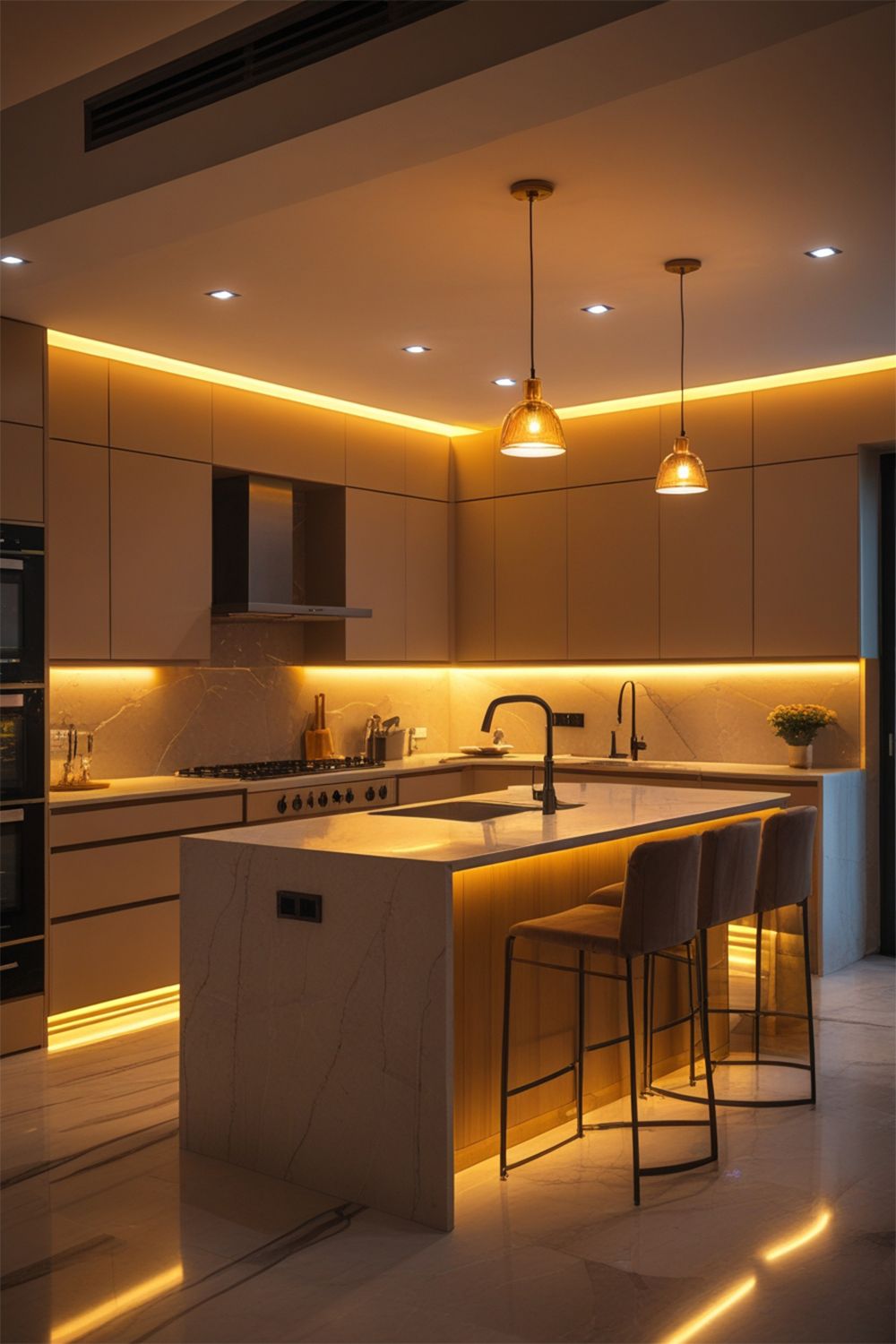
Under-cabinet LED strips are especially popular in Texas remodels because they improve task visibility, use minimal energy, and add a modern aesthetic that works well across kitchen styles. For how LED and modern design trends work together, see our article on modern kitchen design trends Texas homeowners are choosing in 2026.
3. Insulation Improvements During Kitchen Remodel
When walls are opened for remodeling, it's the perfect time to improve insulation — and one of the most cost-effective windows you'll have to do so without paying additional access costs.
Common Problems in Older Texas Homes
- Minimal wall insulation in exterior-facing kitchen walls
- Poor attic insulation above the kitchen ceiling
- Air leaks around cabinets and plumbing penetrations
- Unsealed gaps where duct chases pass through conditioned space
Recommended Upgrades
- Spray foam insulation at penetrations and hard-to-reach gaps
- High-R-value batt insulation in exterior walls
- Sealed air barriers before insulation is added
- Attic insulation above the kitchen if not already upgraded
Why This Matters in Texas
Heat enters through the attic, exterior walls, and duct leakage. Improving insulation can reduce cooling costs by 10–20% annually. If your annual cooling bill is $2,400, a 15% improvement equals $360/year — which adds up quickly over a 10-year horizon. For a comprehensive look at how materials and insulation choices affect long-term performance in this climate, read our guide on choosing the right materials for humid Texas weather.
Many homeowners who remodel kitchens in areas like Conroe address insulation while updating layout and cabinetry — a smart combination that maximizes the value of having walls open during construction.
4. Smart Thermostats & Zoning
Smart thermostats are particularly useful in Texas because they adjust cooling based on usage patterns, reduce energy waste during peak pricing hours, and optimize performance during extreme heat events that push systems to their limits.
Typical savings: 8–15% annually on cooling. If cooling costs $2,400 per year, a 10% reduction equals $240/year.
Advanced remodels also include:
- Zoned cooling that isolates the kitchen as a heat-producing space
- Dedicated kitchen return vents for better humidity removal
- Balanced airflow systems that prevent heat from migrating to adjacent rooms
This prevents the kitchen from overheating during cooking hours and reduces the load placed on the whole-home cooling system. For a broader look at how smart controls fit into a full home upgrade sequence, read our ENERGY STAR home upgrade guide for The Woodlands. Homeowners upgrading kitchens in Spring often combine layout changes with these airflow improvements for maximum comfort impact.
5. Window Upgrades for Texas Sun Exposure
Texas sun is intense. West-facing kitchens suffer most — afternoon solar heat gain through inadequate windows can raise kitchen temperatures by 10°F or more, forcing the HVAC to work significantly harder during the hours when grid electricity is most expensive.
Problem
Single-pane or old double-pane windows allow:
- Significant heat gain during peak afternoon hours
- UV damage to cabinets, flooring, and countertops
- Increased HVAC load that compounds throughout the cooling season
Solution
Install:
- Low-E coated glass rated for Texas solar conditions
- Double or triple pane windows with argon fill
- Solar heat gain coefficient (SHGC) under 0.30 for west and south exposures
- Proper flashing and sealing to eliminate air infiltration at the frame
Savings Impact
Energy-efficient windows can reduce heat gain by 25–40%. If cooling costs $2,400 annually, that represents a potential reduction of $300–$600/year. Additionally, cabinets last longer, flooring fades less, and interior comfort improves dramatically. For more detail on window upgrade decisions and when they deliver the best return, see our article on window and door upgrades that make a big impact.
Homeowners in Tomball updating kitchens often prioritize solar-resistant window systems alongside cabinetry upgrades — you can see how that combination works in our Tomball kitchen remodel project.
6. ENERGY STAR Appliances: Real Numbers
ENERGY STAR appliances are independently certified to use less energy than standard models. In a Texas kitchen where appliances run constantly and cooling demand amplifies every watt of heat generated, these certifications translate into real, measurable savings.
Common annual savings per appliance:
- Refrigerator: $70–$100
- Dishwasher: $35–$50
- Induction cooktop: indirect A/C savings from reduced kitchen heat output
- LED lighting conversion: $100–$150
- Smart thermostat: $150–$250
Combined annual savings: $400–$800 per year. Over 10 years: $4,000–$8,000. That often offsets a significant portion of total upgrade costs — particularly when those upgrades are incorporated into a broader remodel rather than purchased as standalone replacements. For how appliance and material selection affects overall kitchen longevity in this climate, read our guide on the most durable kitchen materials for The Woodlands homes in 2026.
7. Long-Term Savings Calculation Example
Let's break down a realistic Texas remodel scenario.
Remodel Investment:
Appliances: $8,000
LED lighting: $1,200
Insulation upgrades: $2,000
Window upgrades (kitchen only): $5,000
Smart thermostat + zoning: $1,500
Total: ~$17,700
Estimated Annual Savings:
Appliances: $300
Lighting: $150
Insulation: $360
Windows: $400
Thermostat: $240
Total annual savings: ~$1,450
10-year savings: ~$14,500
Add increased home value and resale appeal: often 60–75% ROI on the kitchen remodel overall. Energy-efficient kitchens are increasingly attractive to Texas buyers who understand electricity costs and want homes that are built to perform. For context on what kitchen remodels cost in this area and what factors drive the budget, see our detailed guide on the average cost of a kitchen remodel in Spring TX (2026). Homeowners remodeling kitchens in Magnolia often see strong long-term ROI when combining these upgrades — as demonstrated in our Conroe kitchen remodel project where energy performance was built into the full scope.
8. Tax Incentives & Rebates
Texas homeowners may qualify for a range of incentives that can meaningfully offset the upfront cost of energy-efficient upgrades. These programs change over time, so verifying current eligibility before purchasing or installing is always recommended.
- Federal energy efficiency tax credits for qualifying insulation, windows, and HVAC improvements
- Utility company rebates that vary by provider — many Texas utilities offer incentives for smart thermostats and efficient appliances
- Manufacturer rebates bundled with new appliance purchases
- Seasonal promotional incentives that align with pre-summer demand
Federal incentives often cover insulation upgrades, energy-efficient windows, heat pump systems, and certain appliances. Always consult a tax professional or check current federal programs for updated limits and qualifications. For a broader overview of how to budget and plan for an efficiency-focused remodel, see our guide on how to plan a realistic remodeling budget in The Woodlands.
9. Sustainability Trends in Texas Kitchens
Energy efficiency isn't just about bills — it's about durability in an extreme climate. Texas summers aren't getting cooler, and homes that are designed to handle the heat today will require less reactive spending over the next decade.
Trending features in Texas kitchen remodels include:
- Induction cooking as a standard rather than a premium upgrade
- Sustainable cabinetry materials selected for humidity and heat resistance
- Low-VOC paints and finishes that perform in high-temperature environments
- Energy-monitoring systems that give homeowners real-time usage visibility
- Heat-resistant countertops that hold up under Texas kitchen conditions
- Proper ventilation planning integrated from the start of the design process
Homeowners increasingly want lower monthly expenses, improved indoor air quality, and protection against future utility rate increases. These priorities are driving a shift toward kitchens that are designed to perform, not just to impress. For a look at how these trends are shaping Texas kitchen remodels broadly, see our article on Texas kitchen remodeling trends: what homeowners are upgrading in 2026.
Cost vs Savings Summary
| Upgrade | Average Cost | Annual Savings | 10-Year Savings |
|---|---|---|---|
| ENERGY STAR Appliances | $8,000 | $300 | $3,000 |
| LED Lighting | $1,200 | $150 | $1,500 |
| Insulation | $2,000 | $360 | $3,600 |
| Windows | $5,000 | $400 | $4,000 |
| Smart Thermostat | $1,500 | $240 | $2,400 |
Total Savings Potential: ~$14,500 over 10 years, plus resale premium.
To understand how these costs fit within a full kitchen remodel budget, our guide on how to reduce kitchen remodel costs in Spring TX without sacrificing quality explains where to prioritize investment for the best combined outcome.
Final Thoughts: Beat the Heat & Lower the Bills
Energy-efficient kitchen remodeling in Texas is about more than aesthetics. It's about reducing heat stress, lowering electric bills, increasing long-term durability, improving comfort, and preparing your home for the rising energy costs that Texas homeowners are already experiencing.
A properly planned remodel can save thousands over the next decade while making your kitchen cooler, smarter, and more comfortable year-round. The key is designing for Texas conditions from the start — not adding efficiency upgrades as an afterthought once the layout is already set.
If you're planning a remodel, now is the time to build performance into the design. For a deeper look at how materials, layouts, and appliance choices combine to affect long-term kitchen performance in this climate, read our guide on why kitchens wear out faster in The Woodlands humid climate and how to prevent it and our article on how to extend the life of your kitchen in The Woodlands Texas (2026 guide).
Ready to upgrade your kitchen for real energy savings? Schedule a consultation and see how your home can work smarter against the Texas heat.
Choosing the right contractor matters. Reach out to Remodeling contractors The Woodlands & nearby areas like Spring, Conroe, Tomball, and Magnolia.