

Introduction
A beautiful exterior isn't just about paint color, it's about texture. The most eye-catching homes in The Woodlands combine materials like stone veneer, wood accents, and stucco to create depth, contrast, and a high-end feel that no single-material facade can replicate. Instead of one flat surface, you get layers that catch light differently throughout the day and read as intentionally designed rather than builder-standard.
Discover how professional remodeling services can elevate your home's exterior here: Home Remodeling Services in The Woodlands and explore our full range of solutions here: Home Remodeling Services.
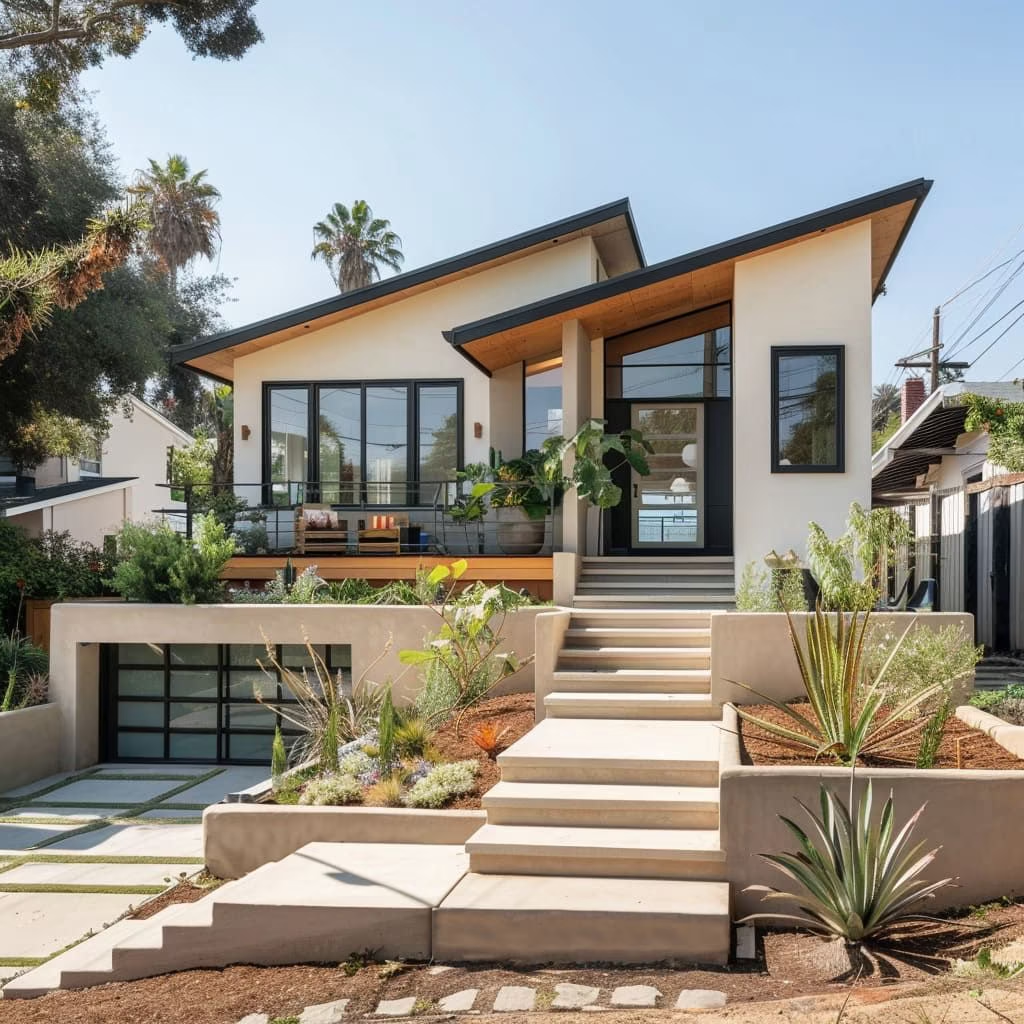
If you're exploring curb-appeal upgrades, this guide breaks down how to mix these materials in a way that looks intentional and timeless including what works best in The Woodlands' humidity, how to plan transitions, and how to keep a mixed exterior looking great over time. For a broader overview of exterior upgrades homeowners are prioritizing right now, see our guide on top exterior remodeling trends.
Why Mixed Materials Are a Top Exterior Trend
Mixed materials create visual movement and reinforce your home's architecture in a way that paint alone cannot achieve. Stone anchors the bottom of the home with visual weight. Wood highlights gables, entries, or accent panels with warmth. Stucco unifies everything with clean, continuous lines. When these transitions are done correctly, the exterior feels custom-built—not like a standard tract home that's been repainted.
The shift toward mixed-material exteriors in Texas suburbs reflects a broader design maturity in the market. Buyers and homeowners have moved past the era of uniform brick or stucco-only facades. They're looking for homes that have architectural character—surfaces that change as you move around the home and create focal points at the entry, garage, and roofline.
Many Woodlands homeowners choose mixed-material facades as part of a larger curb-appeal plan—including windows, doors, trim, and outdoor living coordination. If you're already thinking about a full refresh, our exterior remodeling services in The Woodlands can help you tie the design together from materials to installation details.
Benefits of mixed-material exteriors
- Enhanced curb appeal that looks premium and design-forward—a meaningful differentiator in competitive Woodlands neighborhoods.
- Better architectural balance with materials placed to highlight key structural features rather than cover them uniformly.
- Long-lasting style that won't feel dated quickly—mixed naturalistic materials age gracefully in ways that single-finish facades often don't.
- Personalization to match modern, rustic, farmhouse, or Mediterranean home styles without a full structural change.
- Increased perceived value—mixed materials signal investment and design intention to buyers and appraisers alike.
Material choices should always account for climate performance. For humid Texas weather and long-term durability, also read choosing the right materials for humid Texas weather.
1. Stone: A Bold, Structural Foundation
Stone adds instant presence to a facade. It visually grounds the home, introduces natural texture that changes character across different times of day, and makes an entryway or porch feel more substantial. Even modest stone accents—a column base, a foundation wainscot, an entry surround—can make an entire facade look significantly more expensive.
Where stone works best on the exterior
- Porch columns and bases (one of the highest-impact uses)
- Entryway surrounds and front steps
- Lower exterior sections or wainscoting (the bottom 3–4 feet of the facade)
- Chimneys and fireplace stacks
- Feature walls or accent panels at the garage or gable ends
Natural stone vs. stone veneer
Full natural stone requires significant structural support and a higher installation budget. For most residential exterior projects in The Woodlands, manufactured or engineered stone veneer delivers a comparable look at a fraction of the weight and cost. Modern stone veneer products are remarkably realistic in color variation, texture, and depth—and they're installed over a moisture-resistant substrate with proper flashing, which is critical in humid climates.
If you're pairing stone with siding, make sure the transition lines are clean and properly flashed—especially in wet seasons. See our siding guide: choosing the right siding for humid climates like The Woodlands.
2. Wood: Warm, Inviting Contrast
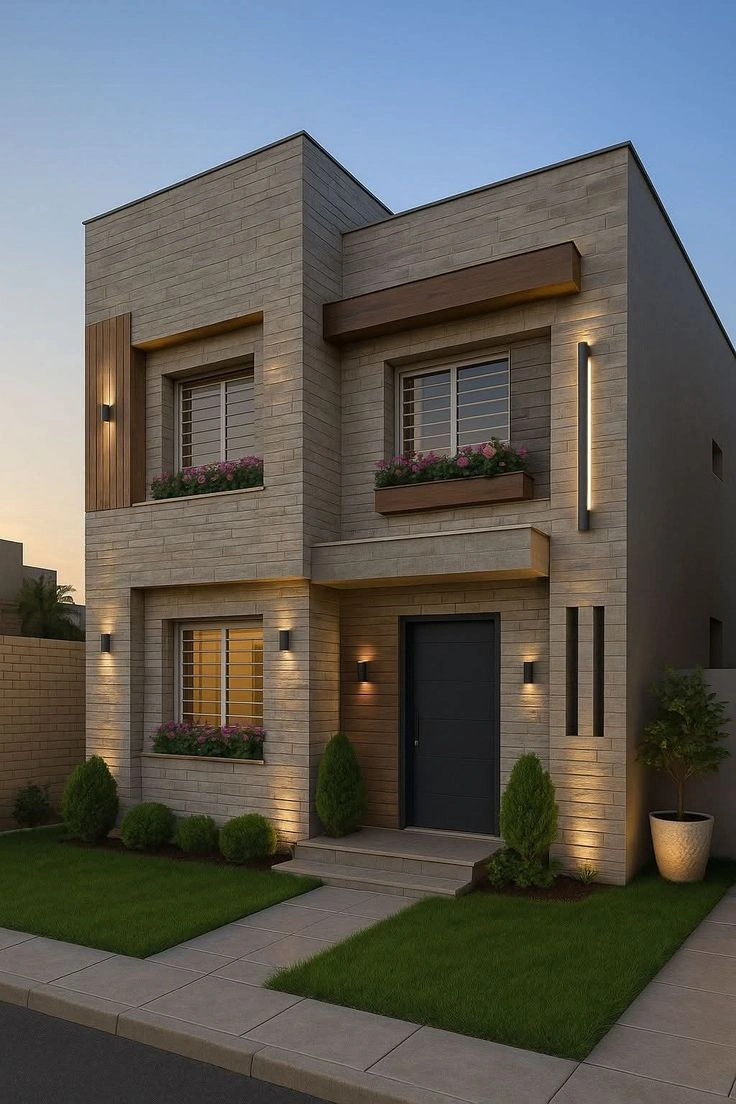
Wood brings warmth to exteriors that might otherwise feel too hard or modern. It pairs beautifully with stone because it softens the overall look and introduces a natural, organic tone—especially around the front door, covered porch areas, and upper gable sections. Where stone reads as permanent and structural, wood reads as welcoming and handcrafted.
Best uses for wood on exteriors
- Accent siding on gables or upper-story sections
- Front entry doors and side doors
- Shutters and decorative trim details
- Horizontal or vertical slat panels on feature walls near the entry or garage
- Covered porch or soffit ceilings (ship-lap or tongue-and-groove)
Natural wood vs. engineered wood
Natural cedar, redwood, and hardwoods can look exceptional on exteriors but require regular sealing, staining, and monitoring for moisture damage—especially in The Woodlands' humid climate. Engineered wood and composite products are increasingly popular in Texas because they reduce maintenance requirements while retaining the warm texture that makes wood attractive as an accent material. They're also more dimensionally stable in humidity, meaning less warping and cracking over time.
If you're designing the exterior as a full experience (not just the facade), you may also like designing outdoor living spaces to make the front and backyard feel equally intentional and connected.
3. Stucco: Smooth, Clean, and Modern
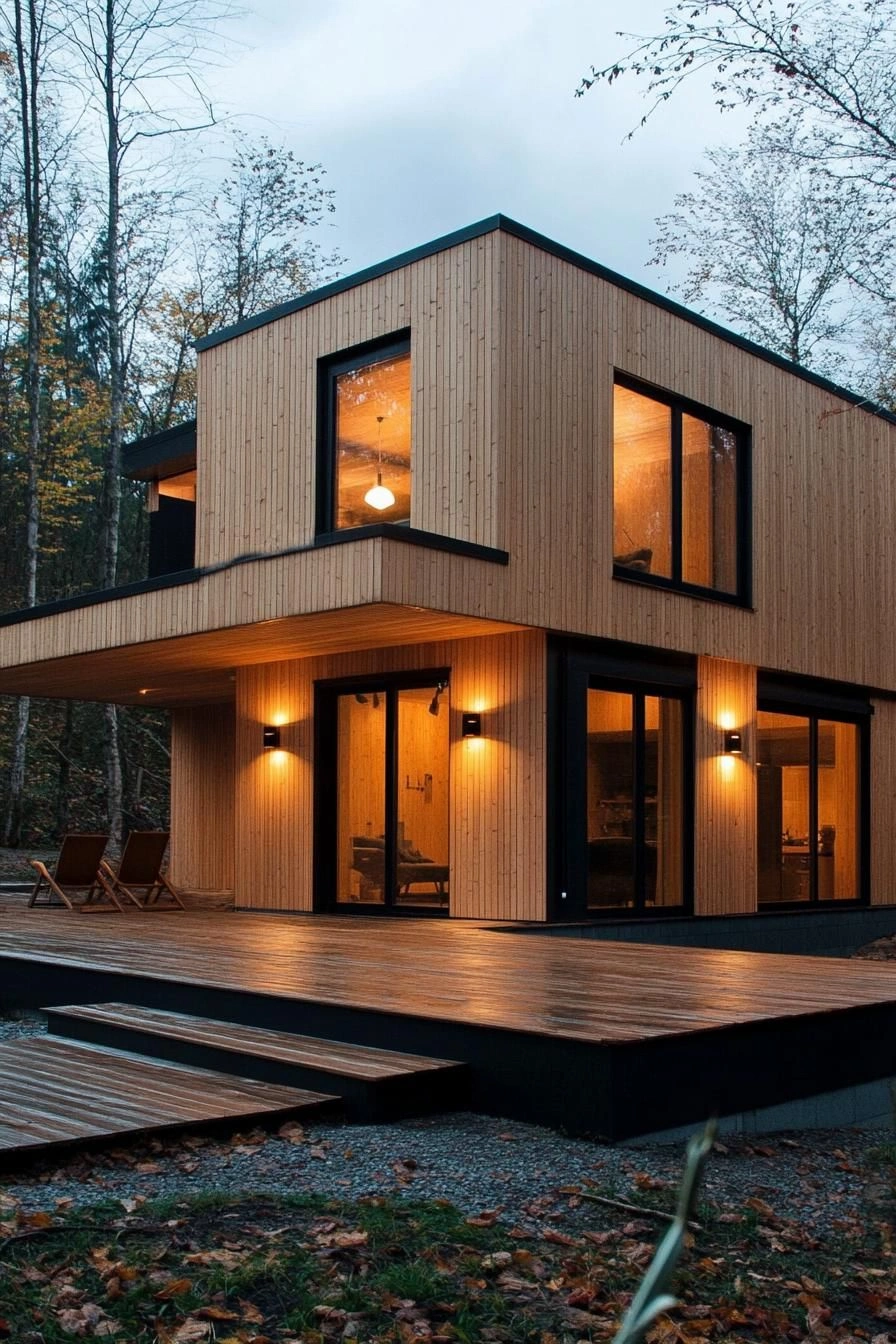
Stucco often acts as the ideal canvas for other materials. Its smooth, continuous finish contrasts beautifully with wood grain and rugged stone—making it a strong base material for modern, Mediterranean, transitional, and farmhouse homes. Because stucco covers large wall areas without visual interruption, it lets stone and wood accents stand out as deliberate design choices rather than competing with background texture.
Why homeowners choose stucco as the primary surface
- Creates clean, uninterrupted lines across large wall areas
- Visually balances rough textures like stone without competing with them
- Works well in warm climates when installed and detailed correctly
- Accepts a wide color palette—from crisp white to warm sand, deep gray, or rich earth tones
- Offers fire resistance and sound dampening as practical performance benefits
What to watch for with stucco in Texas
In humid climates, stucco installation details matter enormously. Proper weather-resistant barrier, control joints, and flashing at windows, doors, and material transitions are not optional—they're what determines whether stucco performs for decades or begins showing moisture problems within a few years. Always verify that your contractor follows ASTM C926 or comparable standards for exterior stucco application.
If you're choosing exterior colors alongside stucco, stone, and wood, get inspiration from color trends for home exteriors so everything stays cohesive across trim, roof tone, and hardware finishes.
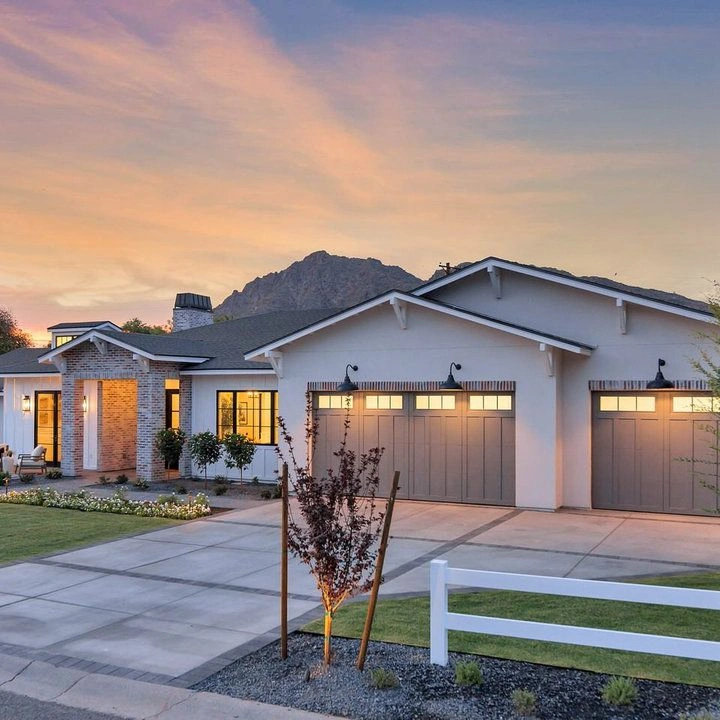
4. How to Mix Stone, Wood, and Stucco Effectively
A great mixed-material exterior comes down to proportion, placement, and detail. The wrong transition lines or inconsistent tones can make a facade feel random and accidental rather than designed. That's why many homeowners work with experienced remodeling contractors in The Woodlands to plan the layout, flashing, trim, and moisture protection before materials are installed.
Use the 60/30/10 rule
This proportion guideline borrowed from interior design translates well to exterior material planning:
- 60% main surface—often stucco or primary siding across the largest wall areas
- 30% secondary material—commonly wood accents or engineered wood panels at gables, soffits, or feature walls
- 10% accent material—stone at columns, base walls, or the entry surround
Staying within these proportions prevents any single material from overwhelming the facade while ensuring each one has enough presence to register as intentional.
Keep a cohesive color palette
- Decide first whether your scheme is warm (beige, cream, tan, brown) or cool (gray, blue-gray, off-white), then keep all materials within that temperature range
- Match stone undertones with roof shingles, trim paint, and wood stains—these four elements seen together in listing photos or from the curb either confirm a cohesive design or reveal a mismatch
- Test material samples together in natural daylight before committing—colors shift significantly between morning and afternoon light
Change materials at natural architectural breaking points
- Use transitions where the architecture already shifts: bump-outs, floor lines, porch posts, gable ends, window headers
- Place stone lower (it has visual weight that reads correctly at grade level), wood in feature areas (gables, entries, soffits), and stucco across the larger planes
- Avoid mid-wall transitions with no architectural justification—they look unfinished and arbitrary
Don't forget the supporting upgrades
- New exterior materials look best when windows, doors, shutters, and trim are also updated and in visual harmony
- For quick high-impact changes that complement a material refresh, read window and door upgrades that make a big impact
Ensure your exterior work complies with local zoning and obtain the necessary permits before beginning. For more information, visit Montgomery County Planning & Development.
For more examples of how designers blend textures without making the exterior feel busy, check out our deeper guide on how to use mixed materials to elevate your home.
5. Popular Mixed-Material Exterior Styles
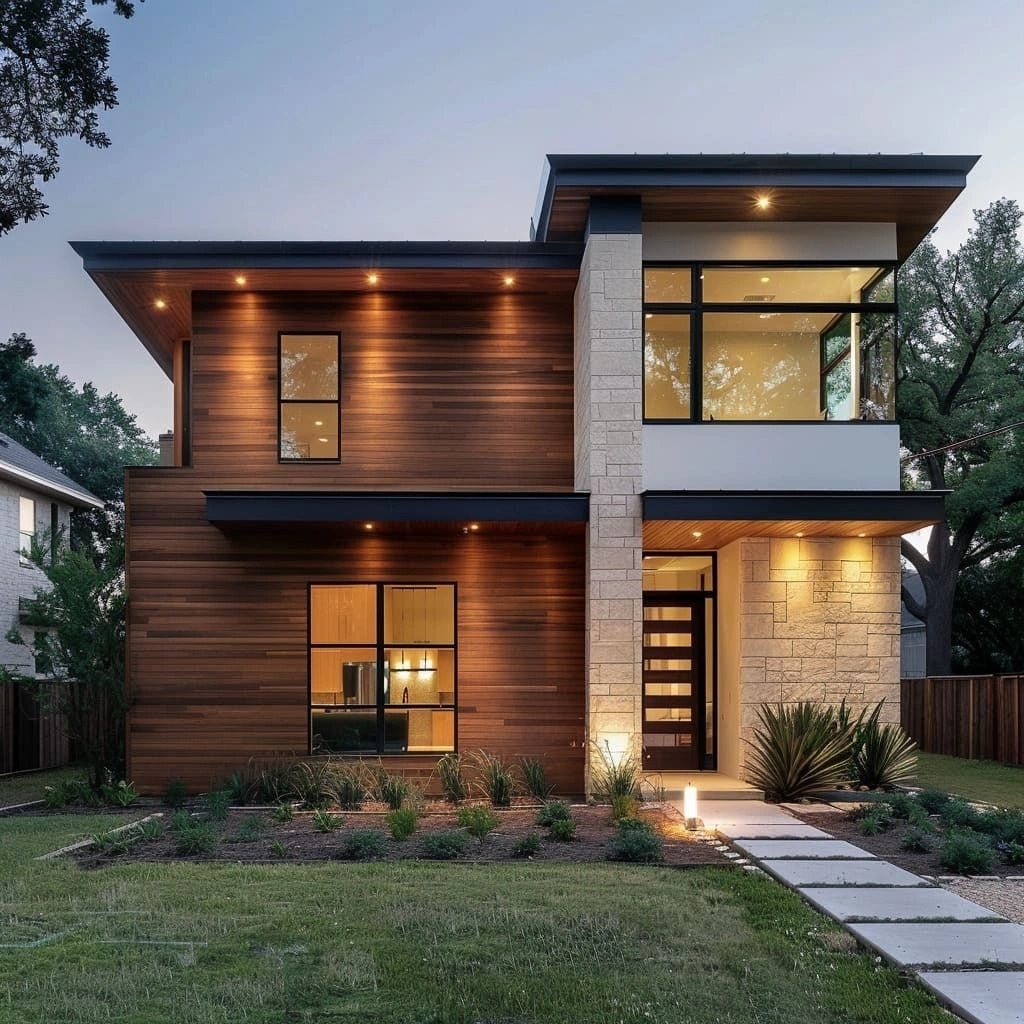
Stone, wood, and stucco can be arranged to match many home styles common in The Woodlands—from modern farmhouse to contemporary, Mediterranean, and rustic lodge. Here are four proven combinations with specific material guidance for each.
Modern Farmhouse
The modern farmhouse look pairs the cleanness of contemporary design with natural material warmth—one of the most requested styles in Woodlands neighborhoods.
- White or off-white stucco or board-and-batten siding across main walls
- Cedar or stained engineered wood accents on gables and entry canopy
- Stone bases on porch columns or along the foundation wainscot
- Dark (black or deep charcoal) window frames and simple trim profiles
- Metal roof accent or standing seam over the porch to complete the style
Contemporary Modern
Contemporary exteriors prioritize clean geometry and minimal ornamentation—stone and wood are used sparingly but deliberately.
- Smooth stucco in soft gray or warm white as the dominant surface
- Wood slats as horizontal or vertical feature panels near the entry (often backlit for evening appeal)
- Dark stone—charcoal, slate, or dark gray veneer—around lower walls or columns
- Minimal trim profiles and flush window frames to maintain clean lines
Rustic Lodge
The rustic lodge style uses heavier material applications and deeper tones—suited to larger homes where the scale can support it.
- Heavy fieldstone or stacked-stone on chimneys, columns, and lower walls
- Deeper wood tones—dark stained beams, board siding, or accent panels
- Earth-tone stucco in warm tan or clay to unify upper-level sections
- Exposed rafter tails and overhanging eaves for additional lodge character
Mediterranean
Mediterranean styling feels especially natural in Texas's warm climate and works well with the region's architectural heritage.
- Warm textured stucco in beige, sand, or terracotta hues as the primary surface
- Neutral limestone or travertine-look stone around entries and base walls
- Wood beams, shutters, and iron hardware details for character and authenticity
- Barrel tile or flat tile roofing to complete the style from roofline to foundation
Looking for a curb-appeal plan that matches your home style and neighborhood? Start with how to boost your home curb appeal in The Woodlands and then build your material palette around it.
6. Material Performance in The Woodlands Climate
The Woodlands' climate is one of the most demanding in Texas for exterior materials. High humidity throughout most of the year, intense summer heat, heavy rainfall, and occasional freeze-thaw cycles create conditions where material selection and installation quality matter significantly more than in drier climates. A mixed-material exterior that looks beautiful on day one needs to be specified and installed with The Woodlands' specific environment in mind.
Stone and stone veneer
Natural and manufactured stone generally perform well in The Woodlands when installed with a proper weather-resistant barrier and correctly flashed transitions. The primary risk area is the grout and mortar joints—in high-humidity environments, organic growth (algae, mold) can develop in porous grout over time. Using a sealer on mortar joints and rinsing stone annually prevents most of this. Avoid installing stone veneer directly over wood framing without a drainage mat—trapped moisture is the leading cause of early failure in stone veneer installations.
Wood and engineered wood
Natural wood is the most maintenance-intensive exterior material in a humid climate. Moisture absorption causes expansion and contraction that eventually leads to paint failure, cracking, and rot—particularly at end grains, horizontal surfaces, and areas with poor drainage. For most Woodlands homes, engineered wood or fiber cement products offer a better long-term choice in wood-accent areas. They provide the same visual warmth with far greater dimensional stability in humidity. If natural wood is preferred, factory-primed products with a field-applied top coat on all six sides (including cut ends) significantly extend service life.
Stucco
Stucco in humid climates requires careful attention to moisture management. Hairline cracks are normal over time, but any crack that allows water behind the stucco layer can lead to mold, rot in the sheathing, and eventually structural damage. Key installation details that protect stucco longevity in The Woodlands: a drainable weather-resistant barrier between stucco and sheathing, correctly sized and placed control joints to manage crack locations, and thorough flashing at all penetrations, windows, and material transitions.
A note on HOA requirements
Many Woodlands villages have deed restrictions that govern exterior material types, color ranges, and sometimes specific material proportions. Before finalizing your mixed-material design, verify your HOA or deed restriction requirements. A contractor experienced in The Woodlands will know which villages have the most specific guidelines and can help you navigate the approval process before work begins.
7. Maintenance Tips for Mixed Materials
Mixed materials look best when the entire exterior ages evenly and is maintained consistently. Neglecting one material while maintaining another creates visible inconsistency that undermines the look of the whole facade. A simple annual routine keeps stone clean, wood protected, and stucco sealed—and catches small issues before they become expensive repairs.
Stone
- Rinse or gently pressure wash annually to remove dirt, pollen, and organic buildup (avoid high-pressure direct spray at mortar joints)
- Apply a penetrating sealer to mortar joints every 3–5 years to reduce moisture absorption and organic growth
- Inspect seams, transitions, and flashing for gaps after major storms—especially where stone meets siding or trim
Wood (natural and engineered)
- Natural wood: seal or stain every 1–3 years depending on sun exposure, product type, and orientation
- Engineered wood: inspect for paint or finish adhesion every 2–3 years; touch up as needed
- Keep sprinklers, mulch, and soil at least 6 inches away from wood surfaces to reduce chronic moisture contact
- Inspect end grains and horizontal surfaces annually—these are the first areas to show moisture damage
Stucco
- Seal hairline cracks early with an elastomeric caulk or stucco patch product—don't wait until cracks widen
- Inspect caulking at windows, doors, and all penetrations annually and replace when it shows cracking or separation
- Refresh paint or finish as needed—typically every 7–10 years depending on exposure, color depth, and product quality
For a broader checklist that helps protect your exterior investment long-term, see maintaining your new exterior.
If you're aiming for sustainable building practices, check out the environmental guidelines for exterior work from the EPA's Sustainable Materials Management for best practices in construction and material selection.
Final Thoughts
Mixing stone, wood, and stucco is one of the most powerful ways to upgrade curb appeal without changing your home's footprint. Done well, it adds depth, personality, and a high-end finish that feels intentional and timeless—and that performs for decades when materials are selected and installed correctly for The Woodlands' climate.
The key is planning before purchasing. Proportion, palette, transition placement, moisture details, and HOA alignment all need to be resolved before materials arrive on site. Homeowners who work through these decisions upfront—ideally with an experienced contractor who knows the area—consistently get better results than those who choose materials first and figure out the installation details later.
To plan a balanced, climate-appropriate design for your home's exterior, talk to our team through the contact page.
If you're choosing a remodeling contractor in The Woodlands for planning, reach out to home remodeling & construction in The Woodlands .
Choosing the right contractor matters. Reach out to Remodeling contractors The Woodlands & nearby areas like Spring, Conroe, Tomball, and Magnolia.