

Introduction
If you're remodeling with resale in mind or simply investing in your forever home, the kitchen layout is where real value is created in Texas homes. Finishes fade, appliance trends change, and cabinet colors cycle in and out of fashion. But a well planned kitchen layout shapes how a home functions and feels for decades.
In 2026, Texas real estate remains one of the most competitive and resilient markets in the country. Even with shifting interest rates and more cautious buyers, one thing hasn't changed: buyers in Texas prioritize kitchens more than almost any other space. The layout how the kitchen connects to the rest of the home, how people move through it, and how much it supports entertaining and daily life drives that emotional response more than any surface upgrade can.
If your goal is long-term investment, working with experienced expert kitchen remodelers can ensure structural changes are done correctly and safely and that the layout you choose works with your specific home's footprint, not just a generic floor plan.

Because each Texas community has its own mix of home styles, lot sizes, and construction eras, kitchen remodel planning often benefits from local expertise. Homes in The Woodlands, Conroe, Spring, Tomball, and Magnolia range from older ranch layouts to newer open-concept builds, which means layout strategies must be tailored to the structure of each home. Homeowners exploring renovation options can review kitchen remodeling services in The Woodlands, kitchen remodeling services in Conroe, kitchen remodeling services in Spring, kitchen remodeling services in Tomball, and kitchen remodeling services in Magnolia to see how different layouts are adapted for local homes. Many families also consult experienced remodeling contractors in The Woodlands, Texas to ensure structural planning, workflow improvements, and material selections are handled correctly from the start.
Texas Real Estate Trends in 2026: Why Kitchen Layout Matters More Than Ever
Texas homes are still known for larger floor plans, expansive suburban developments, open living spaces, and entertaining-friendly layouts. But buyers in 2026 are more analytical than ever. They're comparing homes on Zillow and Redfin before they ever visit in person, which means listing photos of dated, segmented kitchens are filtering out interest before a showing even happens.
Modern Texas buyers ask questions that go beyond aesthetics:
- Does this layout feel modern and efficient, or does it feel like it was designed 20 years ago?
- Can I see the living area from the kitchen while cooking?
- Is there enough space for an island with seating?
- Will this kitchen work for a family of four and still be great for hosting?
Many 15–25 year-old Texas homes were built with segmented kitchens—separate dining rooms, tight prep areas, limited or no islands, and walls that closed off the kitchen from living spaces. Those layouts feel dated in today's market and can significantly reduce showing traffic and offer quality.
Remodeling the layout (not just the finishes) is what truly drives increased home value. A cosmetic refresh on a poorly planned kitchen still leaves buyers wondering "how do I actually use this space?" A layout remodel eliminates that friction entirely. Real renovation examples like the Spring kitchen remodel project and the Tomball kitchen remodel project show how reconfiguring cabinetry, improving traffic flow, and opening the kitchen to surrounding living areas can transform how a home functions day to day.
Most Popular Kitchen Layouts in Texas Homes
Texas homes vary from traditional two-story suburban builds to expansive one-story ranch styles. These five layouts consistently perform best in both livability and resale—and the right choice depends on your specific footprint, family size, and renovation budget.
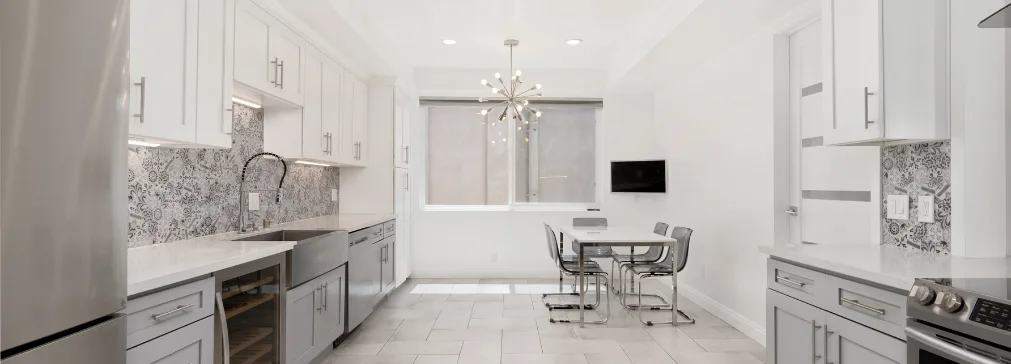
1. L-Shaped Kitchen Layout (Texas Favorite for Versatility)
The L-shaped kitchen is the most versatile layout for Texas homes because it works across a wide range of footprints—from modest 150 sq ft kitchens to sprawling 300+ sq ft open-concept spaces. It places work surfaces along two adjacent walls, naturally creates a functional work triangle, and opens the remaining floor space for an island and traffic flow into living areas.
Why it works in Texas homes:
- Fits both medium and large floor plans without wasted corners
- Encourages natural traffic flow between kitchen and living areas
- Easily accommodates island addition without feeling crowded
- Opens naturally into dining and living zones
In suburban Texas builds, converting a closed U-shape or partial galley into an L-shape with an island often improves daily usability significantly—more accessible storage, better guest interaction, and a more current aesthetic. This layout is one of the safest investments when maximizing resale ROI is the goal.
Buyers love it because: it feels open without sacrificing cabinet storage, maintains a strong work triangle, and is equally suited to families and entertainers.
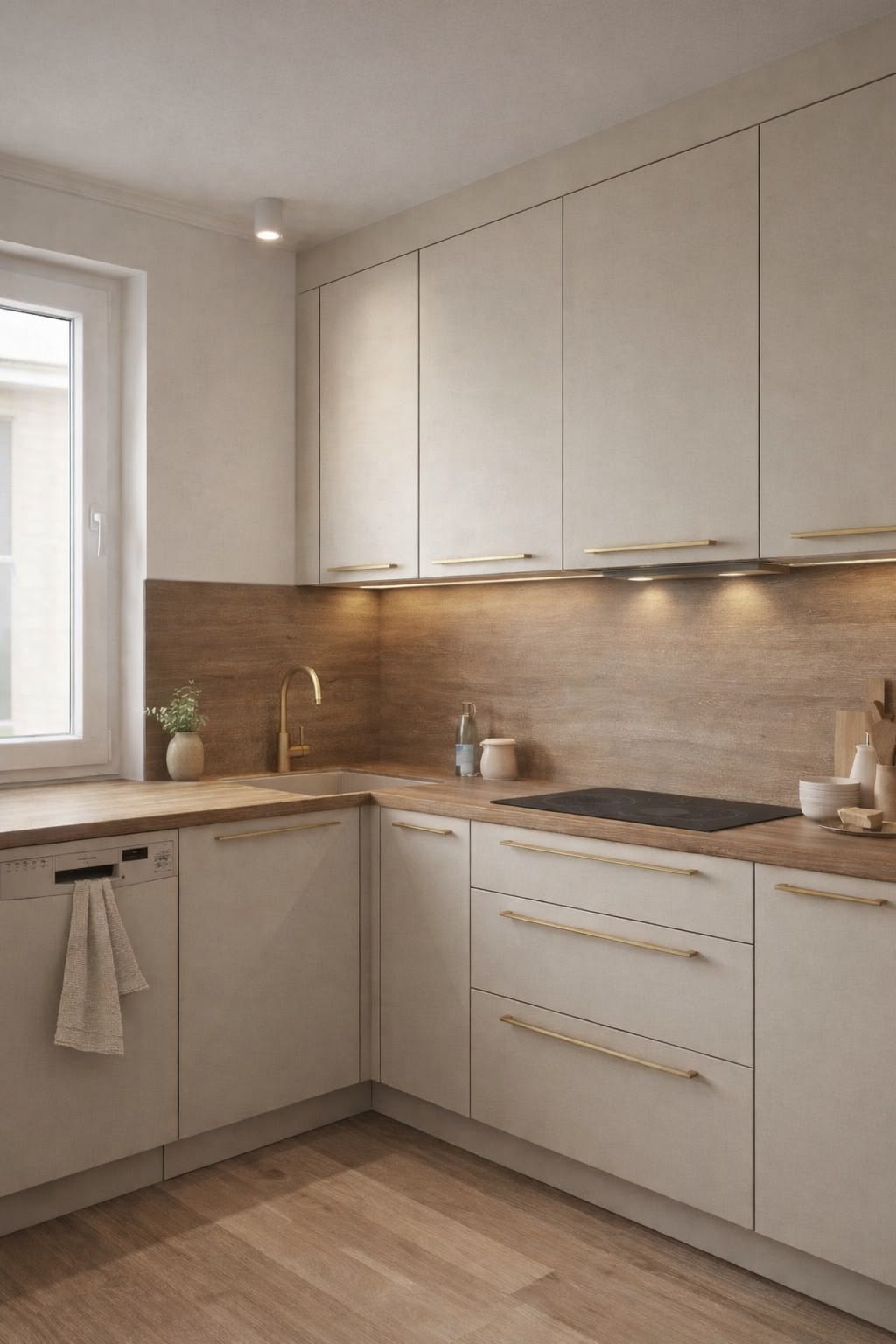
2. U-Shaped Kitchen Layout (Maximum Storage Performer)
The U-shaped layout thrives in larger Texas homes where square footage supports three walls of cabinetry and counter space. It provides the most storage capacity of any layout and the most linear counter space—making it a strong choice for serious cooks and families with large kitchens.
Strengths:
- Maximum cabinet and pantry capacity
- Excellent continuous counter space for prep and serving
- Strong workflow efficiency with appliances on three sides
The key distinction in 2026: modern buyers prefer a U-shape that's open or hybrid—not fully enclosed. A fully closed U-shaped kitchen with a narrow entry feels isolating and dated. An open U-shape hybrid (removing or shortening one leg, adding a peninsula or half-wall) performs dramatically better at resale because it maintains storage while eliminating the "trapped" feeling buyers dislike.
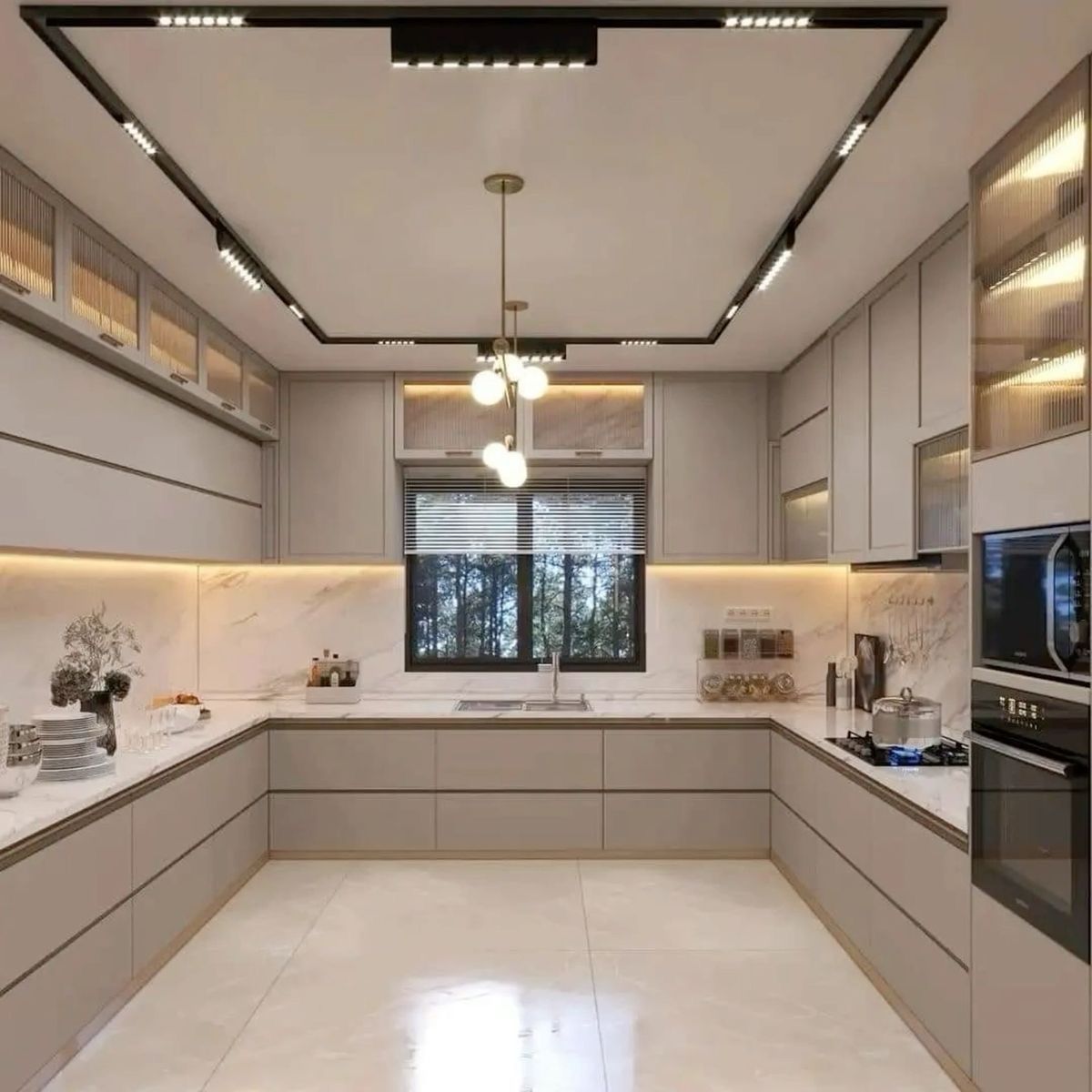
3. Open-Concept Kitchen Layout (High-Impact Value Booster)
Open-concept remains the dominant layout preference in Texas suburban homes, and for good reason. Texas homes often have the square footage to support it, families here entertain frequently, and the combination of high ceilings and natural light from large windows is amplified dramatically when walls come down between kitchen and living areas.
Why open-concept wins in Texas:
- Increases perceived square footage without adding physical space
- Improves sightlines—especially valuable for parents monitoring children
- Allows natural light to travel deeper into the home
- Boosts buyer appeal dramatically during showings
- Supports the Texas entertaining lifestyle better than any other layout
Removing a non-load-bearing wall between kitchen and living area is one of the single highest-ROI structural changes available in a Texas kitchen remodel. For a deeper look at the tradeoffs, see: open-concept vs defined spaces.
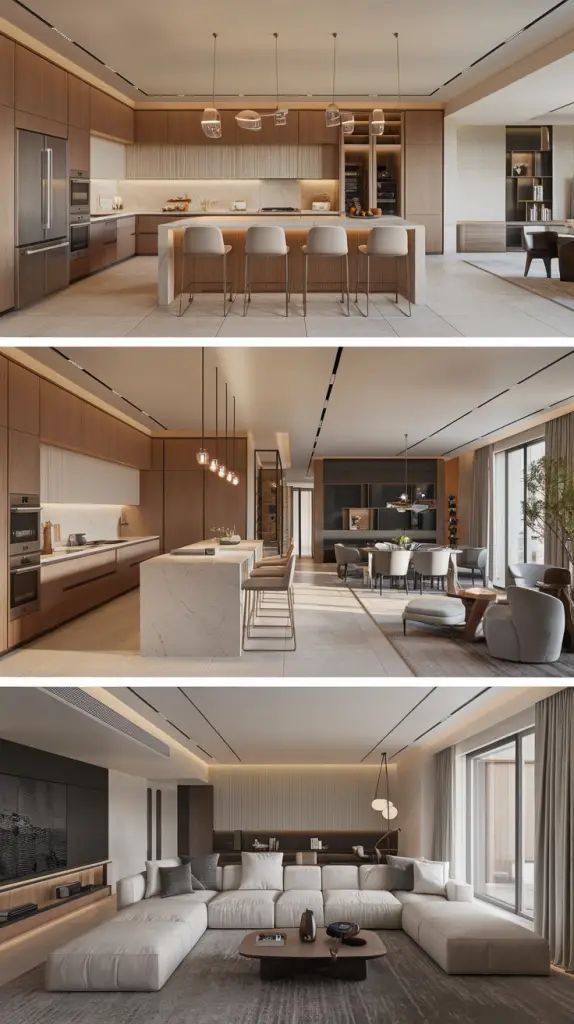
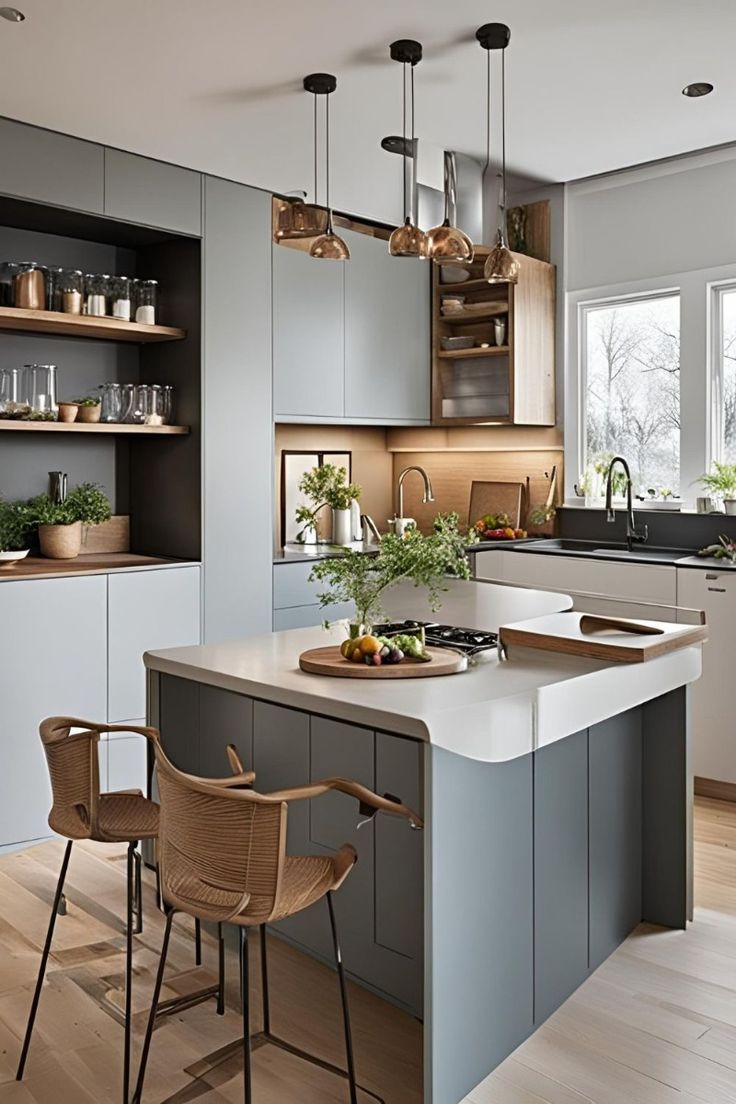
4. Island-Focused Kitchen Layout (Top Resale Performer)
In Texas, the island is no longer optional—it's expected by the majority of buyers, particularly in homes above $400K. The island functions as command center, seating area, prep surface, and social anchor all at once. A kitchen without a functional island can feel incomplete to buyers who have toured homes where one exists.
What Texas buyers look for in an island:
- Seating for 3–5 along one side
- Wide prep surfaces (minimum 24" depth on the working side)
- Integrated storage (drawers, cabinets, specialty pullouts)
- Power outlets and USB ports at counter height
- Under-counter appliance space (microwave drawer, wine fridge, trash)
A large, well-designed island adds perceived luxury even when other finishes are mid-range. It's one of the most cost-effective upgrades in terms of buyer reaction per dollar spent.
5. Galley Kitchen (Low ROI Unless Expanded)
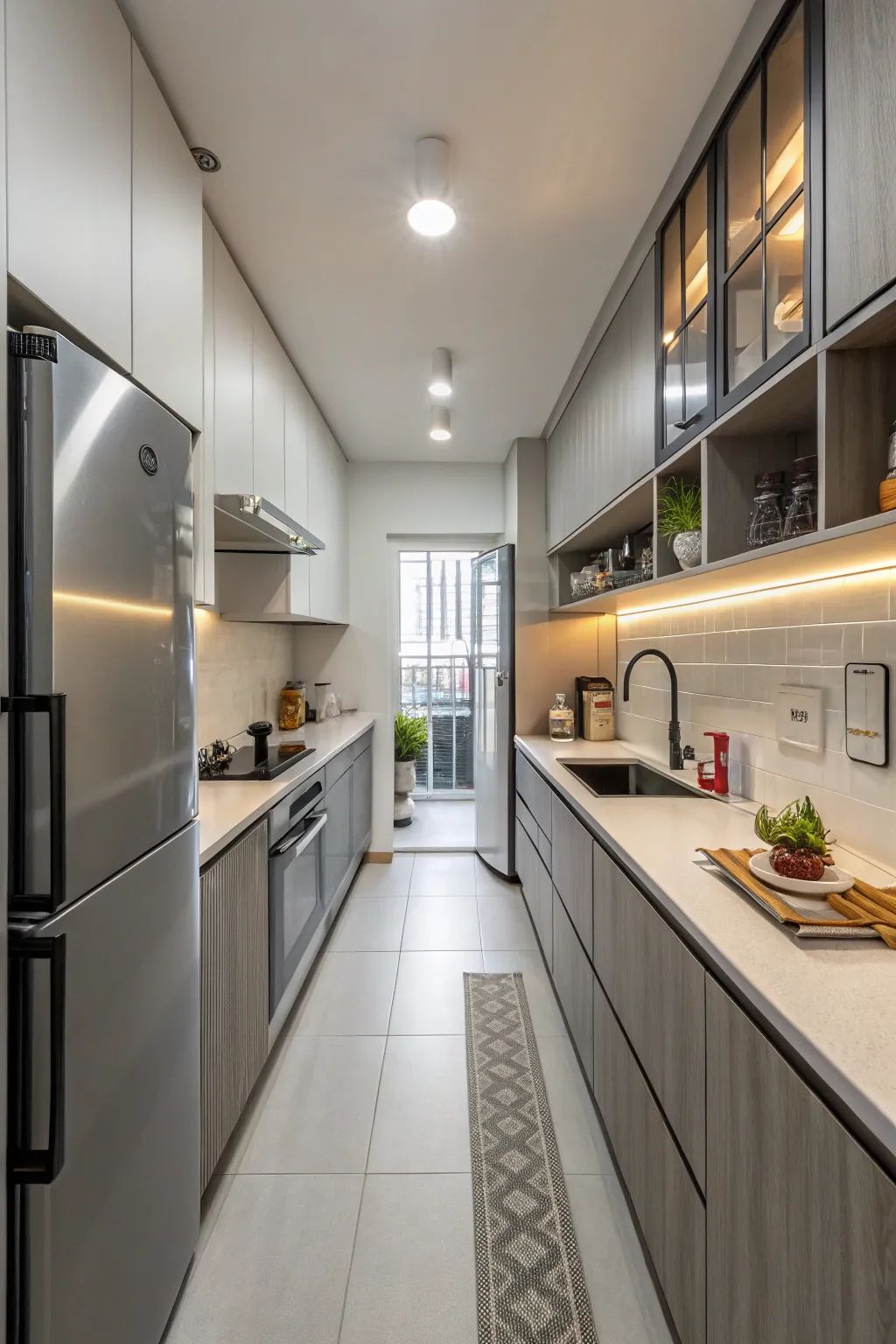
Galley kitchens exist in older Texas homes and townhomes, but they rarely appeal to modern buyers—particularly in a market where competing homes offer open concepts and islands. The narrow corridor format limits social interaction, restricts movement when multiple people are in the kitchen, and photographs poorly in listing photos.
Converting a galley into an L-shape, open layout, or island-enhanced design often delivers a dramatic improvement in buyer response—and in many cases, the wall removal involved is less costly than homeowners expect, especially when the wall is non-load-bearing. If the wall is structural, the cost increases, but the ROI of opening the space typically still justifies it in competitive Texas markets.
Which Kitchen Layout Do Texas Buyers Prefer?
Based on buyer behavior patterns in Texas's competitive suburban markets in 2026, the preference hierarchy is clear:
Top performing layouts at resale:
- Open-concept with large island — highest buyer engagement, fastest offers
- L-shape + island — versatile, widely appealing, strong in most price ranges
- Hybrid U-shape (open on one side) — preferred for larger kitchens with maximum storage needs
Across all layout types, Texas buyers consistently prioritize the same functional features:
- Visibility to living room — the ability to supervise children or converse with guests while cooking
- Seating integration — island or peninsula seating that eliminates the need for a separate breakfast nook
- Efficient movement — a work triangle or zone layout that doesn't require walking past guests to access the refrigerator
- Storage depth — cabinets that feel generous, not just adequate
- Natural light — layout that doesn't block windows or create dark prep zones
The "closed kitchen" trend—where the kitchen is intentionally separated from living areas for visual tidiness—is nearly nonexistent in Texas resale. Buyers viewing a closed kitchen in 2026 often immediately ask whether the wall can come down, which signals that the current layout is working against the home's value.
Layouts That Increase Resale Value the Most
Not all layout investments return equally. Here's a simplified ROI comparison based on buyer appeal and typical return in Texas markets:
| Layout Type | Buyer Appeal | Estimated ROI Potential |
|---|---|---|
| Open Concept + Island | Very High | 75–90% |
| L-Shape + Island | High | 70–85% |
| Modern U-Shape (open/hybrid) | Moderate–High | 65–80% |
| Standard Galley (unchanged) | Low | 40–60% |
ROI is influenced by how well the layout change is executed, the overall quality of materials used, and how the kitchen relates to the rest of the home's finishes. A layout improvement paired with mid-range materials often outperforms a cosmetic-only refresh at the luxury tier because layout drives the emotional decision—materials confirm it.
For a broader look at which interior upgrades return the most value in The Woodlands specifically, see: the most valuable interior upgrades for increasing home value in The Woodlands.
Impact of Open-Concept in Texas Suburban Homes
Open-concept kitchens have a measurable impact on how buyers perceive and value a home. When the kitchen connects directly to living and dining areas, several things happen simultaneously:
- Appraisal perception improves — appraisers recognize functional improvements even when square footage hasn't changed
- Natural light distributes further — windows in the living area now illuminate the kitchen, and vice versa
- Social flow increases — the cook isn't isolated; the kitchen becomes part of family life rather than a separate functional zone
- Visual size expands — combined rooms look larger than their actual square footage in person and in photos
In Texas homes with larger footprints, combining kitchen, dining, and living areas feels natural and proportional—not like the walls were removed out of necessity, but like the space was designed that way from the start.
However, open concept must be executed correctly to deliver on its value potential. Done poorly, it can feel chaotic and unfinished. Done correctly, it dramatically enhances value. The key requirements are:
- Proper structural support — load-bearing walls require beams and posts; the engineering must be done correctly
- Consistent flooring throughout — mismatched flooring at the former wall location undermines the visual continuity
- Strategic lighting coordination — the kitchen lighting plan and living room lighting plan must work together
- Defined zones without walls — rugs, island placement, ceiling treatment, and furniture arrangement replace walls as zone dividers
Space Planning for Large Texas Homes
Texas homes are often spacious, but poor planning wastes square footage in ways that are immediately noticeable to experienced buyers. The most common issue in large Texas kitchens is too much empty floor space without functional purpose—a large kitchen that feels underutilized is not a selling point.
Smart space planning standards for Texas kitchens:
- Minimum 42-inch walkways in single-cook kitchens; 48 inches recommended for multi-cook households
- 48-inch clearance around islands on all sides to allow comfortable movement and seating access
- Zoned cooking, prep, and cleanup areas that don't require crossing traffic patterns to move between tasks
- Appliance placement that reduces cross-traffic — refrigerator accessible from outside the work zone; oven adjacent to landing space
Larger Texas homes benefit from additional features that luxury buyers expect as standard in their price range:
- Secondary prep sink — especially useful in large islands, allows two people to work independently
- Walk-in pantry integration — a well-designed walk-in pantry adjacent to the kitchen is a significant selling point
- Beverage stations and coffee bars — dedicated zones for morning routines keep those activities out of the primary work area
- Appliance garages or charging stations — keep countertops clear without sacrificing function
Luxury buyers in Texas expect flow, not just size. A 400 sq ft kitchen with poor space planning is less impressive—and less valuable—than a 250 sq ft kitchen that's been planned intelligently.
Storage Optimization Strategies That Increase Value
Buyers inspect cabinets closely—and they open drawers, pull out doors, and look inside. Storage that feels generous, organized, and intelligent is a meaningful differentiator. Texas kitchens that support large families need storage that actually works, not just storage that looks good in photos.
High-value storage features that buyers respond to:
- Deep drawer bases — four-drawer base cabinets outperform door-and-shelf bases in usability; buyers immediately notice they can access pots and pans without crouching
- Vertical tray dividers — dedicated storage for sheet pans, cutting boards, and serving trays reads as thoughtful and organized
- Pull-out spice racks — integrated into a base or wall cabinet near the range
- Hidden trash and recycling — integrated pull-out systems eliminate countertop clutter and are universally expected at mid-range and above
- Appliance garages — keep toasters, coffee makers, and mixers accessible but out of sight on the countertop
- Tall pantry towers — 84" or 96" pantry-height cabinets signal serious storage capacity and look premium in kitchen design
A great kitchen remodel combines layout and storage planning—not just aesthetics. The best kitchens in Texas's competitive market look beautiful and function beautifully when buyers open every door and drawer. That thoroughness is what turns a showing into an offer.
Layout Change Costs vs. Expected ROI
One of the most common questions homeowners ask is whether a layout change is worth the additional cost compared to a cosmetic refresh. The short answer: for most Texas homes, yes—but the math depends on your current layout's starting point and your home's price range.
| Layout Change | Typical Added Cost | Value Impact |
|---|---|---|
| Remove non-load-bearing wall | $3,000–$10,000 | High — opens concept, dramatically improves showing appeal |
| Remove load-bearing wall (with beam) | $10,000–$25,000+ | High — significant structural project; high ROI in right-priced homes |
| Add kitchen island | $5,000–$20,000 | Very High — universally expected by Texas buyers above $350K |
| Reconfigure galley to L-shape | $8,000–$20,000 | High — transforms buyer perception of space |
| Move sink or range location | $3,000–$8,000+ | Moderate — worthwhile if it corrects a major workflow problem |
Layout change costs are best evaluated in the context of your total project budget. A $10,000 wall removal added to an $80,000 kitchen remodel is a 12% budget increase that can meaningfully affect buyer response. That same $10,000 on a $25,000 cosmetic refresh may not make sense unless the layout change is the primary issue holding back the home's value.
For a full budget planning framework, see: how to plan a realistic remodeling budget in The Woodlands.
Kitchen Layout Mistakes to Avoid in Texas Homes
Avoiding the following mistakes protects your investment and ensures your remodel improves—not hurts—resale value:
1. Oversized Island That Blocks Flow
Islands should be proportional to the kitchen footprint. The minimum clearance on all sides is 42 inches, with 48 inches preferred. An island that's too large creates bottlenecks that make the kitchen feel smaller and harder to use—the opposite of the intended effect. Buyers immediately notice when an island is sized wrong.
2. Removing All Upper Cabinets for Open Shelving
Open shelving is a design trend, not a functional improvement. Removing all upper cabinets dramatically reduces storage capacity and requires constant styling to look good—something buyers realistically can't count on maintaining. A selective approach (open shelving in one zone, retained upper cabinets elsewhere) is far safer for resale.
3. Poor Lighting Zone Planning
Texas kitchens need layered lighting: ambient (recessed or ceiling), task (under-cabinet), and accent (pendants over island). A kitchen remodeled with only overhead lighting creates flat, unflattering light that makes finishes look worse than they are. Lighting is one of the highest-impact finishing details and one of the most commonly underfunded.
4. Ignoring Ventilation
Texas cooking—especially in homes where Tex-Mex and grilling culture is part of everyday life—generates significant grease, smoke, and odor. A range hood that's undersized or improperly ducted will leave these issues in the home. Proper ventilation protects cabinetry, surfaces, and indoor air quality long-term. See:
kitchen ventilation 101 in The Woodlands.
5. Trend-Heavy Structural Decisions
Layout decisions last decades. Choosing a dramatically unusual layout because it's fashionable in 2026 can feel dated by 2030—and structural changes are expensive to reverse. The safest approach is to keep layout choices timeless (open concept, island-focused, functional workflow) and express personal style through finishes, hardware, and lighting that can be updated more easily.
6. Mismatched Finish Levels
Pairing luxury appliances with budget cabinetry, or premium countertops with poor-quality flooring, sends mixed signals to buyers and undermines perceived value throughout the kitchen. A cohesive finish level—even if it's consistently mid-range—reads better at resale than an inconsistent mix of high and low.
Real Estate Buyer Behavior in Texas
Buyers walk into homes and decide emotionally within the first 90 seconds. The kitchen is usually the room that drives that emotional response most strongly—either positively or negatively. In Texas's competitive suburban markets, a kitchen that instantly impresses can accelerate an offer. One that looks dated or feels inefficient can cause buyers to mentally recalibrate their offer before they've finished the showing.
In 2026, Texas buyers:
- Research layout efficiency online before visiting—homes with open-concept kitchen photos get more showing requests
- Compare flow between competing homes in the same neighborhood
- Notice dated segmentation (closed kitchens, narrow galleys) instantly and associate it with overall age of the home
- Value entertaining potential highly—the ability to host friends and family is part of the Texas lifestyle
- Prioritize resale flexibility—buyers think about their own future sale when making a purchase
A modern kitchen layout that Texas homeowners invest in today consistently reduces days-on-market and supports stronger offers when it's time to sell—because the next buyer will have the same priorities as today's.
Choosing the Right Contractor for a Layout Remodel
Layout changes are a different category of project than cosmetic refreshes. Removing walls, adding islands, reconfiguring plumbing or electrical—these require experience with structural assessment, permit coordination, and trade sequencing that a paint-and-countertop contractor may not have. Choosing the wrong contractor for a layout remodel is one of the most common causes of cost overruns, failed inspections, and unsatisfying results.
What to look for when choosing a contractor for a Texas kitchen layout remodel:
- Experience with structural work — ask specifically whether they've handled load-bearing wall removals and what their process is for engineering and permitting
- Licensed in Texas — verify TDLR licensing and confirm the contractor carries general liability and workers' comp insurance
- Local references with similar scope — a contractor who has completed open-concept conversions in your area understands local permit requirements and inspection processes
- Clear written scope and timeline — layout remodels have more sequencing complexity than cosmetic projects; you should receive a written schedule with milestone dates and decision deadlines
- Transparent subcontractor relationships — layout work involves multiple trades (structural, electrical, plumbing, drywall). Know who will be doing each phase and whether subcontractors are vetted and insured.
For more guidance on selecting a contractor for your remodel in The Woodlands and Montgomery County area, see: how to choose the right remodeling contractor in The Woodlands.
Final Thoughts: Invest in Layout, Not Just Looks
Cabinet color trends change. Countertop materials evolve. But kitchen layout decisions last decades—they shape how a home functions for every family that lives in it.
If you're serious about maximizing resale or long-term comfort, the most valuable investments focus on:
- Flow — movement between kitchen, dining, and living should feel effortless
- Openness — visual connection between spaces is what buyers respond to first
- Island integration — functional, well-sized, and proportional to the space
- Smart storage — deep drawers, pantry towers, hidden systems that work in daily use
- Balanced proportions — island, walkway clearances, and cabinet heights that feel right for the room
The right kitchen layout Texas homeowners choose today shapes their home's value tomorrow. Remodel strategically, design thoughtfully, and prioritize functionality over fleeting trends—because in Texas real estate, the kitchen isn't just another room. It's the deal maker.
When you're ready to plan your kitchen layout remodel, explore our kitchen remodeling services in The Woodlands, Texas or reach out to trusted remodeling contractors in The Woodlands to discuss your project.
Choosing the right contractor matters. Reach out to Remodeling contractors The Woodlands & nearby areas like Spring, Conroe, Tomball, and Magnolia.