

Introduction
In Houston, a luxury bathroom isn't just about looks, it's about daily comfort, smarter storage, and materials that hold up to heat and humidity. Learn more about expert bathroom remodeling services here: Expert bathroom Remodel Services. Whether you're refreshing a primary suite or upgrading a guest bath, a well-planned remodel can make your home feel more refined while improving function. If you're comparing layouts and finish ideas, you may also like our bathroom remodel ideas that add value and our complete guide to bathroom remodeling.
If you want local planning help with selections, timelines, and permits, start here: bathroom remodeling services in The Woodlands, Texas. And if you're building a shortlist for bidding, our team also works alongside homeowners looking for dependable contractors in The woodlands, Texas.
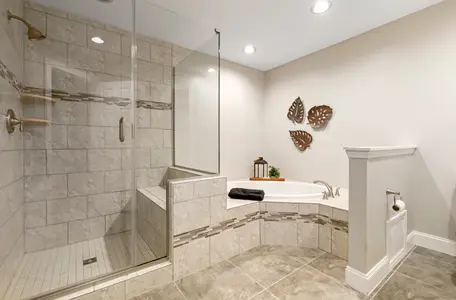
A well-designed bathroom remodel focuses on comfort, durability, and everyday usability rather than just appearance. Smart upgrades such as improved lighting, better ventilation, moisture-resistant materials, and efficient storage can dramatically improve how the space functions for daily routines. Homeowners often find inspiration by reviewing completed renovation examples like the Magnolia bathroom remodel project and the Shenandoah bathroom remodel project, where thoughtful layout changes, updated fixtures, and durable finishes helped transform older bathrooms into modern, comfortable spaces built to handle humidity and long-term use in Texas homes.
This guide covers everything from tile and stone selection to smart technology, lighting layers, storage strategy, ventilation, aging-in-place design, budget expectations, and common planning mistakes. Whether you're starting from scratch or upgrading an existing space, you'll find practical guidance tailored to Houston's climate and housing stock.
Why Invest in High-End Bathroom Remodeling?
The bathroom is one of the most-used rooms in any home—and in Houston's high-end real estate market, it's one of the most scrutinized by buyers, appraisers, and guests alike. A well-executed luxury remodel pays dividends in daily quality of life and in long-term property performance.
- Everyday comfort: Heated floors, rainfall showers, and better ventilation turn rushed mornings into smoother routines—and wind-down evenings into something genuinely restorative.
- Long-term value: Buyers notice bathrooms. Modern lighting, quality tile work, custom cabinetry, and a clean, timeless palette consistently rank among the features that differentiate homes in Houston's competitive market.
- Better performance in Houston's climate: Choosing the right surfaces, proper waterproofing systems, and humidity-rated ventilation helps protect the home from moisture damage—one of the most common and costly issues in Houston bathrooms.
- Reduced maintenance over time: Quality materials installed correctly require far less upkeep than budget alternatives that degrade quickly in high-humidity environments. The cost of a good tile installation is significantly less than the cost of repairing water damage behind a failed one.
- Personal wellness: A bathroom designed like a spa—with thoughtful lighting, a soaking tub, steam capabilities, or radiant heat—actively contributes to stress reduction and recovery. Many Houston homeowners see this as an investment in health, not just aesthetics.
For moisture-ready selections (paint, wall systems, trim, and exterior materials), see: choosing the right materials for humid Texas weather. If your remodel involves aging-in-place upgrades like curbless showers or wider doorways, read our bathroom remodeling for aging in place guide.
Key Features of a High-End Bathroom
1) Spa-Level Bathing Experience
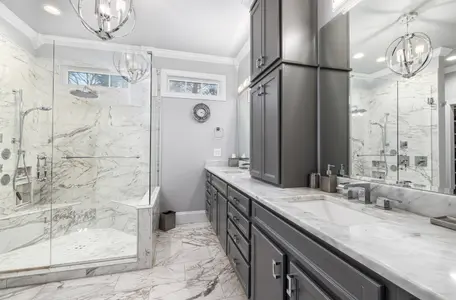
- Freestanding soaking tubs: A centerpiece that instantly upgrades the room. Acrylic, composite stone, and cast iron options each have different weight, heat retention, and care requirements—choose based on your floor structure and maintenance preference.
- Oversized showers: Multiple showerheads, body sprays, handheld wands, and built-in benches for a true spa experience. Walk-in designs with curbless entries are increasingly popular for both aesthetics and accessibility.
- Steam-ready planning: If you want a steam shower later, plan the waterproofing, sealed enclosure, generator rough-in, and dedicated electrical circuit now—retrofitting these elements after tile is installed is far more expensive.
- Rain showers: Ceiling-mounted rainfall heads add a hotel-spa quality to everyday showers. Pair with a pressure-balanced or thermostatic valve for consistent temperature and flow control.
2) Premium Fixtures That Save Water Without Feeling "Low Flow"
- Modern finish options include matte black, brushed nickel, champagne bronze, unlacquered brass, and polished chrome—each with different durability profiles and maintenance needs in high-humidity environments.
- Pressure-balanced and thermostatic valves for consistent, safe temperatures—especially important in homes with young children or elderly residents.
- For water-saving options, look for fixtures aligned with EPA WaterSense guidance: EPA WaterSense.
- Wall-mounted faucets add a dramatic, modern look and simplify countertop cleaning—though they require in-wall rough-in and are best planned during a full remodel rather than added later.
3) Smart Comfort Upgrades
- Heated floors: Electric radiant heat beneath tile is one of the most universally loved luxury upgrades—especially appreciated on cool Houston mornings. Costs are reasonable for the comfort benefit, and the system is thin enough to install under most tile assemblies.
- LED mirrors: Adjustable color temperature lighting helps with grooming and makeup, and eliminates the shadow problems created by overhead-only lighting.
- Quiet ventilation: A properly sized, whisper-quiet exhaust fan (or combination fan/light/heater) is essential for managing Houston humidity. See our dedicated section on ventilation below.
4) Custom Storage That Looks Built-In (Because It Is)
- Floating vanities: Create a lighter visual feel, make cleaning easier, and pair well with contemporary and transitional design styles popular in Houston's newer builds.
- Drawer-based organization: Deep drawers with internal organizers are significantly more practical than deep cabinets with shelves—everything is visible and accessible without kneeling.
- Shower niches & recessed shelving: Keep shower floors clear and bottles organized. Plan niche locations before tile installation—adding them after is costly and disruptive.
- Linen towers and medicine cabinets: Vertical storage keeps counters clear and clutter-free, a key characteristic of bathrooms that feel luxurious rather than busy.
If storage is the pain point, explore how custom cabinetry changes daily usability: custom cabinets vs. stock vs. semi-custom. You can also get inspiration from our cabinet-focused guides like best custom bathroom cabinet makers and built-ins and cabinets.
Tile, Stone & Surface Selection
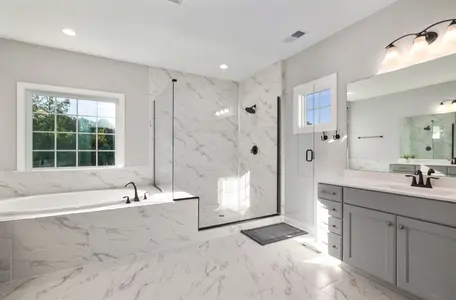
Surface selection is one of the most visible—and most consequential—decisions in a luxury bathroom remodel. The right tile and stone choices define the room's character, affect maintenance requirements, and determine how well the bathroom performs in Houston's high-humidity environment.
Porcelain Tile: The Workhorse of Luxury Bathrooms
Large-format porcelain tile (24"x24", 24"x48", or larger) has become the dominant choice in Houston luxury bathrooms for good reason. It's non-porous, highly durable, resistant to moisture, and available in finishes that convincingly replicate natural stone, concrete, wood, and more—often with better performance than the material it mimics.
- Large-format slabs: Fewer grout lines mean a cleaner look and easier maintenance—particularly valuable in shower enclosures where grout is a common problem area.
- Rectified edges: Allow for tight grout joints (as narrow as 1/16") for a seamless appearance that reads as high-end.
- Matte vs. polished: Matte finishes hide water spots and provide slip resistance on floors; polished finishes add drama and light reflection on walls and accent areas.
Natural Stone: Timeless, Unique, and Demanding
Natural marble, travertine, quartzite, and slate remain popular in Houston luxury homes for their one-of-a-kind appearance and enduring prestige. However, they come with important trade-offs that every homeowner should understand before committing.
- Marble: Beautiful and classic, but requires regular sealing, is susceptible to etching from acids (common household cleaners), and shows staining if not properly maintained. Best used on walls or as accents rather than floors in high-use bathrooms.
- Quartzite: Often confused with quartz (an engineered material), quartzite is a natural stone that tends to be harder and more stain-resistant than marble—a better choice for floors and wet areas.
- Travertine: Warm, classic appearance but is porous and requires consistent sealing in wet environments. Filled and honed versions are easier to maintain than unfilled.
- Slate: Durable and naturally slip-resistant—a good floor choice—but its textured surface can be harder to keep clean in a wet environment.
Countertop Surfaces for Vanities
The vanity countertop faces daily exposure to water, cosmetics, hair products, and cleaning agents. Durability and aesthetics need to coexist:
- Quartz: Engineered, non-porous, highly durable, and consistent in appearance. The most practical choice for high-use vanities in Houston's humid environment.
- Marble: Stunning but requires discipline to maintain. Many homeowners opt for a marble-look quartz or porcelain slab as a more forgiving alternative.
- Porcelain slabs: Ultra-thin slabs (6mm or 12mm) are increasingly used for vanity tops—they offer stone-like beauty with near-zero maintenance requirements.
For a direct performance comparison, see our guide on quartz vs granite vs porcelain countertops.
Smart Bathroom Technology for Houston Homes
Smart home technology has moved firmly into the bathroom—and the best implementations improve daily function rather than simply adding novelty. For Houston homeowners investing in a luxury remodel, the right smart features deliver real comfort, efficiency, and convenience year after year.
Smart Shower Systems
- Digital shower controls: Programmable presets allow each family member to save their preferred temperature, flow rate, and duration—the shower is ready at exactly your preference before you step in.
- Voice-activated controls: Compatible with Amazon Alexa and Google Home platforms for hands-free temperature and flow adjustments.
- Water usage monitoring: Some systems track and report consumption, helping environmentally conscious homeowners reduce water waste without sacrificing comfort.
Heated Floors & Towel Warmers
- Programmable radiant floor heating: Set schedules so floors are warm before your alarm goes off—and automatically off when you leave. Wi-Fi thermostats for radiant systems are now standard in luxury installations.
- Heated towel rails: Wall-mounted electric towel warmers add a hotel amenity feel to the bathroom while keeping towels dry and fresh between uses—an especially practical feature in Houston's humid climate where damp towels can develop odors quickly.
Smart Mirrors
- Integrated LED lighting with adjustable color temperature (daylight to warm white) for accurate grooming and makeup application at any hour.
- Built-in defoggers keep the mirror clear immediately after a shower—no waiting, no wiping.
- Some models include built-in displays for time, weather, and smart home status—useful without adding another screen to the room.
- Bluetooth speakers integrated into the mirror frame deliver audio without visible tech cluttering the space.
Smart Toilets & Bidet Seats
- Tankless smart toilets with integrated bidet functions, heated seats, automatic lid operation, and self-cleaning nozzles represent one of the fastest-growing luxury bathroom upgrades in American homes.
- Comfort-height bowl dimensions and soft-close lids are standard expectations in a luxury build.
- Wall-hung toilets with in-wall tank carriers offer a dramatic, minimalist look and simplify floor cleaning—particularly effective in large-format tile bathrooms.
Automated Ventilation
- Humidity-sensing exhaust fans automatically activate when moisture levels rise—eliminating the common problem of forgotten fans running for hours, or worse, fans left off during long showers. In Houston's climate, this is one of the highest-value smart upgrades available.
- Timer-based and motion-sensor controls ensure ventilation happens when it's needed without manual intervention.
Lighting Design: Layers That Make a Difference
Lighting is one of the most underestimated elements in a bathroom remodel. A beautifully tiled shower and a custom vanity can look flat and uninviting under poor lighting—or warm, dramatic, and luxurious under well-planned lighting. Getting this right requires thinking in layers.
The Three-Layer Approach
- Ambient (general) lighting: Recessed downlights or a central fixture that provides overall illumination. In a bathroom, this is your baseline layer—it should be on a dimmer so you can drop it low for relaxing baths without harsh overhead glare.
- Task lighting: Focused light at the vanity for grooming and makeup. Side-mounted sconces at eye level on both sides of the mirror are significantly more effective than an overhead bar light alone—they eliminate the unflattering shadows that overhead-only vanity lighting creates.
- Accent lighting: Decorative and architectural lighting that adds depth and visual interest. Under-vanity LED strips, illuminated niches inside the shower, backlit mirrors, or cove lighting along a tray ceiling all fall into this category.
Color Temperature Matters
Bathroom lighting color temperature significantly affects how the space looks and how accurate your appearance is in the mirror. For grooming tasks, aim for 2700K–3000K (warm white)—close enough to natural daylight to give an accurate read on skin tone and makeup without the harshness of cool-white or daylight bulbs. Cooler temperatures (4000K+) in a bathroom can make the space feel clinical and can make skin appear washed out.
Wet-Zone Safety Requirements
Lighting inside or directly above showers and tubs must be rated for wet or damp locations per NEC code requirements. Houston-area building inspectors enforce these requirements, and using incorrect fixtures creates safety and liability risks. Work with a licensed electrician to ensure all bathroom lighting meets local code.
Natural Light Options
Where privacy allows, natural light transforms a bathroom. Options for Houston homes include frosted or textured glass windows, solar tubes (which bring daylight in without compromising privacy), skylights above shower areas, and glass block panels in exterior walls. Even modest natural light changes the character of a bathroom significantly. For broader guidance on bringing natural light into your home, see our natural light remodeling tips.
Vanity & Storage: The Backbone of Bathroom Function
No matter how beautiful the tile or how impressive the shower system, a bathroom that lacks functional storage will feel chaotic and cluttered within weeks of a remodel. Storage planning is the backbone of a bathroom that continues to feel luxurious in everyday use—not just in photos.
Vanity Configuration
- Double vanities: In a primary bathroom, a double vanity with 60"–72" of counter space and individual sink stations is considered a baseline luxury feature. It eliminates morning traffic jams and gives each person their own zone.
- Drawer vs. door cabinets: Deep drawers with built-in organizers consistently outperform cabinet-and-shelf configurations for daily usability. Specify soft-close hardware on all drawers and doors—it's a small detail that reads as quality every single time you use it.
- Floating vs. floor-mounted: Floating (wall-hung) vanities create a larger visual footprint, make floor cleaning easier, and read as modern and refined. They require solid blocking in the wall framing during construction—easy to do during a remodel, but difficult to add afterward.
- Custom vs. semi-custom: Custom vanities allow for exact dimensions, specific wood species, unique finishes, and tailored internal organization. Semi-custom options from quality cabinetry lines offer many of the same advantages at a lower cost. See our guide to custom vs. stock vs. semi-custom cabinets for a detailed comparison.
Beyond the Vanity: Whole-Bathroom Storage Strategy
- Recessed medicine cabinets: Recessed into the wall rather than surface-mounted, these add storage depth without consuming space. Modern medicine cabinet designs with integrated lighting and mirrored interiors are a significant upgrade from builder-grade versions.
- Linen closets or towers: A dedicated linen storage solution—whether a built-in tower, a closet accessed from the bathroom, or a freestanding armoire—keeps towels and toiletries organized and off counters.
- Shower niches and shelving: Plan at least two niches in any primary shower—one for daily-use bottles and one for a soap bar or secondary items. Niche lighting (small LED strips or waterproof puck lights) elevates these practical elements into a design feature.
- Under-tub storage drawers: Freestanding tub platforms with built-in storage drawers on the apron side use otherwise-wasted space creatively.
Ventilation & Humidity: A Houston Priority
Houston's climate makes bathroom ventilation more than a comfort feature—it's a structural protection measure. Without adequate exhaust, moisture accumulates on walls, ceilings, grout, and behind wall assemblies, creating conditions for mold growth, grout deterioration, paint failure, and eventually wood rot in framing and subfloors. A luxury remodel that skimps on ventilation will cost far more in repairs within a few years than the upgrade would have cost.
Sizing Your Exhaust Fan
The standard guidance for exhaust fan sizing is 1 CFM per square foot of floor area for bathrooms up to 100 sq ft. For larger primary bathrooms—which are common in Houston luxury homes—add CFM capacity for each fixture: toilet (50 CFM), shower (50 CFM), and soaking tub (100 CFM) are standard additions. It's better to oversize than undersize, and a variable-speed fan gives you precise control over noise and airflow.
Ducting: The Part Homeowners Often Miss
An appropriately rated fan connected to improperly installed ductwork still fails. Exhaust air must duct directly to the exterior—not into the attic, which is a common installation mistake that simply moves moisture into the attic space rather than removing it from the home. Insulated duct runs minimize condensation inside the duct during Houston's cool nights, and smooth-bore metal duct moves air more efficiently than flexible corrugated alternatives.
Humidity-Sensing Fans
As mentioned in the smart technology section, humidity-sensing fans automatically respond to moisture levels—running when they're needed and off when they're not. For Houston bathrooms, this is arguably the single most practical smart upgrade available, because it addresses the city's primary bathroom maintenance concern automatically, without relying on occupant behavior.
When Steam Showers Are in the Plan
Steam shower enclosures require a fully sealed, waterproofed enclosure (ceiling and all walls) with a sloped ceiling to prevent condensation drips, a steam generator sized appropriately for the enclosure volume, and a separate exhaust strategy for clearing steam after use. Plan all of these elements before any tile is set—retrofitting a steam system into a finished shower is expensive and rarely clean.
For moisture and indoor air quality considerations, a helpful baseline reference is EPA guidance on indoor air quality: EPA Indoor Air Quality.
Universal Design & Aging-in-Place Features
Universal design—the practice of creating spaces that work well for people of all ages and abilities—has become a mainstream consideration in luxury bathroom remodeling. Houston's aging population and multigenerational households have accelerated interest in these features, and importantly, most of them also look and function beautifully for every member of the household regardless of age or ability.
Curbless (Zero-Entry) Showers
The elimination of the shower curb is probably the single most impactful universal design upgrade. Curbless showers are easier to enter for everyone, eliminate a tripping hazard, simplify cleaning, and create a seamless, high-end aesthetic that dominates luxury design today. They require careful floor slope planning and waterproofing to function correctly—work that must be done before tile installation.
Grab Bars Designed as Décor
Modern grab bars have evolved dramatically from institutional chrome pipes. Today's options include bars in brushed gold, matte black, and brushed nickel that coordinate with plumbing fixtures and read as intentional design elements rather than medical equipment. Blocking for grab bars should be built into shower and tub surrounds during any remodel, even if the bars themselves aren't installed immediately—it costs very little to add blocking during construction and a great deal to add it afterward.
Comfort-Height Toilets and Vanities
Comfort-height (17"–19" seat height) toilets reduce strain for adults of average to tall height and for anyone with limited mobility. Similarly, vanities at 34"–36" height (versus the standard 32") are more comfortable for standing use without requiring bending. These adjustments are easy to specify during a remodel and make daily use more comfortable for everyone in the household.
Non-Slip Flooring
Slip resistance on bathroom floors is a safety consideration for all ages, not just older residents. Specify tiles with a Coefficient of Friction (COF) rating of 0.42 or higher for wet areas. Smaller-format tiles (mosaic tiles on shower floors), textured or matte-finish porcelain, and stone with a honed or flamed finish all provide better slip resistance than large-format polished tiles in wet zones.
For a deeper look at accessible bathroom design, read our full guide to bathroom remodeling for aging in place.
Design Tips for Houston Homes
1) Layer your lighting. Combine recessed lighting, vanity lighting, and an accent fixture so the space feels bright without harsh shadows. If you're improving daylighting across the home, you'll like: maximizing natural light remodeling tips.
2) Plan for humidity like it's a "feature" of the room. Houston bathrooms work best with excellent exhaust ventilation, properly sealed tile assemblies, and moisture-resistant materials. For broader humidity decisions, see: materials for humid Texas weather.
3) Choose surfaces that stay beautiful with less maintenance. Porcelain tile, quality grout, solid-surface or quartz counters, and durable finishes help your bathroom look newer longer. If you're comparing countertop performance for durability and cleanup: quartz vs granite vs porcelain countertops.
4) Commit to a finish family and stay in it. Mixing hardware finishes—brushed nickel faucets with chrome towel bars and matte black door hardware—creates visual noise that undermines a luxury feel. Choose one primary finish (and optionally one accent finish) and apply it consistently across all metal elements in the room.
5) Use large-format tile to make the room feel bigger. Fewer grout lines and larger visual planes make Houston bathrooms—even moderately sized ones—feel more expansive and refined. This is one of the highest-impact, relatively affordable ways to elevate the visual quality of a space.
6) Don't neglect the ceiling. A painted ceiling in a satin or semi-gloss finish, a tray ceiling detail, or even a wallpapered ceiling above the tub adds a layer of design sophistication that many renovated bathrooms miss entirely. In a room where you often look up, the ceiling deserves attention.
7) Address the door first if your space feels small. Swinging doors consume usable floor space. A pocket door, barn door, or pivot door can reclaim square footage that makes the bathroom feel meaningfully more generous without changing a single wall.
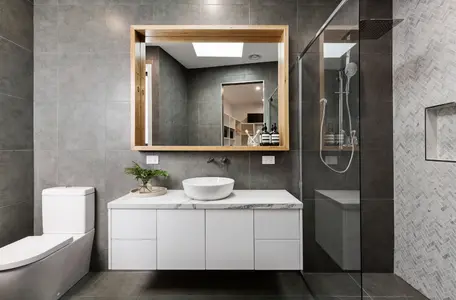
Layout Planning: Getting the Floor Plan Right
The layout is the foundation that everything else builds on. A beautiful bathroom with a poor layout will frustrate you every day—drawers that can't open fully, a toilet positioned too close to the vanity, a shower that feels cramped even though there's plenty of square footage. Getting the floor plan right before committing to tile and fixtures is the single most important planning step in any bathroom remodel.
Clearance Dimensions That Matter
- Toilet clearance: 15" minimum from toilet centerline to any side wall or obstruction; 18"–21" is more comfortable and what most luxury builds specify. 24"+ of clear space in front of the toilet is the functional minimum; 30" is preferred.
- Vanity approach: 30" of clear space in front of a vanity allows comfortable use; 36" is the standard for primary bathrooms where two people may use the space simultaneously.
- Shower size: 36"x36" is the code minimum; 48"x36" is the practical minimum for comfort; 60"x36" or larger is where a shower starts to feel genuinely luxurious and allows two showerheads with comfortable separation.
- Door swing clearances: Every door needs adequate swing space that doesn't conflict with other fixtures. Map this carefully before finalizing any layout.
Plumbing Location Strategy
Moving plumbing—relocating drain lines, supply lines, and wet walls—is one of the most significant cost drivers in a bathroom remodel. Where possible, maintaining existing plumbing locations while upgrading fixtures and finishes saves substantially. Where a layout improvement genuinely requires moving plumbing, the investment is often worth it for the daily functional improvement—but this should be a conscious decision, not a surprise.
Separating the Toilet Compartment
In larger primary bathrooms, a separate water closet (enclosed toilet compartment) is a premium feature that provides privacy when two people use the bathroom simultaneously. It also contains odors more effectively and allows the toilet area to be closed off while the rest of the bathroom remains accessible. If your square footage allows for it, this is a high-value upgrade that buyers and residents both appreciate.
Natural Light and Window Placement
If your remodel involves any exterior wall changes—or if you're working with an architect on a primary suite expansion—consider window placement carefully relative to the vanity. A window beside rather than behind the mirror avoids glare and backlighting issues. A window at the end of a shower enclosure using frosted or textured glass brings in light while maintaining privacy—a compelling combination in Houston's often-overcast winter light conditions.
Budget Guide: What to Expect for a Houston Luxury Remodel
One of the most common questions homeowners have before starting a bathroom remodel is simple: what does this cost? The honest answer is that it depends—on the size of the bathroom, the scope of changes, the fixtures and finishes selected, and whether plumbing or structural work is involved. But there are useful reference ranges that can help you build a realistic budget framework.
General Cost Tiers for Houston Bathroom Remodels
- Mid-range remodel ($15,000–$35,000): New tile on floors and shower walls, updated fixtures (faucets, showerhead, toilet), new vanity and countertop, improved lighting, fresh paint. No significant plumbing moves; existing layout maintained. Good execution of quality materials within a defined scope.
- Upper mid-range ($35,000–$65,000): Custom cabinetry, large-format tile or natural stone, upgraded shower with multiple fixtures, freestanding tub, smart mirror or LED mirror, heated floors, improved ventilation. May include minor plumbing modifications. This is the typical range for a well-appointed primary bathroom remodel in Houston's established neighborhoods.
- Full luxury ($65,000–$120,000+): Complete gut and redesign, steam shower, smart shower system, wall-hung toilet with in-wall carrier, designer tile throughout, custom millwork vanity, built-in storage, architectural lighting plan, natural stone surfaces. Often involves plumbing relocation, electrical upgrade, and potential structural changes for an expanded footprint.
Where Budget Goes Further vs. Where to Spend More
- Spend more on: Waterproofing and tile installation (failures here are expensive to fix), exhaust ventilation (protects the long-term integrity of the room), and fixture quality (faucets and valves used daily should be durable).
- Where savings are possible: Accent tile used sparingly as a focal point achieves visual impact without covering every surface in premium stone. Semi-custom cabinetry at a quality manufacturer often delivers 90% of the result of fully custom at 60–70% of the cost. Keeping the existing plumbing locations avoids significant additional labor and disruption.
For comprehensive guidance on building a realistic project budget and phasing approach, read our guide: how to plan a realistic remodeling budget.
Common Mistakes to Avoid
Even well-intentioned, well-funded bathroom remodels can go wrong when key decisions are made in the wrong order or without adequate expertise. These are the mistakes we see most often in Houston bathroom projects—and what to do instead.
1. Selecting Tile Before Finalizing the Layout
Tile selection should happen after the layout is confirmed and dimensions are set. Choosing tile first and then adjusting dimensions to accommodate it creates unnecessary constraints and often results in awkward cuts or wasted material. Lock in your floor plan first, then select surfaces.
2. Undersizing the Shower
The most common regret in bathroom remodels is a shower that feels too small. If the budget or footprint is limited, prioritize shower size over the freestanding tub—most homeowners use their shower daily and their soaking tub far less frequently. A 48"x36" minimum is acceptable; 60"+ in at least one dimension is where comfort really improves.
3. Ignoring Exhaust Ventilation
In Houston's climate, inadequate bathroom ventilation creates costly moisture damage within a few years. Don't undersize the fan, don't skip the humidity sensor, and don't allow ductwork to terminate in the attic. Ventilation is where cutting costs creates the most expensive long-term consequences.
4. Choosing Fixtures Before Setting a Plumbing Rough-In
Fixture selection (particularly faucet hole count, valve type, and drain location) must be coordinated with your plumber before rough-in work is done. Changing these details after rough-in means opening walls and floors—work that adds cost and time that proper sequencing eliminates.
5. Mixing Too Many Tile Patterns or Materials
It's tempting to incorporate multiple accent tiles, border tiles, decorative insets, and specialty materials seen in design inspiration. In practice, more than two or three distinct tile types in a single bathroom creates visual competition rather than cohesion. Choose a primary field tile, one accent or feature tile, and stop there.
6. Not Planning Electrical for Future Upgrades
Smart mirrors, heated floors, towel warmers, steam generators, and smart toilet seats all require dedicated electrical circuits. Running additional circuits during a full remodel—when walls are open—costs a fraction of what it costs to add them after everything is tiled and finished. Even if you're not installing every smart feature now, roughing in the capacity for them is a worthwhile investment during any comprehensive remodel.
7. Skipping the Permit Process
Significant bathroom remodels in Houston—particularly those involving structural changes, plumbing moves, or electrical work—require permits. Unpermitted work can create issues at resale, affect insurance coverage, and create safety risks. Work with a licensed contractor who pulls required permits as part of the project scope.
Case Study: Houston Master Bathroom Remodel
- Before: A dated layout with a small shower, limited storage, dim and poorly placed lighting, and a standard builder-grade vanity that made daily routines feel cramped and inefficient.
- Goals: Create a spa-like primary bathroom with a larger shower, a soaking tub, improved storage, and lighting that works for both morning grooming and evening relaxation.
- What changed: The shower was enlarged to 60"x42" with a frameless glass enclosure, a rainfall head, and a handheld wand. A freestanding soaking tub replaced a built-in tub that was rarely used. A custom double vanity with soft-close drawers and a quartz countertop replaced the builder vanity. Large-format porcelain tile was installed throughout, a humidity-sensing exhaust fan was added, and layered lighting with dimmer controls was installed throughout the room.
- Result: A bathroom that functions as efficiently as it looks—daily routines are smoother, storage is genuinely organized, and the room now serves as a relaxing retreat at the end of the day rather than just a utility space.
Want a real "before & after" style breakdown? See: a remodeling project that transformed a family home. And if you're planning multiple rooms, our overview on how teams manage bigger scopes can help: how remodeling companies handle full home renovations.
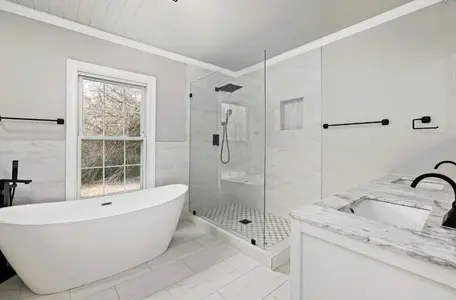
For a real-world example of how these luxury features come together in practice, see our Luxury Bathroom Upgrades Project, where we combined a high-end bathroom transformation with premium materials, custom storage, and spa-level comfort features designed for a modern Texas home.
Final Thoughts
A high-end bathroom remodel in Houston is one of the best ways to upgrade comfort and daily quality of life, especially when it's built with humidity ready materials, strong waterproofing, and storage that actually works. Focus on a spa-level bathing experience, thoughtful lighting layers, quiet and properly sized ventilation, and custom cabinetry that keeps the room calm and organized.
Next steps: review your layout, identify your two or three must-have features, align finishes with how you live day-to-day, and connect with a contractor who understands both the aesthetic and the technical requirements of luxury bathroom construction in Houston. For budgeting and phasing work, our planning guide can help: how to plan a realistic remodeling budget. And if you're choosing a remodeling contractor in The Woodlands for planning, reach out to trusted remodeling contractors in The Woodlands .
Choosing the right contractor matters. Reach out to Remodeling contractors The Woodlands & nearby areas like Spring, Conroe, Tomball, and Magnolia.