

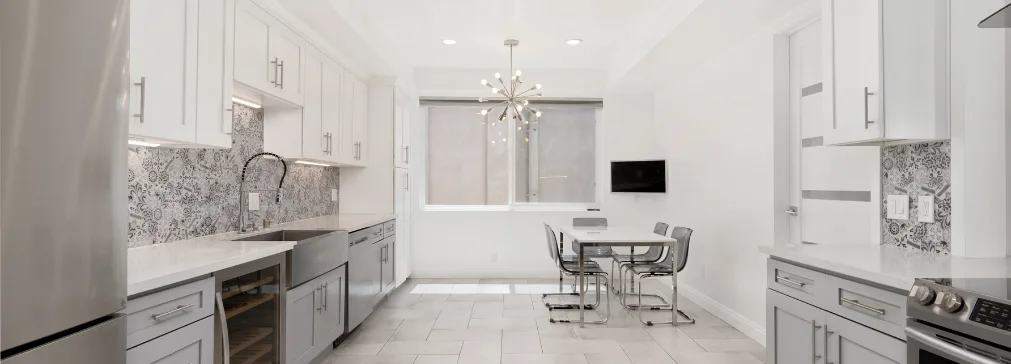
Why Sunrooms Make Sense in The Woodlands
A sunroom is one of the few home additions in The Woodlands that can improve daily livability, create a stronger indoor-outdoor connection, and make practical sense for many homeowners who want more usable square footage without committing to a full room addition. In a market where the The Woodlands median home sale price was about $615,000 in February 2026, buyers and homeowners are still paying attention to upgrades that improve comfort, curb appeal, and functional living space. The local climate also makes sunrooms especially relevant here: The Woodlands averages about 71% humidity and roughly 1,194.7 mm of annual precipitation, with very hot summers and meaningful spring and fall rainfall, so covered, enclosed, or climate-controlled transitional spaces are more than a luxury feature.
This guide covers the full picture: what a sunroom costs in The Woodlands, which designs make the most sense in this climate, what permits and approvals are typically involved, how long projects usually take, what kind of return on investment homeowners can realistically expect, and which neighborhoods and home styles in The Woodlands tend to be the strongest fit. The short version is this: a basic screened or lightly enclosed patio conversion may start in the lower five figures, while a true insulated four-season sunroom often lands in a much higher bracket depending on slab work, glazing, HVAC, roof integration, and finishes. At the same time, sunrooms are not purely a resale play. They sit in the category of projects that can add meaningful lifestyle value first, while still supporting property appeal in a region where exterior-focused upgrades continue to perform well.
The Woodlands has a housing stock that lends itself well to sunroom additions. Many homes already have rear patios, covered outdoor spaces, or backyard zones that can be converted into something more functional. In practice, a sunroom works well here because it helps solve very local problems: heat, humidity, insects, pollen, rain interruptions, and the desire to use backyard-facing space more consistently across more months of the year. Average conditions in late spring through early fall are warm to hot, with summer monthly mean temperatures near 28–29°C and high humidity, while May and October are among the wetter months. That climate profile pushes many homeowners toward either screened rooms with strong airflow or fully insulated, glass-heavy rooms with solar-control glazing and HVAC planning.
For families in The Woodlands, sunrooms are usually used as one of five things: a secondary living room, a breakfast or dining space, a reading and relaxation room, a plant-filled transitional room, or a flex room for entertaining. In higher-end homes, they also work well as a quiet lounge off the primary living area or kitchen, especially when the addition ties into backyard views, mature trees, or pool areas. That local design context matters because the best sunroom is rarely the one with the most glass. It is usually the one that feels architecturally integrated with the rest of the house and is designed for Southeast Texas light, moisture, and heat.
If you are also exploring how a sunroom fits alongside other exterior or structural upgrades, see our overview of accessory dwelling units vs home additions in The Woodlands, Texas to understand the full range of space-adding options available in this market.
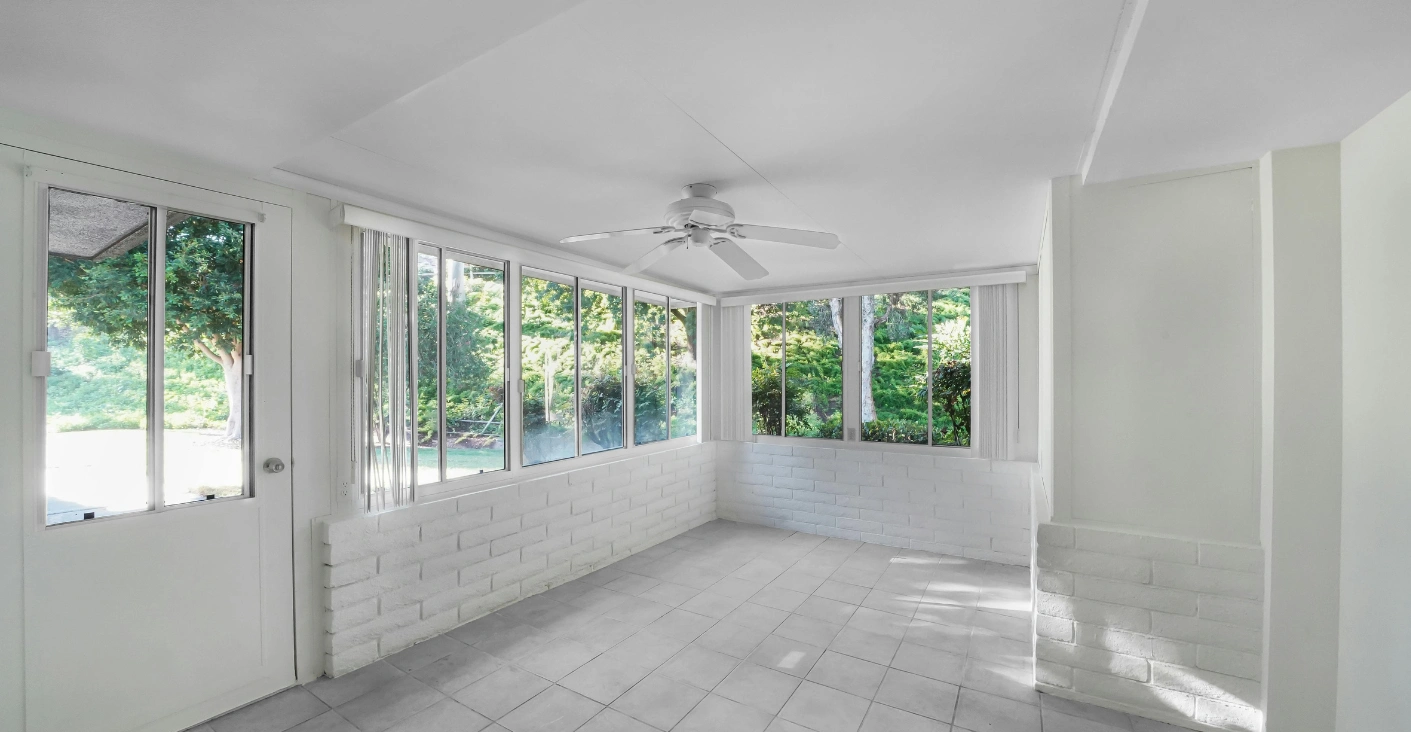
What Is a Sunroom, Exactly?
In practical remodeling terms, homeowners in The Woodlands usually mean one of three different project types when they say "sunroom":
1. Screened-In Porch or Patio Enclosure
This is the most budget-friendly option. It provides shade, airflow, and bug protection, but it is not usually insulated or conditioned like the main house.
2. Three-Season Sunroom
This typically uses more glass and stronger weather separation than a simple screened enclosure, but it may not be fully integrated with the home's HVAC and insulation system. It is usable for much of the year, but not always as comfortably during peak summer heat or colder winter days.
3. Four-Season Sunroom
This is the closest thing to a true room addition without becoming a conventional full addition. It usually includes insulated framing, high-performance glazing, a finished floor, completed electrical, and some form of heating/cooling integration. It is the most expensive option, but also the most livable.
That distinction matters because costs, timelines, permit scope, and ROI expectations change significantly depending on which version you build. If you are also comparing a sunroom with a more practical enclosure approach, see our guide on sunroom vs patio enclosure in Texas for a direct comparison of cost, permits, timeline, and long-term value. If you are weighing a sunroom against a more conventional structural project, our guide on home additions in The Woodlands provides useful context for understanding scope differences.
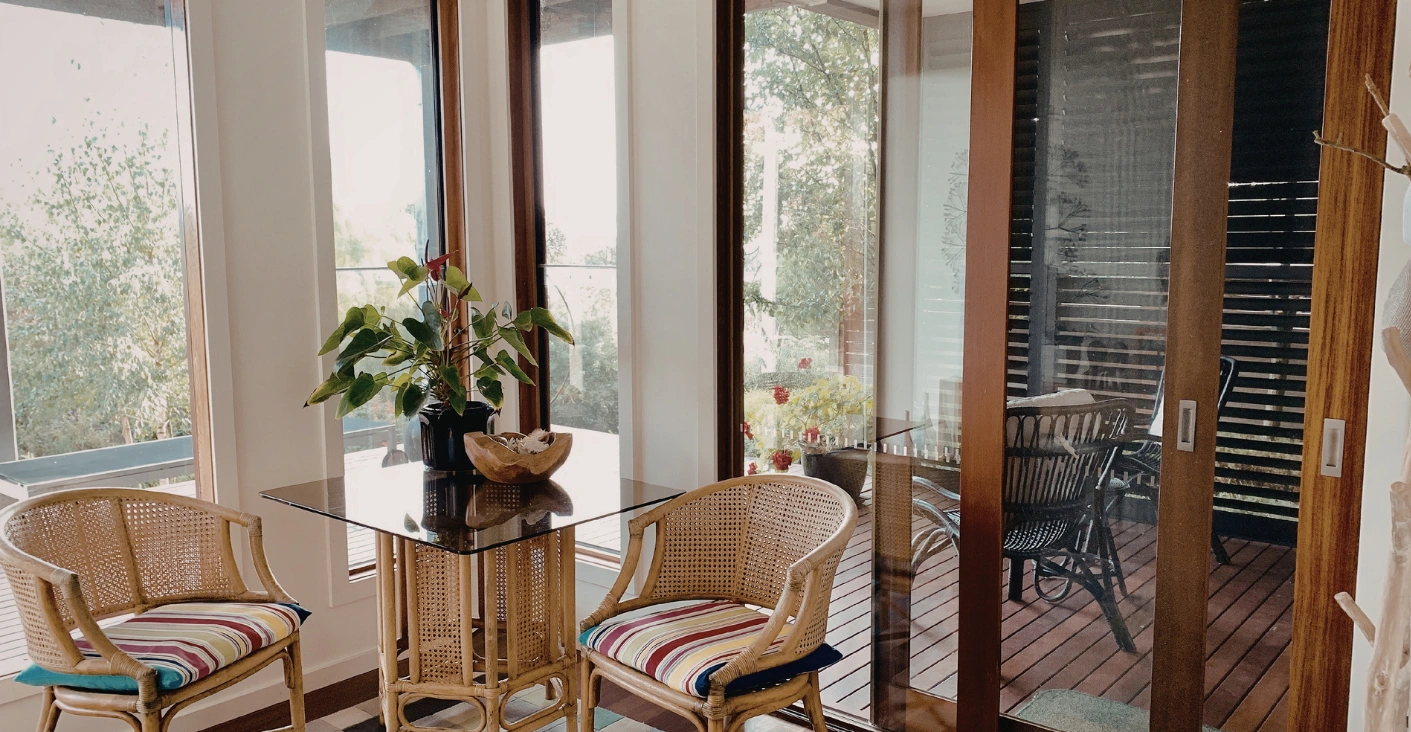
Sunroom Cost in The Woodlands, TX (2026)
Homeowners should budget differently depending on whether they are enclosing an existing covered patio, converting a screened space, or building a new fully integrated addition from scratch.
National 2026 pricing references show that a glass patio enclosure or sunroom can range from $8,000 to $80,000, with 3-season enclosures commonly around $80–$230 per square foot and 4-season enclosures around $200–$400 per square foot. A Houston-area source places typical sunroom pricing at roughly $21,000 to $63,000, while a Texas patio-enclosure source cites an average around $17,933, with wide variation depending on size and specification. Those numbers align with what homeowners in The Woodlands should expect conceptually, though local project pricing will move based on foundation requirements, structural tie-in, roofing, finishes, labor, and neighborhood approval constraints.
Practical Cost Ranges for The Woodlands
Basic Screened or Simple Patio Enclosure
A lighter screened enclosure or basic patio conversion may fall around $25 to $120 per square foot, with many straightforward projects starting in the high four figures to mid five figures, especially when an existing slab and roof structure can be reused.
Three-Season Sunroom
A three-season room in The Woodlands will often land in a mid-range bracket, especially if it uses aluminum or composite framing, insulated roof panels, and better glass systems. A reasonable planning range is often $80 to $230 per square foot, though custom details can push this higher.
Four-Season Sunroom
A fully insulated, more integrated four-season sunroom often starts where many homeowners expect a "real addition-lite" project to start. Planning around $200 to $400 per square foot is realistic for budgeting purposes, especially once HVAC, electrical, slab engineering, and higher-performance glazing are included.
Cost by Room Size
Here is a realistic planning framework for The Woodlands:
| Room Size | Common Use | Estimated Range |
|---|---|---|
| 120–150 sq. ft. | Reading lounge, small breakfast room, compact rear extension | Varies by spec |
| 180–220 sq. ft. | Family seating room, dining expansion | Common mid-range |
| 250–350+ sq. ft. | Substantial entertaining area | Closer to full addition budget |
A Texas patio-enclosure pricing source suggests that around 200 sq. ft. can range from roughly $4,530 to $45,400, and 250 sq. ft. from roughly $9,400 to $60,500, but those broad ranges include everything from simple enclosures to more premium systems. In real project planning, homeowners in The Woodlands should not assume the low end applies unless the existing patio structure is already ideal for enclosure.
What Drives the Cost Up or Down
Existing Structure
If you already have a solid slab, a usable roofline, and enough structural support, costs can stay more controlled. If the project requires a new slab, roof modifications, engineered framing, or drainage correction, the budget rises quickly.
Type of Glass
Large spans of insulated low-E glass and solar heat gain ratings are one of the main upgrades that separate a premium sunroom from a basic one. In The Woodlands, this is not optional if you want a space that remains comfortable through summer.
HVAC Integration
A true four-season room usually needs more than a ceiling fan. Mini-splits, duct extensions, return air planning, and insulation details all affect price and long-term comfort.
Roofing and Ceiling Design
Flat, low-slope, or panel-style roof systems can be more cost-effective. Vaulted ceilings, skylights, or roofline tie-ins that must look original to the home increase cost but often improve aesthetics significantly.
Finishes
Tile, engineered wood, upgraded trim, recessed lighting, shades, and custom millwork can shift a project from functional to luxury very quickly. For a broader view of how finishes affect remodeling budgets across different project types, see our guide on best bathroom flooring for Texas homes (2026) — the same durability principles apply when choosing sunroom floor materials.
Permit and Approval Complexity
Projects in The Woodlands frequently involve both design-review considerations and county permitting. Homes in tighter lots, flood-sensitive areas, or covenant-controlled neighborhoods may require more documentation and a longer approval window.
Best Sunroom Designs for The Woodlands Climate
A design that works in another state can perform badly here. The Woodlands has heat, humidity, storms, glare, and seasonal pollen. That means the best local sunroom designs are usually the ones that manage solar gain and moisture instead of simply maximizing glass. For a broader climate-first breakdown, see our guide on best sunroom designs for humid Texas weather, which explains which layouts, materials, and glass strategies perform best in Texas conditions.
1. Insulated Glass Sunroom with Solar-Control Glazing
This is one of the strongest options for homeowners who want true year-round usability. It works best when the rear elevation gets heavy sun exposure and the space needs to feel like part of the home.
2. Screen Room with Insulated Patio Cover
This is ideal for homeowners who mainly want an outdoor living upgrade with better comfort and bug protection. It performs well when the goal is casual use, not full climate control.
3. Hybrid Sunroom
A hybrid approach uses larger openings, quality glazing, ceiling fans, and selective climate control. For many Woodlands homes, this is the best balance between price and comfort.
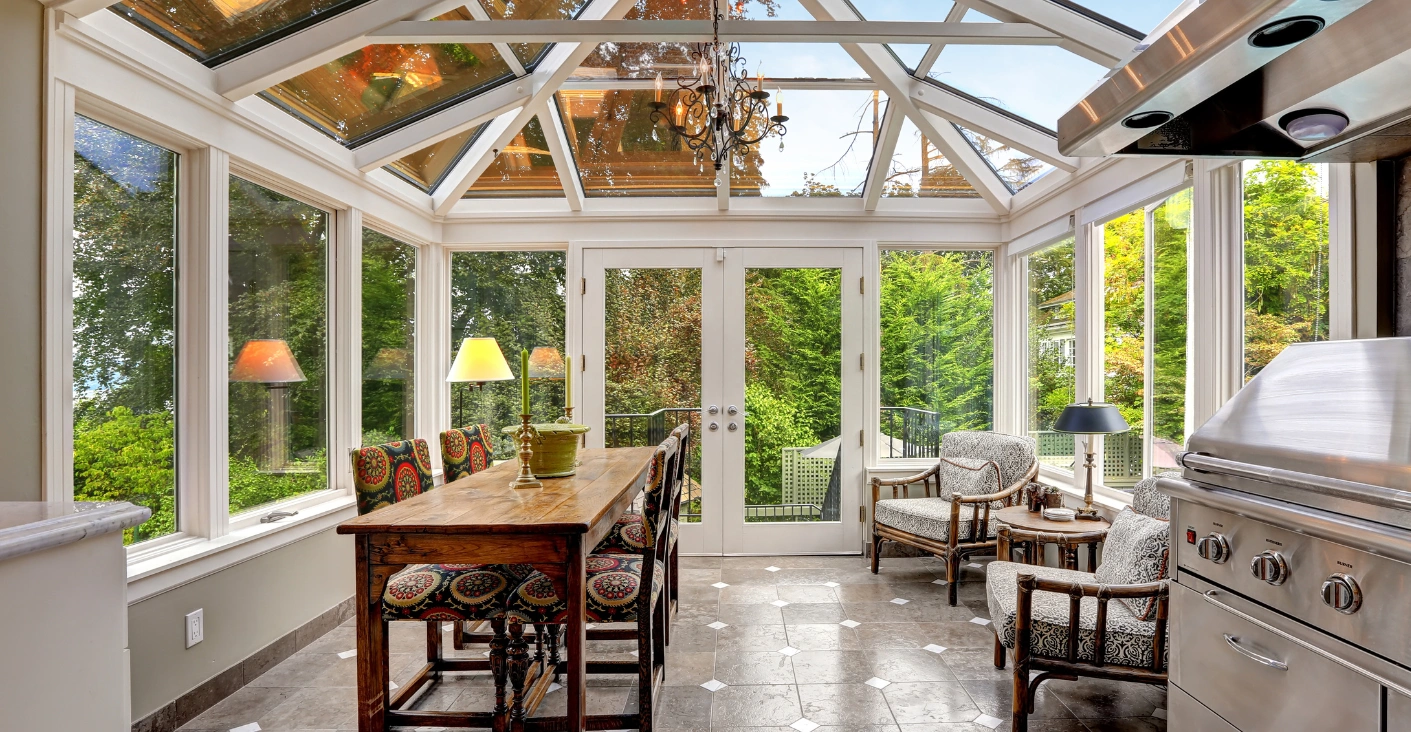
4. Vaulted-Ceiling Garden Room
This works especially well on homes with mature-tree views, larger lots, and a higher design budget. It creates a dramatic feel but needs careful heat and glare control.
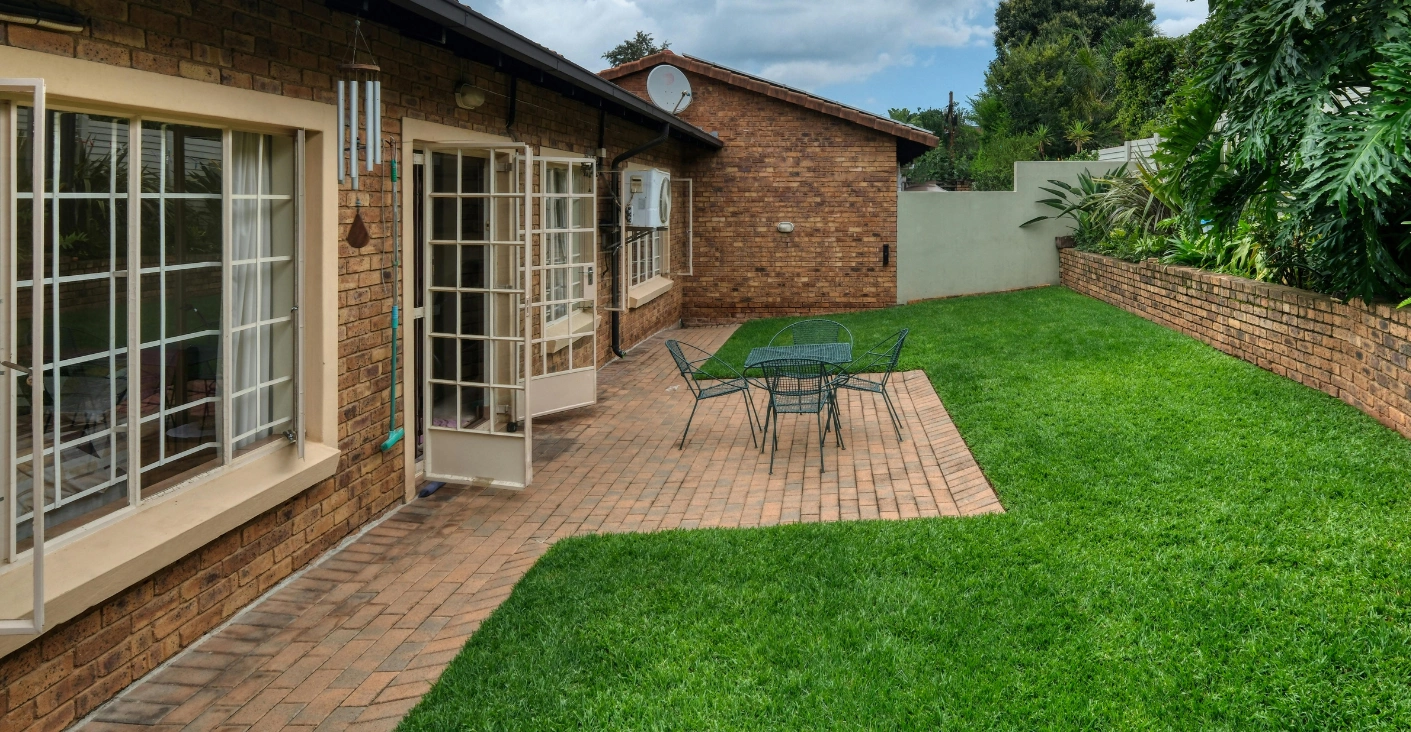
5. Poolside or Backyard-Facing Sunroom
This is one of the most attractive use cases in The Woodlands. It creates a transition zone between interior living areas and the backyard, while giving more shade and storm protection.
Design Recommendations Specifically for The Woodlands
Prioritize Solar Control Over Sheer Glass Area
More glass is not automatically better. In Southeast Texas, too much unprotected glass can make a room hot, glaring, and expensive to cool.
Use Moisture-Resilient Materials
Tile, porcelain, composite trim, and materials that handle humidity well usually outperform delicate finishes in this climate.
Think About Orientation
West-facing sunrooms tend to be the hardest to manage thermally. South- and east-facing spaces are often easier to design for comfort.
Match the Existing Architecture
The best sunrooms in The Woodlands look like they belong to the original house. Roof pitch, trim language, window rhythm, and exterior finishes matter. Homeowners planning a larger refresh alongside their sunroom may also benefit from reviewing bathroom remodel ideas that add value to your Woodlands property — both projects share similar principles around materials, finish quality, and architectural coordination.
Plan for Fans, Shades, and Ventilation
Even in conditioned rooms, layered comfort systems improve usability. Ceiling fans, motorized shades, and thoughtful operable-window placement make a noticeable difference.
Permits for Sunrooms in The Woodlands
This is one of the most important local sections because homeowners often assume a backyard enclosure is just a design decision. In The Woodlands, it usually is not.
The Woodlands Township permit requirements state that permits are required for many exterior home projects, including patios and exterior updates, and residents use the Township's Civic Access Portal to apply. Separately, the Township's residential standards state that improvements such as building additions, interior or exterior remodeling, and related work on a lot with an existing single-family dwelling require prior written approval from the Residential Design Review Committee approval or designated staff. In plain English, a sunroom project may need covenant/design approval at the Township level before or alongside structural permitting.
At the county level, According to Montgomery County addition permit requirements, every structure and/or addition requires its own permit, and an addition is defined broadly as anything with a roof and at least one wall or a carport. The county also notes that work in the 100-year floodplain requires review using official FEMA flood map tools. That is directly relevant because some homes and lots in the broader area may have drainage or floodplain considerations that affect scope and documentation.
What Approvals May Be Needed
For many sunroom projects in The Woodlands, homeowners should expect some combination of:
- Township design or covenant approval
- County building permit
- Site plan and setbacks review
- Structural drawings or engineered details
- Electrical permit if circuits, lighting, outlets, or HVAC equipment are added
- Mechanical scope review if the room is conditioned
- Floodplain review where applicable
A Practical Warning
Do not treat a sunroom like minor patio furniture or cosmetic work. If the project changes the footprint, adds walls and roofed enclosure, modifies setbacks, or becomes a true addition, approvals matter. The Township also began charging permit fees for certain residential and commercial construction-related applications in 2025, replacing some prior deposit-based processes.
Homeowners navigating approvals for the first time often benefit from working with experienced local contractors who understand how Township design review and county permitting interact. For a related look at how permits affect project scope in different remodeling categories, see our guide on aging in place remodeling in The Woodlands, Texas, which covers similar approval considerations for structural modifications.
Sunroom Timeline in The Woodlands
A realistic sunroom timeline includes more than construction days. It includes design, approvals, procurement, and inspections.
Typical Planning Timeline
A professionally managed project usually follows this sequence:
| Phase | Duration | What Happens |
|---|---|---|
| 1. Discovery & Site Evaluation | About 1 week | Measurements, goals, existing structure, drainage, neighborhood rules, and budget review |
| 2. Design & Pricing | About 1–3 weeks | Longer if custom structural design or multiple revisions are needed |
| 3. Township & County Approvals | Often 2–6+ weeks | Varies by project complexity, design-review requirements, and application completeness |
| 4. Construction | Usually 3–10 weeks | Light enclosures move faster; fully insulated four-season rooms with slab work, HVAC, and finish carpentry take longer |
For many homeowners in The Woodlands, the full process from first consultation to final walkthrough often lands somewhere in the 6–12 week range for simpler projects and longer for larger or more customized rooms. Custom rooflines, engineered changes, and approval revisions can extend that.
Sunroom ROI in The Woodlands: What Is Realistic?
A sunroom should not be sold as a magic high-ROI project. That would be misleading. The more accurate view is this: in The Woodlands, a well-designed sunroom can support resale appeal, improve buyer perception, and be financially rational when compared with the much higher cost of a conventional full addition. But most homeowners should treat the project as a lifestyle-first upgrade with secondary resale value, not as the single highest-return remodeling category.
The best national and regional resale data available for 2025 shows that exterior-focused projects continue to outperform many interior projects, with the West South Central region reporting some of the strongest overall returns. Zonda’s 2025 Cost vs. Value Report shows that exterior replacement projects continue to outperform many interior upgrades, and that the Pacific and West South-Central regions show the strongest overall returns. But that same dataset does not list sunrooms as a standard line-item project, which means homeowners should avoid anyone quoting a fake "official" sunroom ROI percentage from that report.
So How Should Homeowners Think About ROI?
Lifestyle ROI
If the room becomes usable almost every week of the year, hosts guests, improves backyard enjoyment, and gives you functional space without moving, that is real value.
Relative Cost ROI
A Houston-area source puts many sunrooms around $21,000 to $63,000, while a 2026 Texas sunroom ROI article contrasts a 200 sq. ft. four-season sunroom at roughly $35,000 to $55,000 versus a traditional 200 sq. ft. addition at roughly $80,000 to $120,000. Even if that comparison comes from an industry source rather than a neutral appraisal database, the directional point is valid: when a sunroom solves your space problem, it can be a more efficient spend than a full addition.
Resale Appeal
In a market where homes in The Woodlands sold for a median of $615,000 in February 2026, quality presentation matters. A sunroom that feels architecturally correct, comfortable, and usable will usually contribute more than one that feels like a cheap patio enclosure. For a broader view of what upgrades support resale value in this market, see our guide on bathroom remodel ideas that add value to your Woodlands property.
Best ROI Scenarios
Sunrooms tend to perform best when:
- they fit the architecture of the home,
- the glazing and thermal performance are appropriate for Texas,
- the room connects naturally to the kitchen or main living area,
- the backyard view is an asset,
- the room solves a real functional need,
- and the project cost remains disciplined.
Lower ROI Scenarios
ROI drops when:
- the room overheats,
- the design looks tacked on,
- the structure feels like a low-grade enclosure,
- the flooring and ceiling read as unfinished,
- or the room creates future maintenance concerns.
Types of Sunrooms
1. All Season Rooms
An All Season Room is a fully enclosed, insulated room designed for year-round use. It usually includes insulated walls or framing systems, higher-performance windows, finished flooring, and some level of heating and cooling support. This is the strongest option for homeowners who want the space to feel like part of the house.
Best for: year-round use, family room expansion, dining or lounge spaces, homeowners who want true indoor comfort.
Texas note: This is one of the best choices for Texas if comfort is the priority.
2. Cathedral Sunrooms
A Cathedral Sunroom has a higher, more dramatic roofline, often with a vaulted or cathedral-style ceiling. It creates a more open, luxurious feel and allows the room to feel brighter and larger.
Best for: upscale homes, dramatic backyard views, higher-end design goals, homeowners who want an airy feel.
Texas note: Looks excellent, but heat control and glazing quality become very important because of the larger glass area and volume.
3. Conservatories
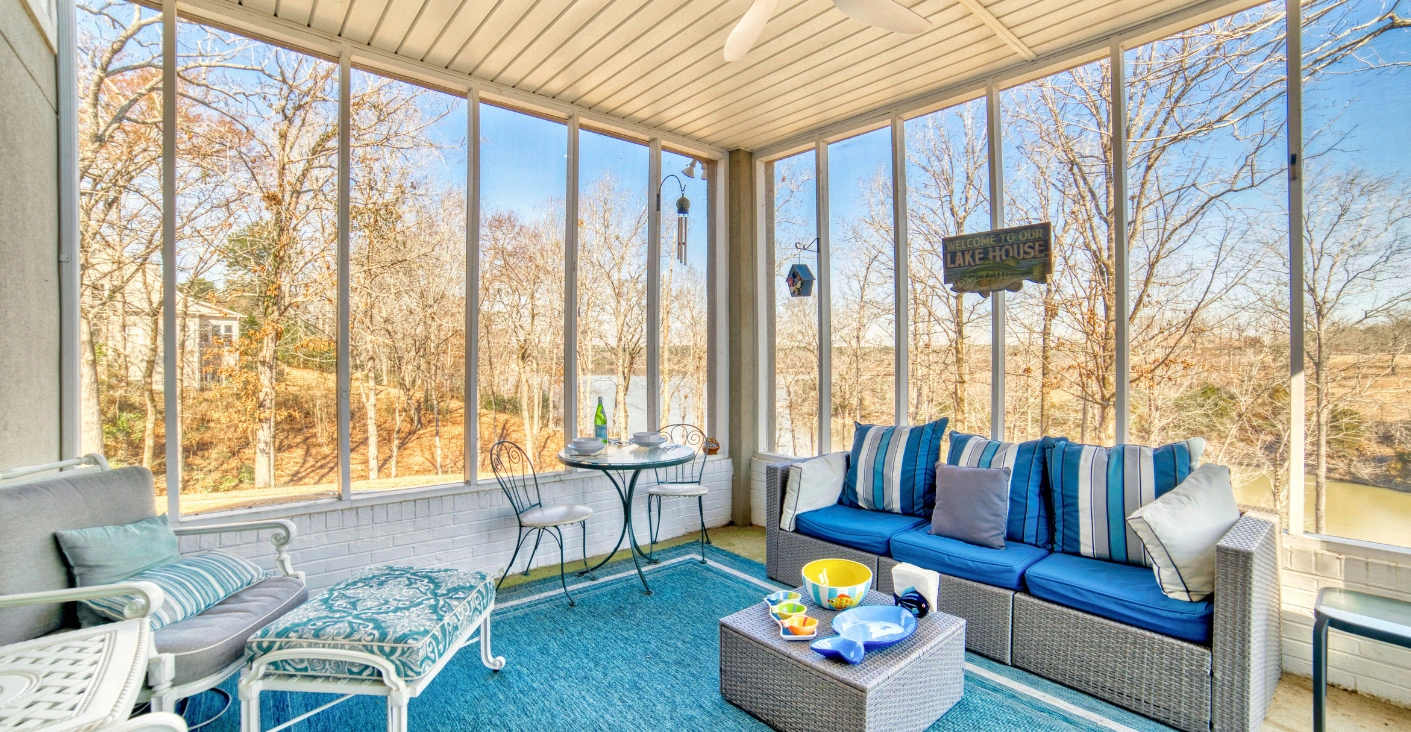
A Conservatory is one of the most glass-intensive and visually elegant sunroom styles. Traditionally, it is used as a bright garden room, sitting area, or statement architectural feature.
Best for: luxury homes, plant lovers, bright formal sitting rooms, homeowners who want a premium visual statement.
Texas note: Beautiful, but one of the most climate-sensitive choices. Without strong thermal design, it can become too hot.
4. Deck Enclosures
A Deck Enclosure is built around an existing deck structure and encloses it using screens, windows, panels, or other materials. It is often used when homeowners want to convert an exposed outdoor deck into a more protected usable area.
Best for: homes with an existing deck, elevated or rear outdoor zones, homeowners wanting a lighter upgrade.
Texas note: The structure must be evaluated carefully, because not every deck is suitable for full enclosure loads.
5. Enclosures
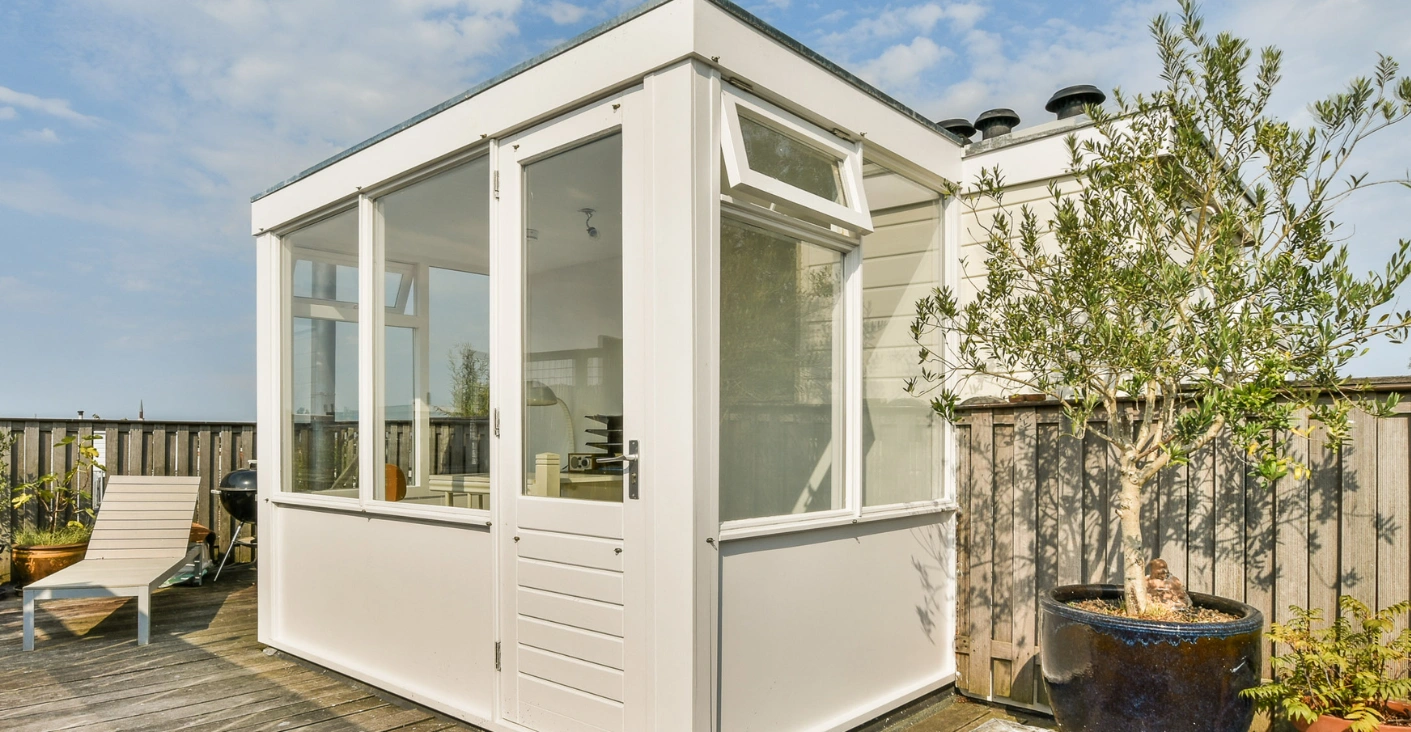
The term Enclosures is broad and may refer to any enclosed patio, porch, deck, or outdoor-living conversion. It is more of a category label than a precise room type.
Best for: general exterior room conversions, homeowners still deciding between screen, glass, or hybrid systems.
Texas note: This category can include everything from simple screened spaces to complex insulated rooms.
6. Gabled Sunrooms
A Gabled Sunroom uses a gable-style roof, often matching traditional home architecture. It is a popular choice because it looks more residential and integrated than flatter or simpler roof systems.
Best for: traditional homes, strong architectural matching, balanced light and visual appeal.
Texas note: A good option for homes in Texas where you want the addition to look original to the house.
7. Integrated Sunrooms
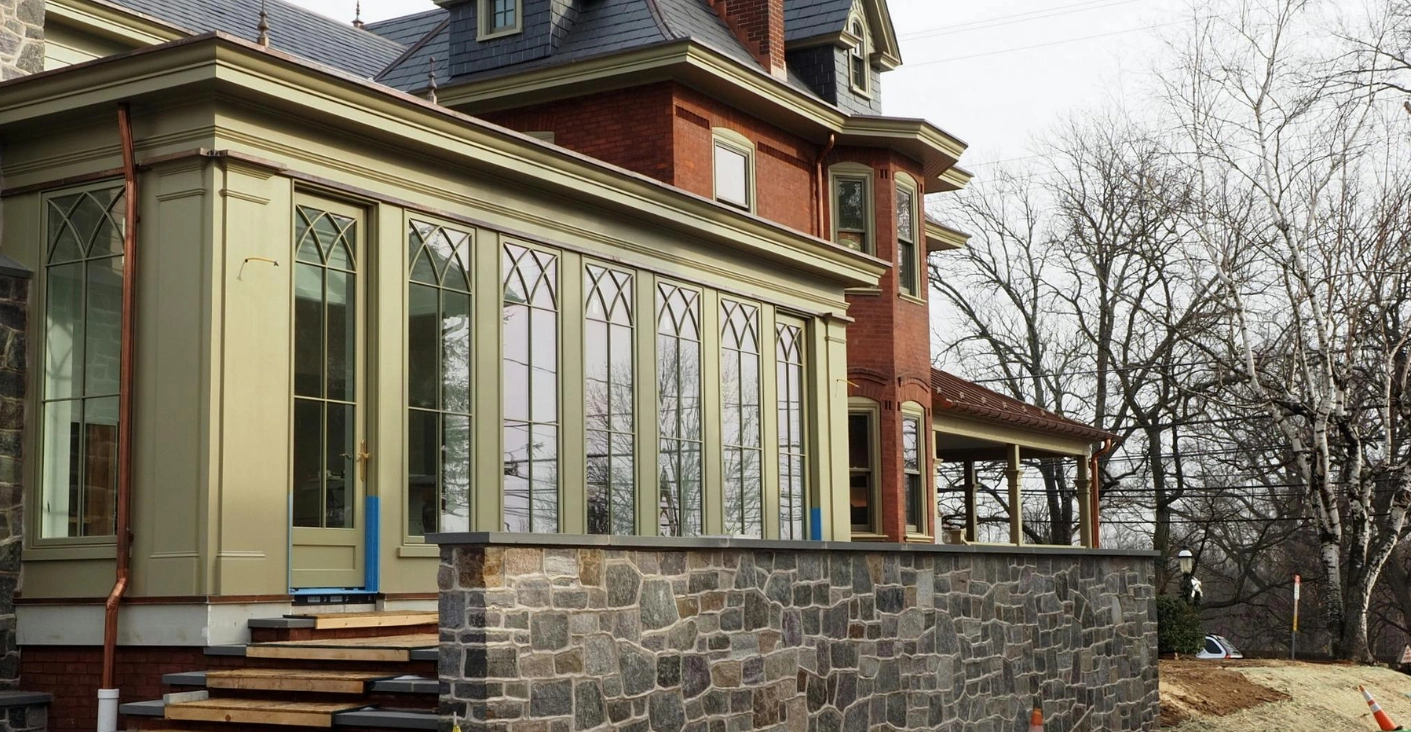
An Integrated Sunroom is designed to blend closely with the existing house in both structure and appearance. It often has matching rooflines, coordinated trim, and a finished interior that feels like a natural extension rather than an add-on.
Best for: homeowners wanting the highest visual integration, strong resale presentation, family living use.
Texas note: This is one of the strongest long-term choices if the budget allows.
8. Patio Covers
A Patio Cover is not a sunroom. It is a roofed structure over a patio that provides shade and some weather protection but does not fully enclose the space. It is often the starting point before homeowners consider a patio enclosure.
Best for: shade, outdoor seating, lower-cost backyard improvements.
Texas note: Very practical in Texas, especially for sun control, but it does not provide the same insect or climate protection as an enclosure.
9. Patio Enclosures
A Patio Enclosure takes an existing covered or uncovered patio and encloses it with framing, screens, glass, or panels to make it more usable. It is one of the most common backyard upgrades.
Best for: homeowners wanting a practical outdoor-living upgrade, lower budgets than full sunrooms, bug and weather protection.
Texas note: Excellent for casual use, but not always ideal for true year-round comfort unless upgraded substantially.
10. Porch Enclosures
A Porch Enclosure converts an existing front or rear porch into a more protected usable space. It can be screened, glazed, or partially enclosed depending on the goal.
Best for: homes with deep porches, transitional sitting areas, maximizing an underused porch footprint.
Texas note: Great for improving usability without a full addition feel.
11. Screen Rooms
A Screen Room is an enclosed area that uses screen panels rather than full glass or insulated wall systems. It keeps out insects while allowing airflow.
Best for: homeowners who value breeze and open-air feeling, lower-cost outdoor comfort, casual lounging and entertaining.
Texas note: One of the most popular practical options in Texas because of mosquitoes and long warm seasons.
12. Studio Sunrooms
A Studio Sunroom usually has a simpler, single-slope roofline and a cleaner, more streamlined design. It is often more economical than more dramatic roof styles.
Best for: modern or simpler home designs, cost-conscious sunroom projects, homeowners wanting clean lines.
Texas note: A strong practical option when paired with good glazing and shading.
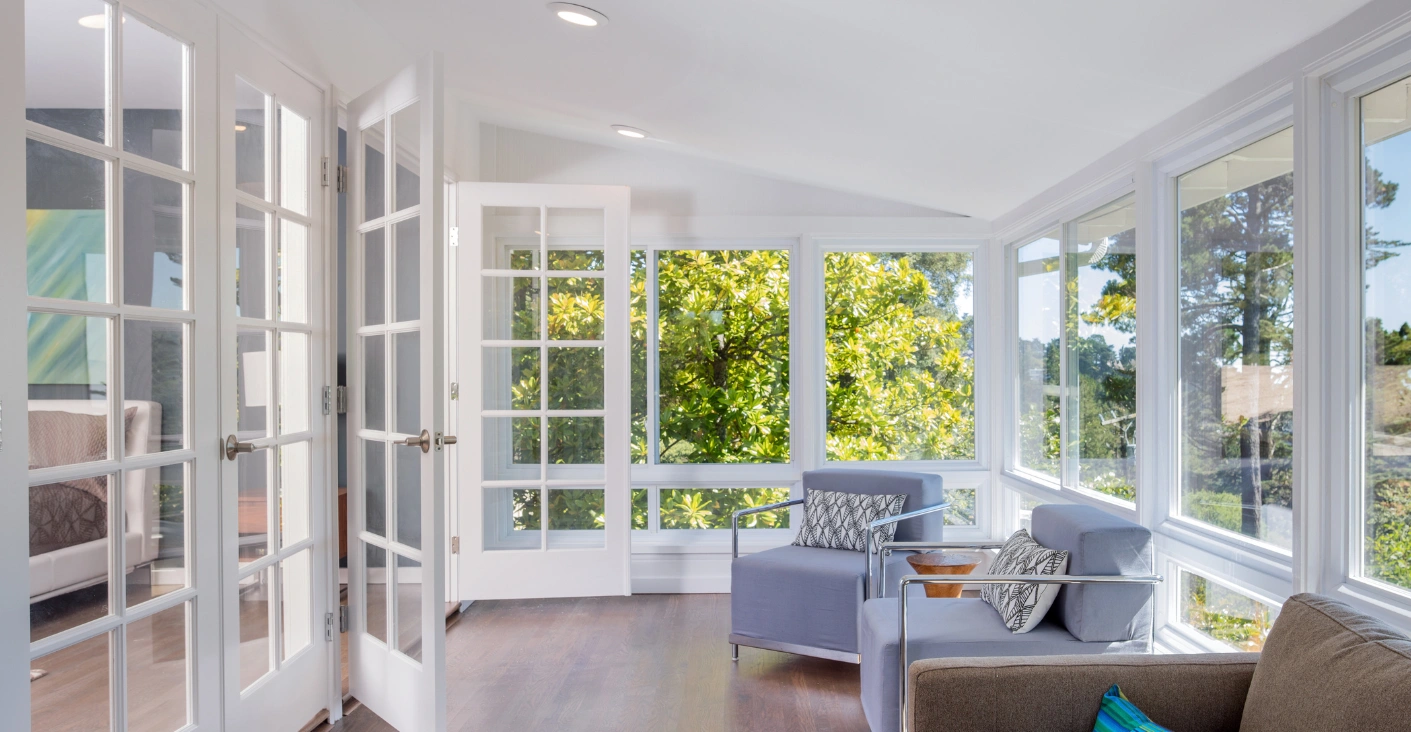
Understanding which sunroom type fits your home is closely connected to your overall renovation priorities. If you are also planning interior upgrades alongside this project, see our guide on best custom built-ins and cabinets in The Woodlands for ideas on how to integrate built-in storage and design details into a sunroom or adjacent living space.
Best Neighborhood and Home-Type Fits in The Woodlands
A location section matters because not every home benefits equally from the same sunroom design.
Creekside Park
Often a good fit for more contemporary, cleaner-lined sunrooms that connect to patios, pools, or outdoor kitchens.
Sterling Ridge and Indian Springs
Good candidates for family-oriented sunrooms used as second living spaces or breakfast rooms.
Cochran's Crossing and Panther Creek
Many homes here can benefit from updates that make older patio areas more usable and architecturally refreshed.
Grogan's Mill
Older homes with mature lots may offer excellent opportunities for thoughtful sunrooms, especially where backyard trees and privacy are already strong assets.
Alden Bridge
Well-suited to flexible family sunrooms that work as play, lounge, or entertaining spaces.
These are not hard rules. The more important local filter is lot condition, rear-yard depth, setback constraints, home style, and how much direct sun the back elevation receives. Homeowners in established neighborhoods who are also reviewing other long-term livability upgrades may find our aging in place remodeling guide for The Woodlands useful — especially for homes where a sunroom is being considered alongside broader accessibility and comfort planning.
Is a Sunroom Better Than a Patio Cover, Screen Room, or Full Addition?
Better Than a Patio Cover
Yes, if you want more weather protection, more year-round use, and a space that feels closer to the home interior.
Better Than a Screen Room
Usually yes, if comfort and resale presentation matter more than pure airflow and lower cost.
Better Than a Full Addition
Not always. But if your goal is a flexible lounge, dining, or transition room rather than a bedroom or code-heavy living-area expansion, a sunroom can be much more cost-efficient. For a direct comparison of these options, see our full guide on accessory dwelling units vs home additions in The Woodlands, Texas, which covers how different project types stack up on cost, permitting, and long-term value.
Common Mistakes The Woodlands Homeowners Should Avoid
The first mistake is underestimating heat gain. A beautiful glass room that becomes unpleasant by late morning in July is not a successful project. The second is skipping local approvals or assuming a contractor can "handle it later." The third is overspending on square footage while underspending on glazing quality and comfort systems. The fourth is poor architectural matching. The fifth is building a room that is too specialized and not flexible enough for how families actually live.
Many of the same planning oversights that affect sunroom projects also come up in bathroom and interior remodeling. If you are coordinating multiple upgrades at once, see bathroom remodeling for aging in place in The Woodlands, Texas for a look at how material choices and structural planning apply across different project types in this market.
Why Choose Us for a Sunroom Project in The Woodlands
A sunroom is not just a glass box. It is an addition that has to work structurally, visually, and practically in a very specific climate. That means the right contractor should understand more than framing and finish work. They should understand neighborhood standards, setback realities, humidity-related material performance, roof tie-ins, drainage, thermal comfort, and the difference between a low-end enclosure and a room that genuinely improves the house.
We approach sunroom projects with that full-picture mindset. First, we look at how the room will actually be used, because the right design for a family lounge is not the same as the right design for a quiet reading room or backyard entertaining space. Second, we design around The Woodlands climate instead of copying ideas from cooler or drier markets. Third, we focus on architectural fit, so the finished room feels intentional and connected to the existing home. Fourth, we plan around approvals and constructability early, which helps reduce budget surprises and rework. And finally, we keep the goal practical: to build a sunroom that feels comfortable, looks correct, and adds lasting value to the property.
To learn more about how we approach remodeling projects across The Woodlands, visit our Select Remodeling & Construction main site, or contact our team to discuss your sunroom project in detail.
Final Thoughts
For many homeowners in The Woodlands, a sunroom is one of the smartest ways to gain functional square footage without committing to the cost and disruption of a full conventional addition. The local climate supports the idea, the housing market can reward quality upgrades, and the project can deliver meaningful day-to-day value when it is designed properly. The key is to choose the right type of room, plan the budget realistically, account for Township and county approvals, and treat comfort performance as seriously as aesthetics. Done correctly, a sunroom becomes more than an upgrade. It becomes one of the most enjoyable spaces in the home.
If you are comparing this project to other major home investments, see our related guides on accessory dwelling units vs home additions in The Woodlands and bathroom remodel ideas that add value to your Woodlands property to build a complete picture of how your renovation dollars can work together.
When you are ready to move forward, contact our remodeling contractors to discuss your sunroom and renovation plan, or get a free estimate.
Choosing the right contractor matters. Reach out to Remodeling contractors The Woodlands & nearby areas like Spring, Conroe, Tomball, and Magnolia.