

Introduction
In 2026, Texas homeowners are remodeling with intention. Across Houston, Dallas, Austin, San Antonio, and growing suburban communities — including Spring, The Woodlands, Conroe, Tomball, Magnolia, and Klein — many families are making a deliberate choice to upgrade their existing homes rather than compete in a challenging move-up market. Elevated mortgage rates, rising construction replacement costs, and limited inventory in desirable neighborhoods have shifted the prevailing homeowner mindset from "move up" to "upgrade smart." Many homeowners start exploring options through professional home remodeling services to understand which upgrades will deliver the best long-term value.
Texas buyers are also more informed than ever. They compare listings with precision, evaluate energy efficiency, factor renovation costs into their offers, and bring home inspectors who identify deferred maintenance and outdated systems. Homes that feel updated, functional, and climate-appropriate consistently outperform outdated properties in listing appeal, days on market, and final sale price. This is why many homeowners begin planning projects with local experts offering home remodeling services in The Woodlands, as well as nearby communities such as Conroe, Spring, Tomball, and Magnolia, where remodeling demand continues to grow.
The question for today` s Texas homeowner has evolved. It is no longer "What looks good?" It is "What actually adds measurable value relative to what it costs?" That answer depends on Texas climate realities, local buyer behavior, neighborhood price ceilings, and the specific systems and spaces that most affect buyer perception and appraiser confidence. Homeowners who want to evaluate their options or start planning a renovation can also contact our remodeling contractors to discuss project ideas and local market considerations.
What "Value" Actually Means in Texas Real Estate
Before investing in any home improvement, it is essential to understand how value is actually measured in Texas real estate because it is not the same as renovation cost, and the gap between the two surprises many homeowners.
In Texas, home value is determined by comparable sales — what similar homes in your neighborhood have recently sold for not by what your renovation cost. Appraisers compare recent nearby transactions and adjust for square footage, condition, upgrades, and functionality. If updated homes with modern kitchens and bathrooms consistently sell for more in your neighborhood, those upgrades carry measurable appraisal weight. If they do not — because comparable homes are not selling at that level — the investment premium does not transfer to market value.
The Neighborhood Price Ceiling Reality
Every Texas neighborhood has an effective price ceiling the maximum price at which homes can realistically transact given the comparable sales data. Overspending beyond neighborhood norms rarely pays off in appraised value. A $150,000 luxury kitchen renovation in a $350,000-median neighborhood will not push your home's appraisal to $500,000 — comparable sales cap the ceiling regardless of upgrade quality.
Remodeling decisions must align with the market tier of the home and the neighborhood. The highest-ROI remodels bring a home up to the standard of the best-performing comparable sales — they do not attempt to push above that ceiling. This is the foundational strategy that separates smart Texas remodeling decisions from expensive ones.
Two Types of Value: Financial ROI and Quality-of-Life Return
Financial ROI — the percentage of renovation cost recovered through increased home value at sale — is the metric most homeowners focus on. But quality-of-life return is equally real: the daily comfort, functional improvement, and aesthetic enjoyment delivered by a well-executed remodel during the years you live in the home. For homeowners with a long time horizon, quality-of-life return often justifies investments that pencil out less favorably on pure financial ROI alone.
In 2026, the most reliable value-adding remodels in Texas fall into five categories: kitchens, bathrooms, energy performance improvements, functional space expansions, and outdoor living upgrades — in roughly that priority order for most Texas markets.
Kitchen Remodeling: Texas' Strongest ROI Category
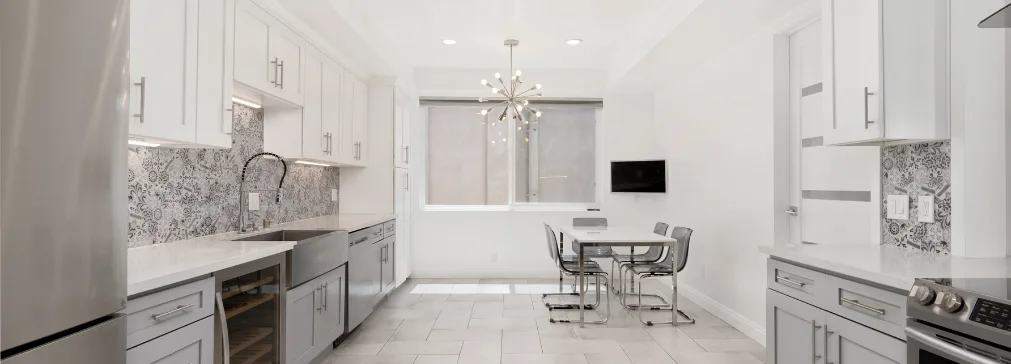
Kitchen remodeling remains the single strongest ROI driver across most Texas markets in 2026. From master-planned communities in The Woodlands and Spring to established suburban neighborhoods in Klein and Conroe, buyers consistently rank kitchen condition and layout among their top evaluation criteria and sellers with updated kitchens face significantly less negotiation pressure and shorter days on market.
Why Kitchen ROI Is So Strong in Texas
Texas families use kitchens as central gathering spaces a cultural reality that amplifies the buyer impact of kitchen quality beyond what market data alone explains. Open-concept living remains dominant across Texas markets, and buyers prioritize seamless flow between kitchen, dining, and living areas. A kitchen that does not integrate with the main living space, or one that still has the isolated, compartmentalized layout common in pre-2000 Texas homes, immediately feels dated to today's buyers regardless of surface condition.
Additionally, Texas buyers closely evaluate countertop surfaces, cabinet quality, and appliance condition. An outdated kitchen with laminate countertops, dark cabinet finishes, and original 1990s appliances is one of the most visible triggers for buyer price concession requests in Houston-area listings.
Typical Texas Kitchen Remodel Cost Ranges (2026)
- Minor kitchen refresh (paint, hardware, countertops, sink, lighting): $20,000–$40,000 — highest percentage ROI, lowest risk
- Mid-range kitchen remodel (cabinet refacing or replacement, quartz countertops, new appliances, layout optimization without structural changes): $45,000–$75,000
- Major structural remodel (wall removal, open-concept conversion, full custom cabinetry, large island, premium appliances): $80,000–$150,000+
ROI Potential in Texas
Mid-range kitchen remodels in Texas commonly return 65–80% of investment in increased home value at resale. The strongest returns come from layout improvements — particularly open-concept conversions — and durable, market-appropriate material choices rather than top-of-market luxury upgrades. A well-executed mid-range kitchen remodel in a $450,000 Spring TX home carries significantly higher ROI than a $120,000 custom kitchen in the same property because the latter pushes above the neighborhood price ceiling.
For Spring TX and North Houston area homeowners, our Spring kitchen remodel projects and Conroe kitchen remodel projects illustrate the quality and approach our team brings to kitchen renovations across this market.
Bathroom Remodeling: Buyer Confidence Builder
In Texas, outdated bathrooms do more than look dated — they actively signal deferred maintenance to buyers and their home inspectors. Buyers who encounter builder-grade tile surrounds, original 1990s vanities, outdated fixtures, and failing caulk lines do not simply see cosmetic issues. They assume there may be hidden moisture problems, aging plumbing, and structural issues behind the surfaces. Updated bathrooms remove that assumption entirely and replace it with buyer confidence.
What Texas Buyers Expect in 2026
The renovation features that carry the most buyer influence in Texas bathroom remodels in 2026:
- Walk-in tile showers replacing builder-grade tub/shower combos — the single most impactful bathroom upgrade for primary suite appeal in the Texas market
- Large-format porcelain tile on floors and shower walls — 24×24 and larger formats now expected in mid-range and above primary bathrooms
- Neutral, timeless finishes that present well in listing photography — buyers view hundreds of listings online before scheduling tours; bathroom photography strongly influences which homes make the tour list
- Improved ventilation — particularly important in Texas humidity; buyers and their inspectors specifically look for properly installed exhaust systems
- Water-efficient fixtures — becoming an increasingly common buyer evaluation point in the Texas market as utility costs remain a consistent concern
- Double vanities with quartz countertops in primary bathrooms — now a standard expectation in $400,000+ Texas homes
Typical Texas Bathroom Remodel Cost Ranges (2026)
- Guest or hall bathroom remodel: $18,000–$32,000 for a mid-range scope with tile shower, new vanity, updated fixtures, and lighting
- Primary bathroom remodel: $30,000–$65,000 for a comprehensive transformation with custom tile shower, double vanity, frameless glass, and premium fixtures
- Luxury spa-style primary bath: $65,000–$100,000+ with steam shower, heated floors, freestanding tub, custom cabinetry, and premium tile
ROI Potential in Texas
Mid-range bathroom remodels in Texas commonly return 60–75% ROI at resale. The strongest returns come from primary bathroom upgrades in homes where the existing bathroom is significantly below comparable sale standards. Guest bathroom refreshes deliver strong percentage ROI at lower investment levels and are excellent pre-sale upgrades.
For Spring TX and surrounding area homeowners, review our completed bathroom remodel work: Shenandoah bathroom remodels, Oak Ridge North bathroom remodels, and Magnolia bathroom remodels. For detailed Spring TX bathroom remodeling cost guidance, see our average cost of bathroom remodel in Spring TX (2026) and factors affecting bathroom remodel costs in Spring TX.
Energy-Efficient Upgrades in Texas Climate
Texas's long, intense cooling seasons make energy efficiency a uniquely powerful factor in home value and buyer appeal. In markets like Spring, The Woodlands, and the greater Houston area — where summer cooling costs are a persistent household expense — buyers pay close attention to windows, insulation, roofing, and HVAC system age. Homes with known energy efficiency advantages command buyer confidence and face less negotiation resistance from buyers citing expected maintenance or replacement costs.
High-Impact Energy Upgrades for Texas Homes
Window Replacement: Single-pane windows in older Texas homes are a significant source of heat gain and cooling loss. Whole-home window replacement with low-E, double-pane, energy-rated windows is a highly visible upgrade that improves comfort, reduces utility costs, and signals to buyers that the home has been maintained to a modern standard. Typical cost range: $15,000–$35,000 for a full replacement depending on home size and window count.
Roofing Upgrades: Texas roofing takes significant weather stress — hail, UV exposure, and thermal cycling. Buyers and their home inspectors specifically evaluate roof condition and age. A new roof or recently replaced roof reduces buyer negotiation leverage and in some cases improves insurance rates. Typical cost range: $12,000–$25,000 depending on square footage and material selection.
Insulation Improvements: Attic insulation upgrades deliver consistent ROI in Texas because the attic is the primary heat transfer pathway in the cooling season. Spray foam air sealing combined with blown-in insulation upgrades can meaningfully reduce cooling costs in homes with original builder-grade insulation. Typical range: $3,000–$8,000 for targeted attic improvements.
HVAC System Replacement: An aging HVAC system is one of the most common buyer negotiation points in Texas home sales. A recently replaced high-efficiency system removes that negotiation pressure, improves buyer confidence, and delivers measurable utility savings. HVAC replacement costs vary significantly by system size and configuration but commonly range from $8,000–$18,000.
ROI Consideration for Energy Upgrades
Energy upgrades do not always show a direct 1:1 financial return in appraisal value — appraisers may not credit energy improvements at full replacement cost. However, they protect resale value by eliminating a major buyer negotiation trigger, and in competitive Texas listing situations, they can be the differentiating factor that reduces days on market or supports asking price more effectively than cosmetic upgrades of similar cost.
For Texas homeowners concerned about moisture management — particularly relevant in the Houston area — proper insulation and ventilation tie directly to long-term home health. Read more in our guide on choosing the right materials for humid Texas weather.
Home Additions: Expanding Instead of Moving
Across Texas, families are increasingly choosing to add space to their existing homes rather than absorbing the transaction costs, financing challenges, and relocation disruption of moving. In 2026, the combination of elevated mortgage rates — where many Texas homeowners are sitting on 3–4% rate financing they would lose by purchasing a new home — and rising replacement construction costs has made home additions a financially compelling alternative to moving for many households.
Most Common Home Addition Types in Texas (2026)
- Primary suite addition: Adding a primary bedroom and bathroom wing to homes that lack one — particularly valuable in older Texas homes built before primary suite separation was standard. High buyer appeal in listings, strong ROI in the right market tier.
- Home office addition: The sustained prevalence of remote and hybrid work has made dedicated home office space a functional requirement for many Texas buyers. Converted spaces feel temporary; purpose-built office additions deliver permanent value.
- Family room or living space expansion: Opening up the footprint of a home where the existing layout is constraining — particularly relevant in smaller 1980s and 1990s Texas homes where floor plans were not designed for open-concept living.
- In-law suite or accessory dwelling: Growing demand for multigenerational living options has increased the appeal of attached or detached accessory dwelling units in Texas markets where lot sizes permit them.
Typical Home Addition Cost Ranges in Texas (2026)
- Small addition (200–400 sq. ft.): $60,000–$120,000 depending on scope, finishes, and whether plumbing and electrical are included
- Mid-size addition (400–800 sq. ft.): $100,000–$200,000 for a well-finished addition with full systems integration
- Large structural addition: $150,000–$350,000+ for major footprint expansions or additions requiring significant structural and site work
ROI and Financial Logic for Texas Additions
Home addition ROI in Texas generally ranges from 50–70% — lower percentage return than kitchens and bathrooms on a cost-per-dollar basis. However, the financial comparison is not always addition cost vs. addition ROI — it is often addition cost vs. the total cost of purchasing a new home of the desired size. When you factor in realtor commissions (5–6%), closing costs (2–3%), moving expenses, and the higher interest rate on a new mortgage, the effective cost of "moving up" for 400 additional square feet can easily exceed $80,000–$120,000 in total transaction costs alone — making a $100,000 well-designed addition the financially superior choice.
For North Houston and Spring TX area homeowners interested in room additions, our Harris County room addition projects show how our team approaches permitted, professionally managed addition work in this market. For whole-home remodels that include addition scope, see our Imperial Oaks home remodel and Kingwood full interior remodel project galleries.
Outdoor Living & Curb Appeal in Texas
Outdoor living is one of the most Texas-specific value drivers in residential remodeling. The climate that makes air conditioning essential also delivers a substantial portion of the year where outdoor living space is genuinely pleasant — particularly in the spring and fall months that bracket the intense summer heat. Texas families who invest in well-designed outdoor living spaces extend their usable square footage in the most enjoyable months of the year, and buyers recognize this as tangible lifestyle value.
Highest-Value Outdoor Upgrades for Texas Homes
Covered Patio or Outdoor Living Room: A well-constructed covered patio — particularly one that provides meaningful shade from the Texas afternoon sun — is one of the most universally appreciated outdoor upgrades across Texas markets. Buyers immediately evaluate usability: is there shade? Is there weather protection? Is there space for furniture and gathering? A covered patio that answers yes to all three consistently improves listing appeal. Typical cost: $20,000–$50,000 depending on size, roofline integration, and materials.
Outdoor Kitchen: Outdoor cooking and entertaining is deeply embedded in Texas culture, and an outdoor kitchen — even a well-equipped grill station with countertop, sink, and refrigerator — elevates the perceived quality of a home's outdoor space significantly. Full outdoor kitchen builds with multiple cooking stations, covered pergola, and entertainment systems can reach $40,000–$80,000+. Targeted, well-designed functional outdoor kitchen stations at $15,000–$30,000 often deliver stronger ROI because they are accessible to a broader buyer pool.
Landscaping and Curb Appeal: The first impression a buyer forms about a home — before they ever set foot inside — is the exterior and front landscaping. Well-maintained, updated landscaping with fresh mulch, defined bed edges, and healthy mature plants consistently improves listing photography, drives more buyer tour requests, and supports asking price against comparable listings with neglected exteriors.
Privacy Fencing and Yard Usability: Privacy fencing is particularly valued in Texas markets where lot sizes are smaller and neighborhoods are densely built. A well-fenced, usable backyard is a meaningful upgrade to families with children or pets and is a frequent buyer priority in suburban Texas communities.
ROI Context for Outdoor Improvements
Outdoor living improvements in Texas typically deliver 50–70% financial ROI in comparable sale adjustments, but their listing appeal impact — reducing days on market and competing favorably against similar properties without outdoor improvements — often makes them strategic pre-sale investments even when pure appraisal ROI is moderate.
Interior Modernization: Low-Cost, High-Impact
Interior modernization — flooring updates, fresh paint, and lighting upgrades — consistently delivers some of the strongest percentage ROI in residential remodeling because the investment is relatively modest while the impact on buyer perception is substantial. These improvements work by removing objections: they replace the visual signals of age, deferred maintenance, and outdatedness that cause buyers to reduce their offers or request price concessions.
Flooring Replacement
Original builder-grade carpet in main living areas, worn hardwood floors, or dated ceramic tile in off-trend colors are among the most common triggers for buyer discount requests in Texas home sales. Updated flooring — luxury vinyl plank (LVP) for its durability and moisture resistance, hardwood refinishing or replacement, or contemporary large-format tile in appropriate zones — fundamentally transforms the perceived quality of a home's interior at a cost that is far below what buyers typically price-discount for flooring.
Typical whole-home flooring replacement in Texas: $12,000–$30,000 depending on material selection and square footage. LVP is the most popular choice in Texas currently for its combination of durability, moisture resistance, and consistent mid-range buyer appeal.
Interior Paint
Fresh, neutral interior paint is the single highest percentage-ROI interior improvement available — consistently delivering multiple times its cost in buyer perception value. Dated wall colors, worn finishes, and heavy accent walls in bold colors that worked a decade ago now signal to buyers that additional updating is needed throughout the home. Contemporary neutral palettes — warm whites, soft greiges, and balanced greens — photograph well, feel spacious, and allow buyers to project their own furnishings onto the space.
Professional whole-home paint in Texas typically ranges from $8,000–$18,000 depending on home size, ceiling height, and scope. It is almost always worth doing before listing.
Lighting Modernization
Original builder-grade lighting fixtures — particularly the builder boob lights, outdated chandeliers, and fluorescent kitchen lighting common in Texas homes built before 2010 — are a consistent buyer perception detractor. Modern lighting upgrades: recessed LED lighting in main living areas, a statement fixture over the dining area, under-cabinet kitchen lighting, and contemporary vanity lighting in bathrooms collectively transform the ambiance of a home at a cost of $5,000–$15,000 for a targeted update scope.
Interior modernization improvements remove buyer objections and enhance resale competitiveness without requiring structural changes or major system work. They are often the highest-priority investment for homeowners preparing to list in 6–18 months, and they improve daily living quality immediately for homeowners with longer time horizons.
For guidance on material selection that holds up specifically in Texas's climate — particularly relevant for flooring and bathroom surfaces — read choosing the right materials for humid Texas weather.
Smart Remodeling Strategy for Texas Homeowners
Understanding which remodels add value is only the first half of a smart remodeling strategy. The second half is knowing how to sequence and scope your investments so they deliver maximum value relative to cost — in your specific home, in your specific neighborhood, at your specific price point.
Step 1: Start with Neighborhood Analysis
Before committing to any major renovation investment, study recent comparable sales in your neighborhood. What are the top-performing homes selling for? What features do they have that yours does not? What are buyer agents and home inspectors consistently flagging in homes at your price point? This analysis defines the gap between where your home is and where the top comparable sales are — and that gap is your highest-ROI remodeling opportunity.
Step 2: Prioritize Kitchens and Bathrooms First
For most Texas homeowners in established neighborhoods, the highest-ROI sequence is: kitchen first (if significantly below comparable standard), primary bathroom second, guest bathroom third. These three spaces drive the most buyer perception value and the strongest appraiser adjustments. Energy upgrades, additions, and exterior improvements are valuable but generally secondary unless a specific deficiency is materially affecting resale competition.
Step 3: Match Investment Level to Neighborhood Price Tier
A $70,000 kitchen in a $350,000 neighborhood is over-invested. A $30,000 kitchen in a $650,000 neighborhood is under-invested. The right investment level is the one that brings your home to the standard of the best-performing comparable sales — not above it, and not below it. Licensed contractors who work regularly in your specific Texas market can help you calibrate this correctly.
Step 4: Always Secure Permits for Regulated Work
Any remodel involving plumbing, electrical, structural, or mechanical systems requires permits. Well-documented, inspected upgrades protect resale credibility, maintain insurance validity, and prevent the expensive retroactive compliance scenarios that unpermitted work creates at home sale. The permit fee is always less expensive than the alternative.
For Spring TX homeowners specifically, our complete permit and inspection resource library covers every stage of the compliance process — see permit requirements for bathroom remodels in Spring TX, how to apply for a bathroom remodel permit in Spring TX, and the inspection process after permit approval.
Step 5: Plan Design Completely Before Construction Begins
Every design decision made during construction costs more than the same decision made before demolition begins. Finalize material selections, fixture specifications, and layout decisions completely before the first wall comes down. This prevents the scope creep and mid-project change orders that are the most common cause of remodeling projects exceeding their budgets.
Step 6: Budget a 10–15% Contingency for Hidden Issues
Texas homes — particularly those built in the 1980s through 2000s frequently have hidden moisture damage, aging plumbing, and previous non-code-compliant work behind walls. Budgeting 10–15% of your total estimated project cost as a hidden issue contingency prevents a mid-project discovery from derailing your budget and timeline. This is standard practice for experienced contractors working in the Texas market.
For guidance on planning a full bathroom renovation from start to finish in 2026, read our step-by-step bathroom renovation guide for 2026.
Final Thoughts
The smartest remodel is not the most expensive one, it is the one aligned with Texas market realities, your neighborhood's price tier, and your personal time horizon. A well-planned, properly permitted, professionally executed remodel delivers both financial return and daily quality-of-life improvement for the years you enjoy it before sale.
Our team at Select Remodeling & Construction works with homeowners across the greater Houston area Spring, The Woodlands, Conroe, Tomball, Klein, Magnolia, and surrounding communities to deliver high-ROI remodeling projects aligned with local market conditions. Explore our completed work across bathroom remodeling, kitchen remodeling, whole-home renovations, and room additions through our project gallery.
Ready to plan your next high-ROI renovation? Visit our contact page or get directions and read client reviews then reach out to remodeling experts in The Woodlands, TX.
Choosing the right contractor matters. Reach out to Remodeling contractors The Woodlands & nearby areas like Spring, Conroe, Tomball, and Magnolia.