

Introduction
Bathroom remodeling in Spring, TX can dramatically improve daily comfort, property value, and long-term energy efficiency. But there is one phase of the process that homeowners routinely underestimate — until it causes a project to grind to a halt: the inspection process.
Failing a bathroom remodel inspection does not just mean filling out a correction notice and moving on. It means project delays measured in days or weeks, rework costs that can run into the thousands, re-inspection fees, contractor rescheduling challenges, and in the worst cases — demolition of completed tile work or drywall to expose systems that were not properly inspected before being covered.
The frustrating reality is that the vast majority of bathroom remodel inspection failures in Spring TX are not caused by major structural disasters. They are caused by a predictable, recurring set of small oversights — improper drain slope, missing GFCI protection, exhaust fans venting into the attic, shower pan flood tests skipped, and walls closed before rough-in approval. Every one of these is preventable.
Understanding exactly why inspections fail — before your project starts, not after the inspector hands you a correction notice — is the most effective way to protect your timeline and budget. This guide breaks down the 12 most common inspection failure reasons in Spring TX bathroom remodels, explains what happens at each failure stage, and gives you the pro tips that experienced contractors use to pass inspections the first time.
Before diving in, make sure you have also reviewed permit requirements for bathroom remodels in Spring TX and ways to avoid failed bathroom remodel inspections in Spring TX — these three guides together give you the most complete picture of what compliance requires.

Working with professionals who understand Spring TX code requirements and inspector expectations dramatically reduces inspection risk. Our team at Select Remodeling & Construction — Bathroom Remodeling in Spring TX handles permits, code compliance, and inspection coordination as part of every project.
Why Bathroom Remodel Inspections Matter in Spring TX
Spring TX falls under Harris County or Montgomery County jurisdiction depending on your specific property address, with some properties further governed by Municipal Utility District (MUD) requirements. Any remodel involving plumbing changes, electrical updates, structural modifications, or ventilation adjustments requires permits and mandatory inspections — and this is strictly enforced across both county jurisdictions.
Inspectors in Spring TX verify compliance with a layered set of standards:
- International Residential Code (IRC) — covering structural, plumbing, mechanical, and energy requirements
- National Electrical Code (NEC) — governing all electrical system safety requirements
- Texas State Plumbing License Law and IPC — state-level plumbing standards that apply to all permitted plumbing work
- Local county amendments — Harris County and Montgomery County both adopt amendments to base codes that affect specific requirements
- Texas energy code requirements — insulation, vapor barriers, and ventilation standards tied to Climate Zone 2
Failing inspection in Spring TX has real consequences that extend well beyond the immediate project:
- Stop-work orders that freeze the entire project until violations are corrected
- Re-inspection fees ($50–$150 per visit) plus rescheduling delays
- Project timeline extensions of 1 to 3 weeks per failed stage
- Resale complications — unpermitted or uninspected work surfaces during home sale inspections and can require expensive retroactive correction
- Insurance claim denials — insurers may deny water or fire damage claims tied to uninspected systems
- Required demolition — if work is covered before inspection, drywall and substrate removal may be required to expose systems for belated inspection
Many inspection failures are not major structural issues — they are small technical violations that are quick and inexpensive to fix before walls are closed, but become very expensive to address after tile and drywall are in place. Catching them early is always the right strategy.
For a full picture of the inspection sequence and what each stage covers in Spring TX, read our guide on the inspection process after bathroom remodel permit approval in Spring TX.
The 12 Most Common Reasons Bathroom Remodel Inspections Fail in Spring TX
The following failure points are drawn from the most frequently issued correction notices in Spring TX bathroom remodel inspections. Each one is preventable — the key is knowing what to look for before the inspector arrives.
1. Improper Plumbing Venting
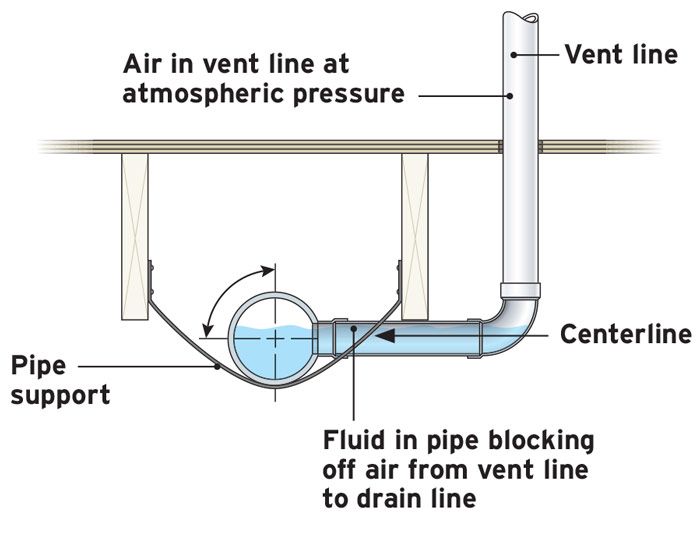
Plumbing venting violations are consistently among the top inspection failure causes in Spring TX. Every plumbing fixture must be properly vented to prevent trap siphoning, sewer gas entry, and slow drainage — and inspectors scrutinize vent configurations carefully at rough-in.
Common venting failures inspectors flag:
- Fixtures not connected to an approved vent system — leaving traps vulnerable to siphoning
- Incorrect vent pipe sizing — pipe diameter too small for the fixture unit load
- Horizontal drain runs without proper 1/4-inch-per-foot slope — causing standing water and sewer gas buildup
- Illegal wet vent configurations — wet venting is permitted under IPC but must follow strict sizing and connection rules
- Trap arm lengths exceeding code limits — arm too long between trap and vent connection
- Vent terminations too close to windows, doors, or air intakes
For the complete plumbing venting requirements that apply in Spring TX, see our guide on Spring TX plumbing code requirements for bathroom remodels.
2. Incorrect Shower Pan Installation and Failed Flood Test
Shower pan failures are among the most expensive inspection failures in Spring TX because they are often discovered after tile has already been installed — requiring complete demolition of finished work before the liner can be repaired and retested. The shower pan flood test is a mandatory inspection stage, and it must be completed and documented before tile installation begins.
Most common shower pan installation failures:
- No pre-slope installed under the liner — water pools under the liner instead of draining to the weep holes
- Improperly folded liner corners — the single most common source of liner leaks in the field
- Fastener penetrations below the flood line — nails or screws through the liner create immediate leak points
- Flood test not completed or not documented before calling inspection — inspection cannot be passed without the 24-hour test result
- Missing curb waterproofing — liner does not extend minimum 2 inches above the curb top
- Incompatible drain assembly — weep holes blocked or drain not rated for the liner type used
For the full shower pan installation requirements and flood test procedure, see the shower waterproofing section of our Spring TX plumbing code requirements guide and our complete rough-in inspection preparation checklist.
3. Missing or Improperly Wired GFCI Protection
Ground Fault Circuit Interrupter (GFCI) protection is mandatory for all bathroom receptacles under both the NEC and local Spring TX code amendments. Inspectors physically test every GFCI device during both rough-in electrical inspection and final inspection — and GFCI failures are among the most common correction notices issued in Spring TX bathroom remodels.
GFCI violations inspectors flag:
- Receptacles not GFCI-protected — standard outlet installed in bathroom where GFCI is required
- GFCI device wired in incorrect load/line orientation — LINE and LOAD terminals reversed, eliminating downstream protection
- Missing grounding at GFCI outlets — ground wire not connected or box not properly grounded
- GFCI protection missing on all downstream outlets — a single GFCI can protect multiple outlets wired downstream, but the circuit must be correctly configured
- Dedicated circuit requirements not met — bathroom receptacle circuit not sized to NEC recommendations
4. Exhaust Ventilation Problems — Fan Venting Into Attic
Improper exhaust fan installation is a top inspection failure trigger in Spring TX — and it is especially damaging in this humid subtropical climate. An exhaust fan that vents into the attic rather than the exterior does not remove moisture from the bathroom — it deposits warm, humid air directly into the attic structure, causing mold growth, insulation compression, and structural wood rot.
Ventilation violations that inspectors flag:
- Exhaust duct terminating in the attic space rather than through the roof or exterior wall — the single most common ventilation violation in Spring TX
- Duct joints not sealed — unsealed joints allow moisture to escape into wall cavities
- Incorrect duct diameter — unapproved reducers that restrict airflow
- Missing or non-functional backdraft damper at exterior termination cap
- Fan CFM rating insufficient for bathroom square footage
- Fan not wired to a switched circuit — fan must be independently controllable
Proper exhaust ventilation is especially important in Spring's climate. For more on how ventilation affects long-term material performance, see choosing the right materials for humid Texas weather.
5. Incorrect Drain Slope
Drain slope is the most technically straightforward requirement in plumbing code — and one of the most frequently violated. Inspectors in Spring TX check horizontal drain slope on every plumbing rough-in inspection, and both insufficient slope and excessive slope are flagged.
- Minimum 1/4 inch per foot slope required for drain pipes 2.5 inches in diameter or smaller
- Minimum 1/8 inch per foot slope required for pipes 3 inches and larger
- Slope must be consistent throughout the full run — sagging pipe sections that create low points are flagged even when average slope appears acceptable
- Excessive slope on small lines (steeper than 1/2 inch per foot) can cause solids to separate from liquids, leading to chronic clogs — also flagged in some inspections
6. Missing Nail Plates at Stud Penetrations
Steel nail plates are required by both the NEC and IPC wherever wires or pipes pass through framing members within 1-1/4 inch of the face of the stud or joist. Without nail plates, future drywall screws or finish nails can puncture wires or pipes concealed in the wall — creating electrical hazards or hidden water leaks.
Missing nail plates are one of the most consistently flagged items in Spring TX bathroom rough-in inspections — particularly in DIY remodels and projects where the rough-in was rushed. They are inexpensive and simple to install, but easy to overlook when attention is focused on larger system components.
7. Improper Waterproofing Behind Tile
A critical misconception among DIY remodelers: tile is not waterproof. The waterproofing membrane or substrate behind the tile is what prevents moisture from penetrating into the wall structure. Using the wrong substrate or skipping the waterproof membrane layer is a code violation that inspectors look for specifically in shower and tub surround areas.
- Standard paper-faced drywall installed behind shower or tub surround tile — not approved in wet zones and will fail inspection
- Moisture-resistant drywall ("green board") used inside shower enclosures — approved only in low-splash areas, not inside shower or tub surrounds
- Waterproof membrane system not installed per manufacturer specifications — membrane coverage gaps at corners, transitions, or penetrations
- Backer board seams not taped and treated with waterproofing membrane before tile installation
Approved substrates for wet zones include cement board (HardieBacker, Durock), fiberglass mat gypsum board (DensShield), and approved waterproof membrane systems (Schluter KERDI, Laticrete Hydro Ban, RedGard). For material selection guidance suited to Spring TX's humid climate, see choosing the right materials for humid Texas weather.
8. Improper Electrical Box Installation
Electrical boxes that are improperly installed create code violations that inspectors flag during rough-in electrical inspection. Box installation issues in Spring TX bathroom remodels include:
- Boxes not properly secured to framing — loose boxes that move when receptacles are installed
- Box face not flush with the finished wall surface — boxes must be positioned accounting for the final drywall and tile thickness to be flush at finish
- Box fill overfilled — too many conductors, devices, and fittings in a box that exceeds its rated fill capacity per NEC calculations
- Junction boxes buried behind finish materials — all boxes must remain accessible per NEC
- Incorrect box depth for the wall assembly — boxes that are too shallow once drywall and tile thickness is accounted for
9. Insufficient Fixture Clearances
Minimum clearance requirements for bathroom fixtures are specified in the IRC and enforced by Spring TX inspectors during both framing and final inspections. Clearance violations are particularly common in smaller guest bathrooms and powder rooms where space is limited and every inch matters.
- Minimum 15 inches from toilet centerline to any side wall, cabinet, or fixed obstruction
- Minimum 21 inches of clear floor space in front of the toilet
- Minimum 30-inch × 30-inch interior shower dimension with 30-inch diameter circle clearance
- Minimum ceiling height of 6 feet 8 inches within the shower enclosure
Layout planning errors that result in clearance violations are expensive to fix after framing is complete. For guidance on bathroom layout planning as part of a full renovation, see our step-by-step bathroom renovation guide for 2026.
10. Incorrect Shower Valve Height or Missing Scald Protection
Modern plumbing code in Spring TX requires pressure-balanced or thermostatic mixing valves (anti-scald valves) on all shower and tub installations. These valves prevent scalding by limiting maximum water temperature and maintaining consistent temperature when pressure changes occur in the supply system.
- Anti-scald valve not installed — a code violation that will fail final inspection
- Shower valve rough-in height not matching the finished valve trim specification — requires repositioning the valve body before walls are closed
- Valve not accessible for future service — blockage by structural elements that prevents future cartridge replacement
11. Structural Modifications Without Proper Framing Support
Bathroom renovations that involve wall removal, doorway enlargement, or layout reconfiguration require proper structural framing to replace the support provided by the original walls. Framing violations are common in Spring TX bathroom remodels where homeowners or unlicensed contractors remove walls without understanding load-bearing requirements.
- Load-bearing wall removed or modified without proper header installation — a structural safety violation that can also affect the roof or floor system above
- Studs over-notched or drilled beyond code limits — weakening framing members that support wall loads
- New openings framed without correct header sizing for the span and load
- Missing blocking for grab bars, towel bars, or shower door frames — required in the framing stage before walls are closed
- Structural modifications not matching the approved permit plans — deviations require plan amendment before the framing inspection can pass
For Spring TX homeowners planning significant structural changes as part of a broader renovation, our project gallery includes examples of how structural reconfigurations are handled correctly — see Imperial Oaks interior layout redesign and Kingwood full interior remodel.
12. Missing Insulation or Incorrect Vapor Barrier
Exterior bathroom walls must meet local energy code insulation requirements before drywall can be installed. In Spring TX (Climate Zone 2), inspectors check insulation R-value, vapor barrier type, and placement before approving the insulation inspection stage.
- Insulation R-value does not meet minimum code requirements for Climate Zone 2
- Gaps or voids in batt insulation that reduce effective R-value — inspectors look for compression, gaps at edges, and poorly fitted batts
- Vapor barrier placed on the wrong side of the wall assembly for the climate zone — Climate Zone 2 requires careful attention to moisture management direction
- Insulation inspection called before all exterior walls are fully insulated and vapor barrier installed
At What Stages Can You Fail a Bathroom Remodel Inspection in Spring TX?
Bathroom remodel inspections in Spring TX occur at multiple stages throughout the project — not just at the end. Failures at earlier stages are generally less expensive to address than failures at final inspection, but all have timeline impact. Understanding which stage each failure type occurs at helps you prioritize preparation at the right moments.
Stage 1 — Rough-In Inspection
The rough-in inspection covers all plumbing, electrical, framing, and venting systems before any drywall, cement board, or wall covering is installed. This is where the majority of inspection failures occur in Spring TX bathroom remodels — and where failures are the least expensive to fix, because systems are still fully accessible.
Failure points most common at rough-in: improper drain slope, plumbing venting errors, GFCI wiring issues, missing nail plates, framing violations, and exhaust fan duct routing errors. Walls closed before rough-in approval results in required demolition for re-inspection — the most expensive rough-in failure consequence.
For a complete preparation checklist for this stage, see what to prepare before rough-in inspection for bathroom remodels.
Stage 2 — Shower Pan Inspection
The shower pan inspection is a separate, dedicated inspection stage that occurs after the liner or membrane is installed but before any tile, mud bed, or floor substrate is applied. The 24-hour flood test result must be verified by the inspector before tile installation can begin.
A shower pan failure after tile installation is the most expensive single failure in bathroom remodeling — requiring complete demolition of finished tile work to access and repair the liner. This is entirely avoidable through proper liner installation and mandatory flood testing before calling the inspection.
Stage 3 — Insulation Inspection
If exterior walls were opened during the remodel, an insulation inspection may be required before drywall is installed. Failures at this stage — typically insufficient R-value or incorrect vapor barrier placement — are straightforward to correct before drywall goes up, making this one of the less costly failure stages.
Stage 4 — Final Inspection
The final inspection occurs after all fixtures are installed, trim is complete, and the bathroom is in essentially finished condition. Failures at final inspection are particularly frustrating because they require corrections in a nearly completed bathroom — with all the access challenges that come with finished walls and installed fixtures.
Common final inspection failure points: fixtures not secured, GFCI outlets not operational, caulking incomplete at tile-to-fixture transitions, exposed wiring, exhaust fan not verified operational, and clearance violations discovered after fixture installation.
For a full stage-by-stage guide to what happens after permit approval through each inspection stage, read our guide on the inspection process after bathroom remodel permit approval in Spring TX and how to schedule bathroom remodel inspections in Spring TX.
What Happens If You Fail a Bathroom Remodel Inspection in Spring TX?
A failed inspection is not the end of your project — but understanding the exact process helps you respond efficiently and minimize the timeline and cost impact.
When an inspection fails in Spring TX, the following process occurs:
- Correction notice issued: The inspector provides a written correction notice that specifies each code violation, the relevant code section, and what must be corrected before re-inspection. Review every item carefully — all items must be addressed before re-inspection, not just the most obvious ones.
- All corrections completed: The contractor or homeowner must complete every item on the correction notice. Partial completion will result in a second failed inspection and additional fees and delays.
- Re-inspection scheduled: After all corrections are made, a re-inspection is scheduled through the same county portal. Re-inspection typically requires 24 to 48 hours advance scheduling, plus the waiting period for an available appointment.
- Re-inspection fee paid: Most Spring TX jurisdictions charge a re-inspection fee of $50 to $150 per visit. Multiple failures multiply this cost.
- Re-inspection performed: The inspector returns to verify only the items listed on the correction notice have been corrected. If new violations are discovered during re-inspection, additional corrections and fees may apply.
Special case — shower pan failure after tile: If a shower pan inspection fails after tile has been installed (because tile was placed before the inspection was called and passed), the correction process requires complete tile and substrate removal, liner repair or replacement, retest, re-inspection, and full reinstallation. This scenario can add $3,000 to $8,000 or more to a bathroom remodel cost — and weeks to the timeline.
Special case — walls closed before rough-in approval: If drywall or substrate was installed before the rough-in inspection was passed, complete removal is required to expose the systems for re-inspection. This is the costliest inspection failure scenario in bathroom remodeling.
Why DIY Remodels Fail Inspections More Often
DIY bathroom remodels fail inspections at significantly higher rates than professionally managed projects in Spring TX — and the reasons are consistent across most failed DIY inspections. This is not a criticism of homeowner skill — it reflects the reality that code compliance requires specific technical knowledge that most homeowners simply have not had reason to learn before their first major remodel.
The most common DIY inspection failure patterns:
- Skipping or misreading venting calculations: Proper plumbing venting requires fixture unit calculations, vent stack sizing, and correct tie-in point selection. DIYers frequently install venting intuitively rather than per code specifications, resulting in configurations that look correct but fail the sizing or tie-in requirements.
- Misreading electrical code: NEC requirements for bathroom electrical — GFCI configuration, box fill calculations, dedicated circuits, wire protection — involve specific technical details that are frequently misread or overlooked in DIY projects.
- Forgetting nail plates: Nail plates are one of the easiest items to overlook when attention is focused on larger system components. They are consistently among the most frequently flagged items in DIY rough-in inspections.
- Improperly waterproofing showers: Using the wrong substrate, missing membrane coverage at transitions, or skipping the flood test entirely are extremely common in DIY shower builds — and create the most expensive correction scenarios.
- Failing to schedule inspections properly: DIY homeowners frequently schedule inspections too early (before work is complete), schedule the wrong inspection type, or cover work before rough-in approval — all of which result in failed or incomplete inspections.
- Not understanding local Spring TX amendments: Harris County and Montgomery County have local amendments to base codes that affect specific requirements. Licensed contractors who work regularly in Spring TX know these amendments; most homeowners do not.
Even small errors in any of these areas trigger inspection failures. If you are considering a DIY bathroom remodel in Spring TX, review our full inspection failure prevention guide before starting — and seriously evaluate the value of professional inspection coordination for at minimum the permit and rough-in phases.
Pro Tips to Pass Bathroom Remodel Inspections in Spring TX
These are the practices that experienced remodeling contractors use to consistently achieve first-attempt inspection approvals in Spring TX bathroom projects.
Never Skip Permits
This cannot be overstated. Starting work without the required permits exposes you to stop-work orders, fines, required demolition, insurance consequences, and resale complications. Pull all required permits before demolition begins — every time, without exception. Our guide on permit requirements for bathroom remodels in Spring TX explains exactly when permits are required and how to apply.
Photograph All Rough Work Before Drywall
Take comprehensive photographs of all plumbing, electrical, and framing work before any wall covering is installed. Date-stamp each photo. These images serve as documentation of what was installed if questions arise during inspection, during future renovation work, or during resale. They also help your contractor verify rough-in completeness before calling the inspection.
Never Skip the Shower Pan Flood Test
Complete the 24-hour flood test before calling the shower pan inspection — every time, without exception. Document the test with photos showing water level at start and at 24-hour mark. Never tile over a liner that has not passed the flood test. The cost of this discipline is nothing. The cost of failing to do it is potentially thousands of dollars in tile demolition and rework.
Confirm GFCI Protection and Dedicated Circuits Before Calling Inspection
Verify every bathroom receptacle has proper GFCI protection, correct wiring orientation (LINE and LOAD terminals), and adequate grounding before calling the electrical rough-in inspection. Test each GFCI device with a tester before the inspector arrives. Confirm dedicated circuits are correctly sized and labeled at the panel.
Use a Pre-Inspection Checklist for Every Stage
Before calling any inspection in Spring TX, use a systematic checklist to verify every requirement for that stage. Our complete checklist for rough-in inspection preparation is available in what to prepare before rough-in inspection for bathroom remodels — use it as your standard walkthrough before every call.
Work With Licensed Professionals Familiar With Spring TX Code
Licensed contractors who work regularly in Spring TX understand local code amendments, know individual inspector preferences, and sequence inspections efficiently within the project timeline. This is the single most reliable risk reduction strategy for first-attempt inspection success. Explore our completed bathroom remodeling work in Spring TX and surrounding communities through our Shenandoah bathroom remodels, Oak Ridge North bathroom remodels, Magnolia bathroom remodels, and Harris County luxury upgrade projects.
Understand Your Specific Spring TX Jurisdiction
Because Spring spans Harris County and Montgomery County, confirm which jurisdiction covers your property before applying for permits or scheduling any inspections. The permit portal, scheduling system, local amendments, and inspector contacts differ between jurisdictions. Our step-by-step permit application guide for Spring TX covers how to identify your jurisdiction correctly.
Final Thoughts
Bathroom remodel inspections in Spring TX are not designed to create obstacles. They exist to verify that your home's plumbing is leak-free and correctly vented, that your electrical systems are safe and properly protected, that your waterproofing will keep moisture out of the structure, and that your family is safe in the renovated space. When everything is installed correctly, inspections become routine sign-offs, not stressful events.
The 12 failure points covered in this guide are responsible for the vast majority of failed bathroom remodel inspections in Spring TX. Every one of them is preventable with the right preparation, the right materials, and the right sequence. Most failures come down to small oversights, lack of code familiarity, and improper construction sequencing — not major construction errors.
Explore our complete Spring TX bathroom remodeling resource library to prepare for every stage of your project:
- Permit requirements for bathroom remodels in Spring TX
- How to apply for a bathroom remodel permit in Spring TX
- Spring TX plumbing code requirements for bathroom remodels
- How to schedule bathroom remodel inspections in Spring TX
- Inspection process after bathroom remodel permit approval
- What to prepare before rough-in inspection
- Ways to avoid failed bathroom remodel inspections in Spring TX
- Average cost of bathroom remodel in Spring TX (2026)
- Factors affecting bathroom remodel costs in Spring TX
- Step-by-step bathroom renovation guide for 2026
When you are ready to start your Spring TX bathroom remodel with a team that handles permits, code compliance, and inspection coordination from day one, visit our bathroom remodeling services in Spring TX page or contact us through our contact page.
Choosing the right contractor matters. Reach out to Remodeling contractors The Woodlands & nearby areas like Spring, Conroe, Tomball, and Magnolia.